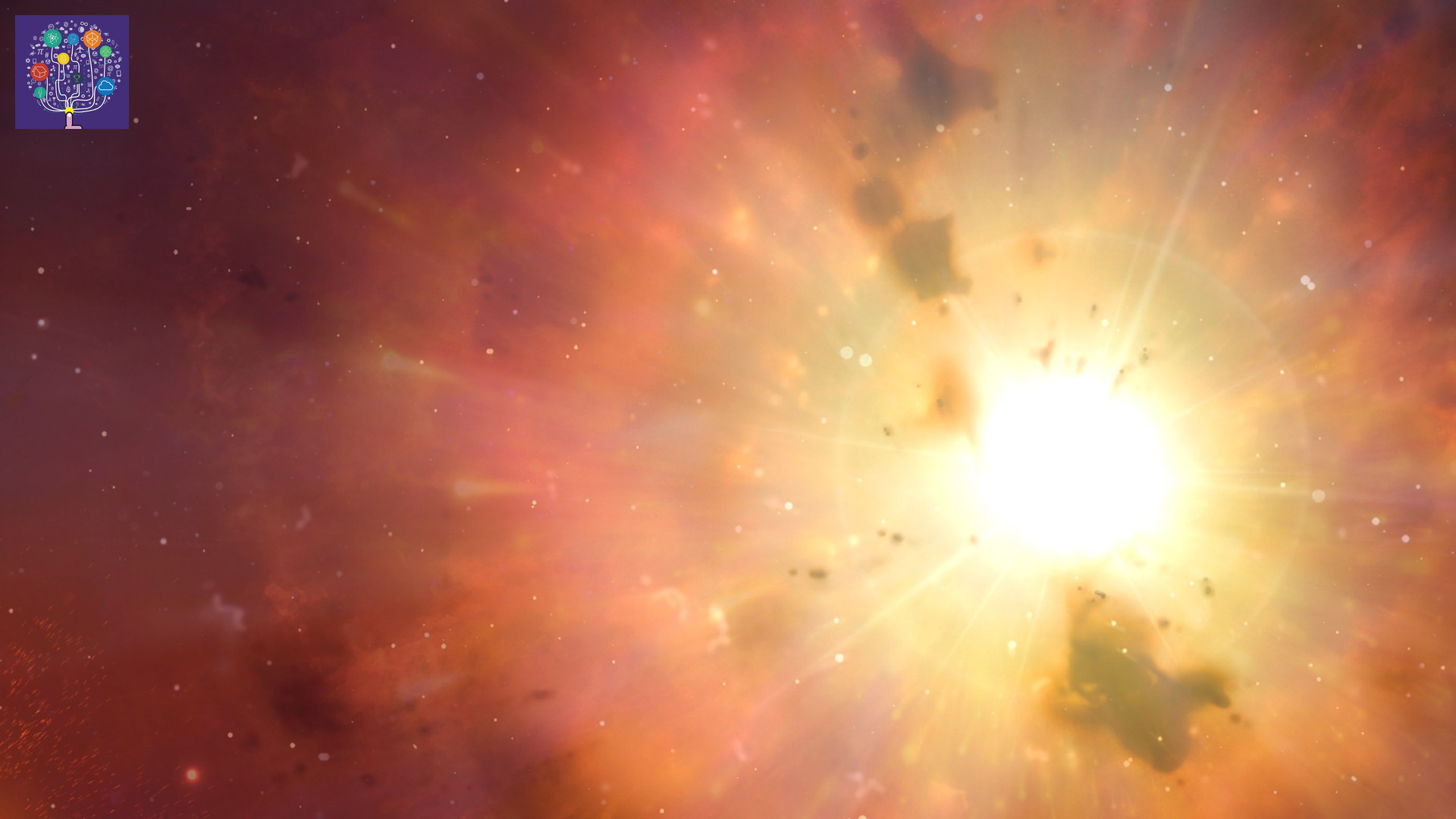
New Method Finds Supernovas Hours After Explosion
Innovative Method Enables Early Detection of Supernovae
Scientists have developed a reliable approach to identify supernovae in their very infancy, providing valuable insights into the stars’ explosive processes. While observing supernovae immediately after they occur has been challenging, this new protocol significantly improves early detection capabilities.
Supernovae originate from two main types of stars. The first type involves white dwarfs—remnants of sun-like stars—that explode after accumulating mass beyond a critical limit or merging with a companion star. The second type comes from massive stars at least eight times the Sun’s mass, which collapse into neutron stars and cause their outer layers to blow apart.
Using the world’s largest optical telescope, the 10.4-meter Gran Telescopio de Canarias, researchers monitored ten early supernova explosions—five from core-collapsing massive stars and five from white dwarf detonations. Most were detected within six days of explosion, with some identified less than two days after the event. These discoveries hinged on a strict protocol: first, the candidate supernova must be absent from the previous night’s images; second, it must be located in a galaxy, preventing confusion with other transient objects. Confirmed candidates then underwent spectral analysis using the OSIRIS instrument, revealing key data about the explosion.
Early supernova observations, such as the ‘shock breakout’—a brief flash when the supernova shockwave emerges—shed light on the star’s interior structure and surface composition. Additionally, interactions between the blast wave and material ejected prior to the explosion produce a ‘flash spectrum,’ revealing the composition of these shells and informing scientists about the star’s environment. Variations in early light curves can also indicate the presence of a nearby companion star or planetary body caught in the merger.
The Vera C. Rubin Observatory, set to commence full operations before 2026, will generate millions of alerts each night, including potential supernovae. When integrated with the detection protocol, this observatory can routinely identify supernovae within the first 24 hours, revolutionizing our understanding of stellar explosions.
“By coordinating rapid-response spectroscopy with deep photometric surveys, we can systematically study the earliest phases of supernovae,” said
New Technique Promises Early Detection of Supernova Explosions
Researchers have established a dependable method to identify supernovae shortly after they explode, enhancing our ability to study these stellar events from their very beginning. While observing supernovae immediately after their detonation has traditionally been difficult, this approach allows astronomers to catch them in their earliest stages.
Supernovae can emerge from two primary types of stars. The first involves white dwarfs—stellar remnants similar to our Sun—that explode once they accumulate enough mass beyond a critical threshold or merge with a companion star. The second type results from massive stars at least eight times the Sun’s mass, which, after exhausting their nuclear fuel, collapse into neutron stars and trigger a catastrophic explosion of their outer layers.
Utilizing the world’s largest optical telescope, the 10.4-meter Gran Telescopio de Canarias, scientists tracked ten early-stage supernovae—five from massive stars and five from white dwarf explosions. Most were observed within six days of explosion, with some identified less than two days after. Key to these detections was a strict protocol: an object must be absent in the previous night’s images to confirm it is a new event, and it must be located within a galaxy to rule out other transient phenomena. The confirmed candidates were then analyzed spectroscopically with the OSIRIS instrument, revealing vital information about their nature and composition.
Early observations often focus on the ‘shock breakout’—a rapid burst when the supernova shockwave escapes the star’s surface—which provides clues about the star’s internal structure and surface makeup. When the blast wave interacts with material ejected prior to the explosion, it creates a ‘flash spectrum’ that uncovers the composition of these shells and helps map the star’s surrounding environment. Variations in the light curve’s early stages can also suggest the presence of a close companion star or planetary object caught in the explosion.
Looking ahead, the upcoming Vera C. Rubin Observatory will generate around ten million alerts nightly, including potential supernovae. Coupled with this new detection protocol, it could allow scientists to recognize supernovae within the first 24 hours of explosion, significantly advancing our understanding of these cosmic phenomena.
“Coordinated rapid spectroscopic responses, combined with deep sky surveys, will enable systematic early-stage studies of supernovae,” said Galbany.