Tiny New Moon Discovered Around Uranus by James Webb Telescope
New Tiny Moon Discovered Orbiting Uranus by James Webb Telescope
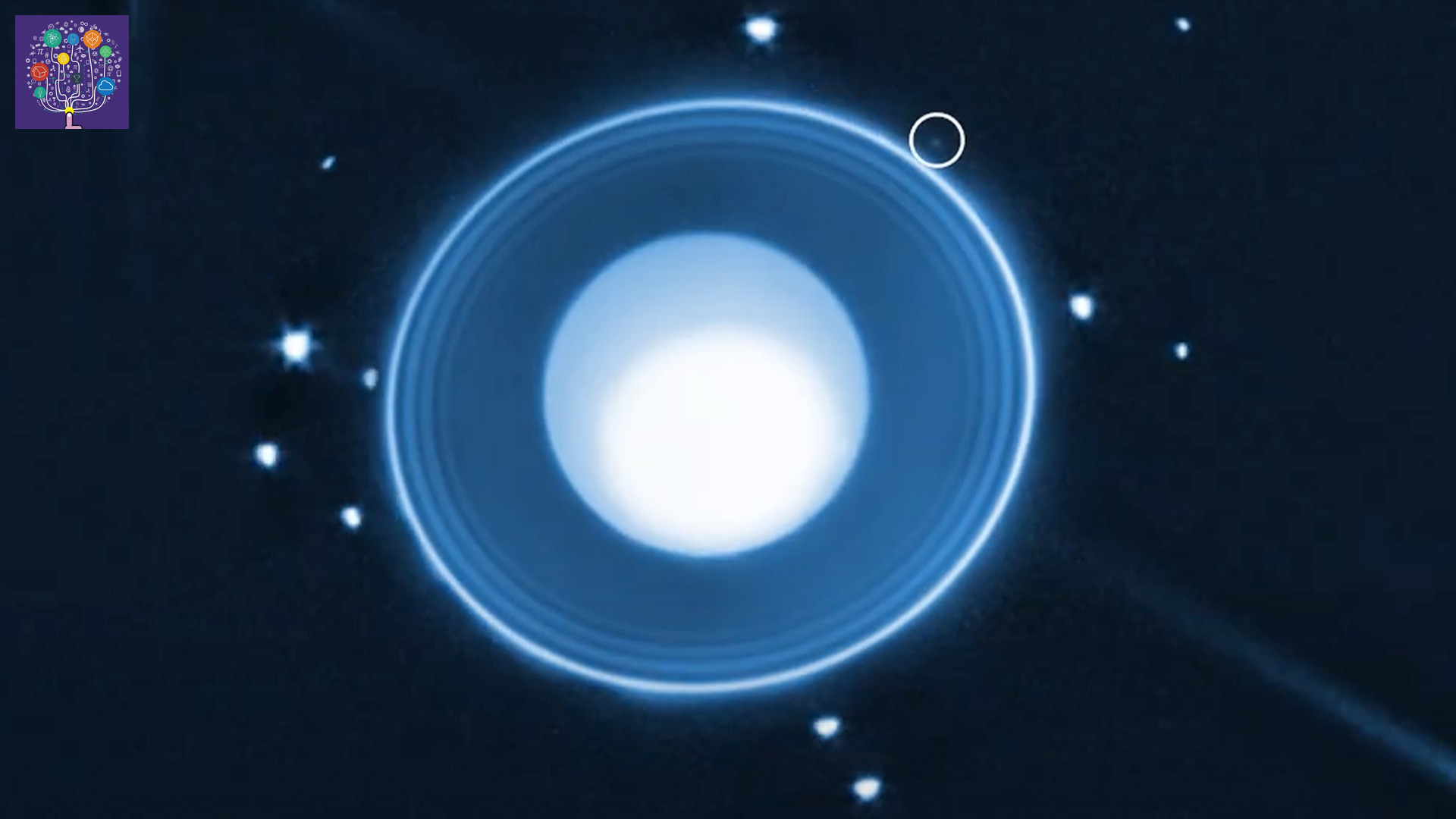
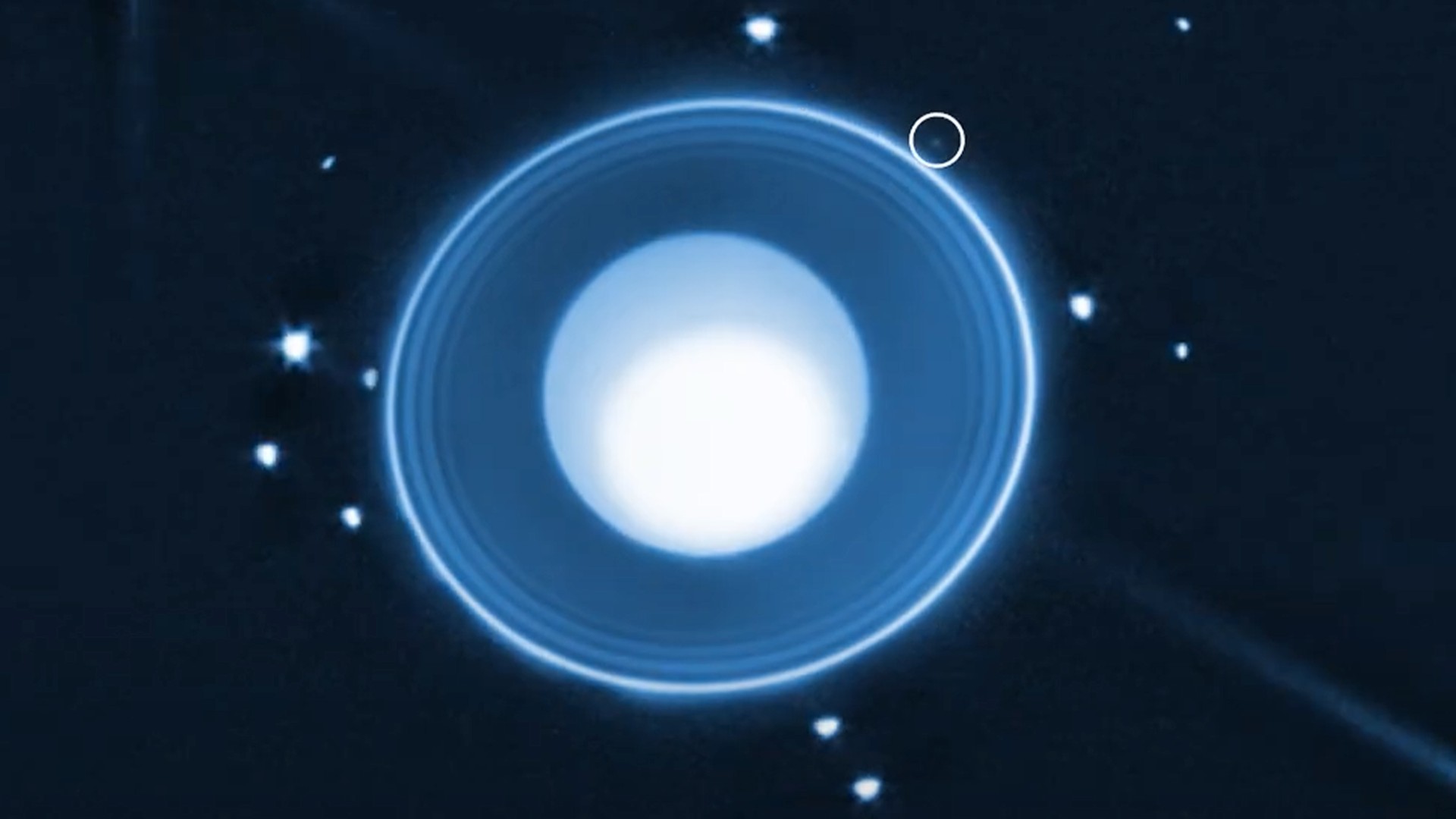
A recently identified moon circling Uranus has been spotted by the James Webb Space Telescope, marking a significant discovery. Named S/2025 U1, this moon is approximately 6 miles (10 kilometers) in diameter—small enough to have eluded previous observations by NASA’s Voyager 2 probe during its 1986 flyby, as well as other telescopes.
The discovery was made through ten 40-minute exposures taken with JWST’s Near-Infrared Camera (NIRCam). The small celestial body orbits about 35,000 miles (56,000 km) from Uranus’s center, considerably closer than our Moon’s average distance of 238,855 miles (384,400 km). Its circular orbit suggests it formed in its current location.
S/2025 U1 joins a collection of small satellites within Uranus’s inner ring system, which includes 13 faint rings and 14 moons. Most of these moons are named after characters from Shakespeare’s plays; the new moon is yet to receive an official name from the International Astronomical Union.
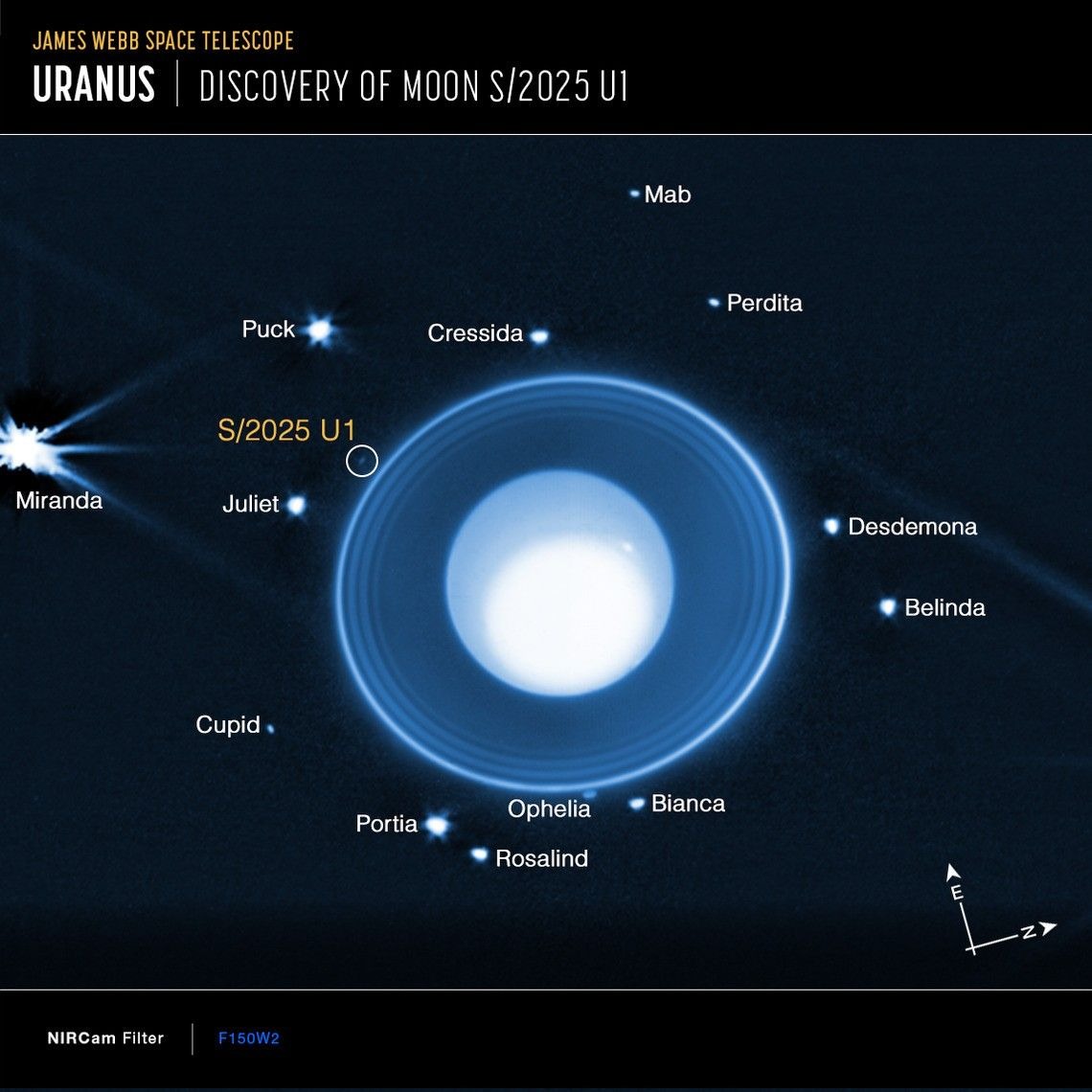
Uranus has 13 dark, difficult-to-observe rings divided into an inner and outer system, with many small moons embedded within. These moons, including Miranda and Ariel, help maintain the structure of the rings and provide insight into the planet’s dynamic environment.
More than three decades after Voyager 2’s historic flyby, which initially revealed only five moons, JWST’s advanced instruments enable scientists to detect even smaller and fainter moons. This discovery hints at a more intricate and possibly chaotic history of Uranus’s moon system than previously thought.
Discoveries like this continue to build on the legacy of past missions like Voyager 2, providing deeper insights into the outer solar system. As science progresses, JWST is helping us better understand the complex and mysterious nature of Uranus and its moons.