MTA Awards $1.9B Contract for Second Avenue Subway, Officials Claim Savings
Massive Contract Approved for Second Avenue Subway Expansion
The Metropolitan Transportation Authority (MTA) has officially awarded a nearly $2 billion contract to advance the next stage of the long-planned Second Avenue Subway project. This significant investment is seen by officials as a vital step forward, even as the current transit system faces ongoing challenges.
The contract was granted to Connect Plus Partners, a joint venture between Halmar International and FCC Construction. It involves digging a tunnel from 116th Street to 125th Street and constructing two new stations in East Harlem. Construction is set to commence later this year, with early street work followed by more extensive civil tunneling in 2026 and 2027.

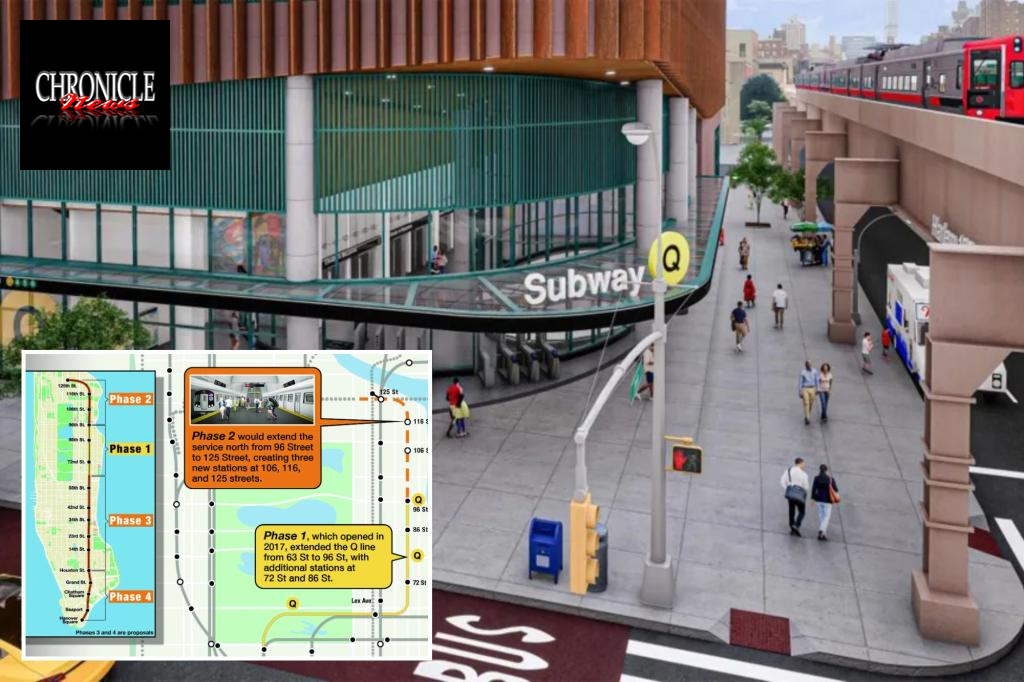
Officials emphasized that the project, part of the $7.7 billion Phase Two, marks a pivotal move in realizing a century-old goal of extending subway service up the East Side of Manhattan. The first phase, completed in 2017 at a cost of $4.45 billion, added three stops between 63rd and 96th Streets. The upcoming phase aims to extend the line by 1.5 miles and open three new stations by 2032.
Despite its high cost—approximately $4 billion per mile—officials argue the project is cost-effective on a per-rider basis, projecting around 110,000 daily passengers. They also highlighted savings strategies, such as repurposing existing tunnels from the 1970s and employing smaller crews, which are expected to save hundreds of millions of dollars.

Additional visual plans include a proposed entrance for a future 106th Street station, which will be awarded as a separate contract. Overall, the project signals a major push to enhance transit infrastructure and meet long-standing expansion goals.