Palantir Profits with Trump 2.0, Peter Thiel Backs Republicans Again
Peter Thiel Reenters Political Donor Scene, Funds Republican Midterms

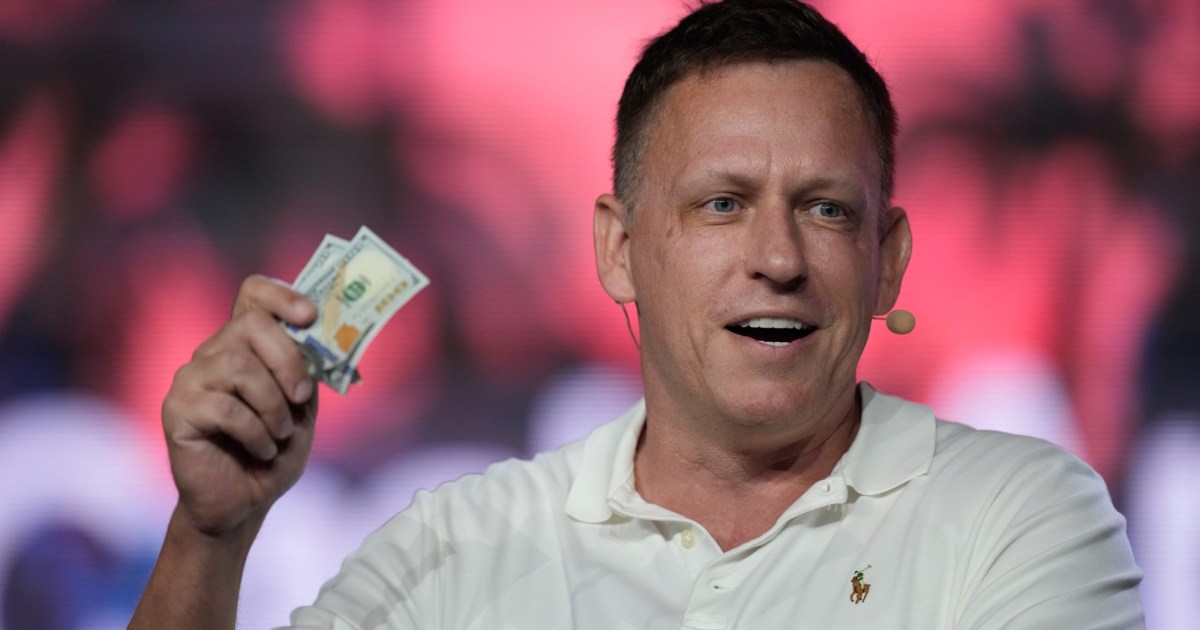
Peter Thiel shows a pair of hundred dollar bills during an address at an April 2022 conference.
After abstaining from political donations in 2024, billionaire investor Peter Thiel has resumed contributing to Republican candidates. This year, he has donated over $850,000 to support incumbents aiming to maintain GOP control of the House in the upcoming midterm elections.
Thiel’s renewed political activity coincides with Palantir, the software firm he founded, experiencing a stock surge—from about $40 in November to over $150 recently—funded in part by lucrative government contracts. Palantir has been instrumental in implementing the Trump administration’s immigration and data initiatives, including aiding mass deportations and creating comprehensive federal databases that utilize taxpayers’ information.
These activities have attracted criticism from Democrats, who argue Palantir may be violating privacy laws and expanding government surveillance capabilities. Despite this, Republican legislators have largely remained silent on these issues, with Palantir maintaining support for its work with the federal government, citing growth in both public and private sectors.
Thiel has historically been a significant supporter of Republican and libertarian causes, contributing millions to presidential campaigns and Senate candidates. His support for Trump in 2016 was especially pivotal, although he briefly stepped back from endorsing Trump’s second term efforts, citing disappointment with the administration’s policies. Nonetheless, he continues to back populist candidates, seeing their disruption as a means to foster technological innovation and societal change.
Recently, Thiel contributed $852,200 to support House Republican efforts, signaling a strategic focus on maintaining conservative majorities. In interviews, Thiel has expressed concerns about societal stagnation, government regulation, and global authoritarianism, advocating for technological progress free from excessive oversight.
While Thiel’s political motivations are often framed as driven by ideas about innovation and societal risk, his financial backing suggests a desire to shape electoral outcomes that support his vision of a future tech-driven society.
“`