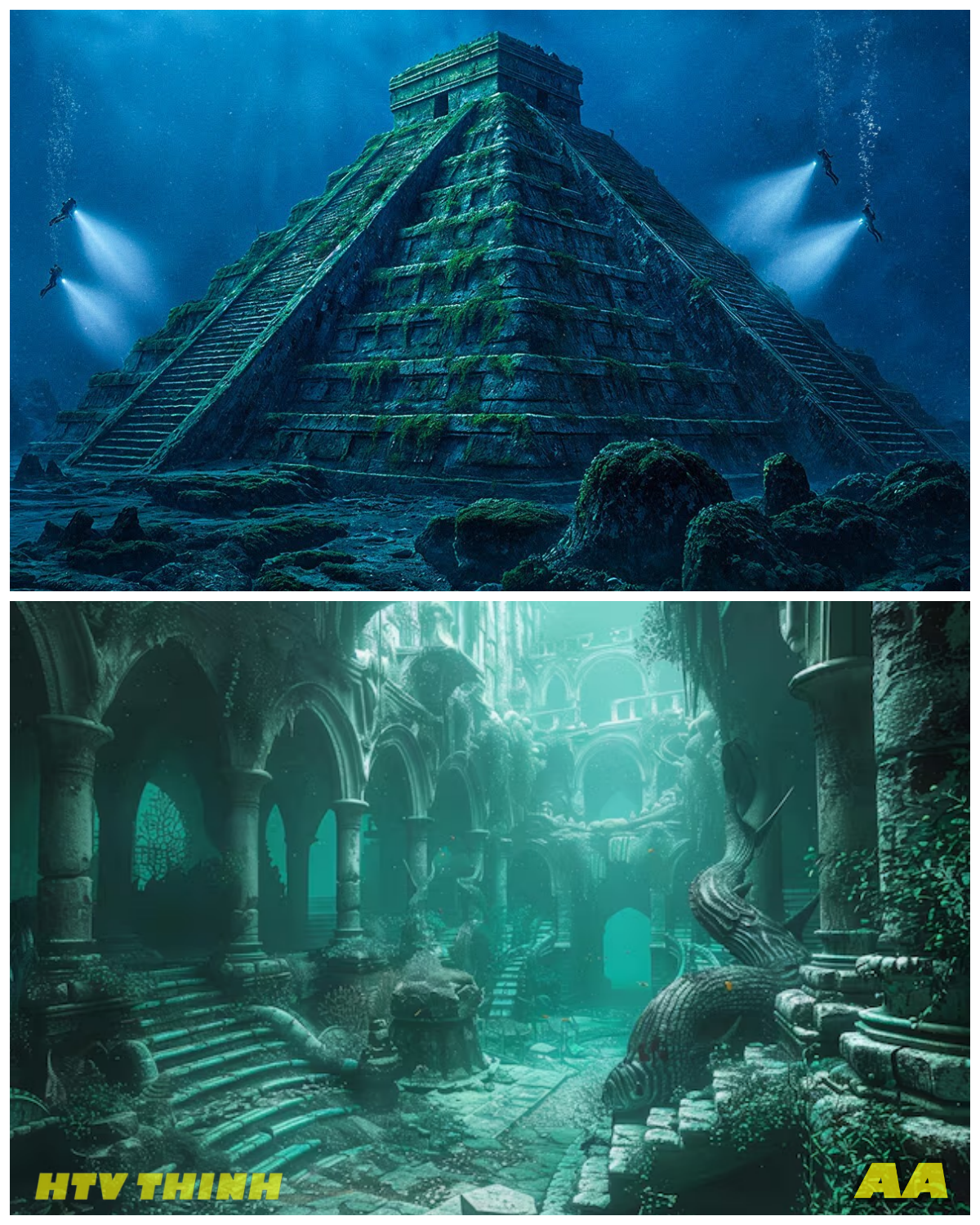
Shocking Underwater Ruins Off Cuba Could Change History—Why Is Nobody Talking About It?
Unexplored Underwater Structures Off Cuba May Rewrite History
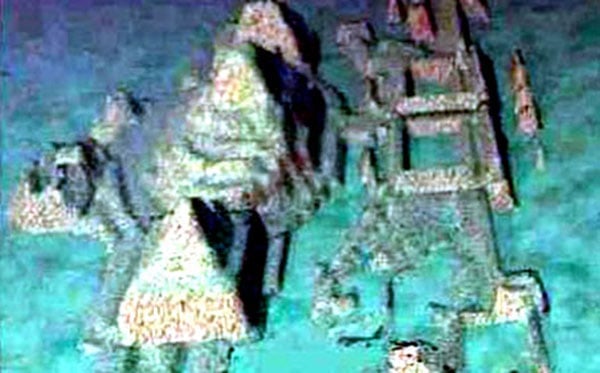
In the early 2000s, marine engineers Paulina Zelitzky and Paul Weinzweig conducted surveys off Cuba’s western coast, originally seeking shipwrecks and oil deposits. Using high-resolution sonar, they expected to map natural geological features or sunken vessels. Instead, they uncovered a startling discovery: large, geometrically arranged, block-like formations at depths exceeding 2,000 feet.
The sonar images revealed symmetrical, meticulously placed structures resembling ancient architecture—pyramids, corridors, and foundations—unlike natural formations. To verify, a remotely operated underwater vehicle (ROV) captured footage of smooth, angular stones stacked in ways that suggested intentional construction.
Zelitzky suggested the site could be a city built over 6,000 years ago, predating many known civilizations and even the pyramids of Egypt. Some speculated it might be a lost pre-Columbian metropolis or even Atlantis. Theories posited that a catastrophic tectonic event could have submerged the city, which now lies at a depth ten times greater than other submerged archaeological sites.
Despite the excitement, the discovery quickly faded from mainstream attention. No further exploration or artifact collection occurred, fueling skepticism and conspiracy theories. Critics argued that natural limestone formations could mimic man-made structures, and that the depth would require incredibly ancient civilizations unlikely to have built such cities.
Some believe the silence and lack of follow-up results from political or secretive reasons, with theories suggesting cover-ups of evidence of ancient advanced civilizations or extraterrestrial involvement. The absence of concrete samples or artifacts keeps the mystery alive, leaving speculation open.
The site’s remarkable symmetry and geometric design—features rare in natural formations—continue to tantalize researchers. Until further investigation occurs, the true nature of these underwater formations remains one of the ocean’s most intriguing and unresolved mysteries.