No Evidence of Arson at South Carolina Judge & Ex-Senator’s Beachfront Home
Investigation Finds No Evidence of Arson in South Carolina Judge’s Fire
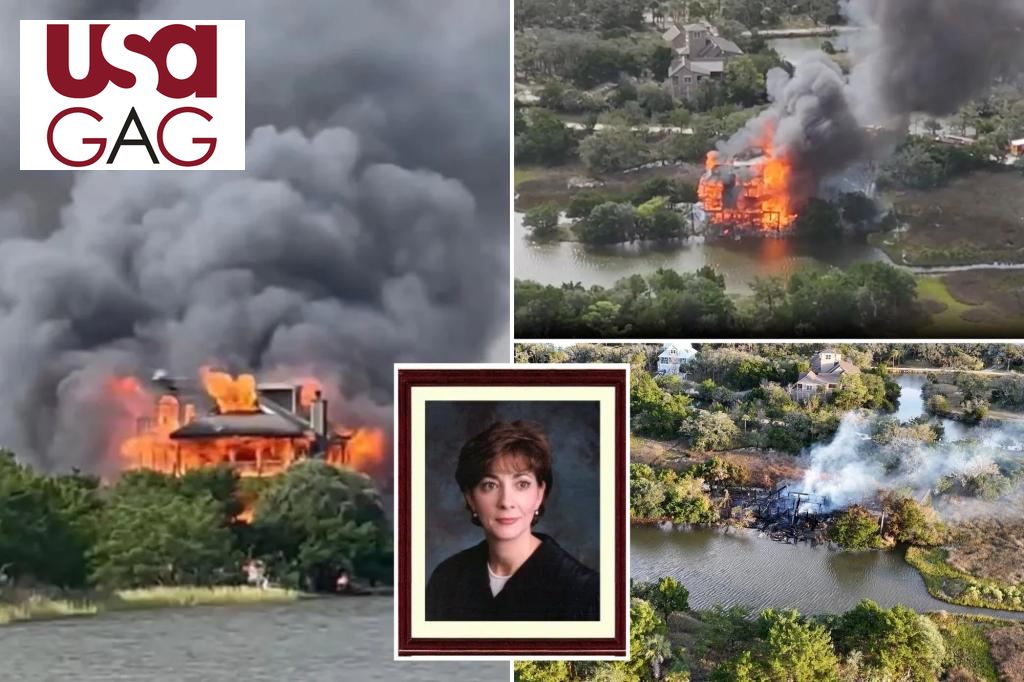
Authorities have not found any initial proof that the fire which destroyed the waterfront home of a South Carolina judge and her ex-senator husband was deliberately set. The blaze occurred around midday at Judge Diane Goodstein’s residence on Edisto Beach, prompting her husband, former State Senator Arnold Goodstein, to jump from the first-floor window to escape the flames.
The house was engulfed in smoke and flames, with emergency responders rescuing Arnold Goodstein and two other individuals using kayaks amidst marshy terrain behind the property. One person was rushed to a hospital via airlift, while the other two were transported by ground ambulance. Arnold Goodstein reportedly suffered several broken bones during his escape.

Investigators from the South Carolina Law Enforcement Division stated there is no evidence indicating arson or pre-fire explosions. The cause of the fire remains under investigation, with officials urging the public not to jump to conclusions.
Judge Diane Goodstein, age 69, was walking her dogs along the beach at the time of the fire. She has served since 1998 and recently made decisions opposing the state’s Election Commission in a high-profile voting rights case.

The South Carolina Supreme Court later reversed a temporary restraining order issued by Goodstein, calling it “clearly erroneous.” Following her ruling, some officials and online users received threatening comments. An assistant attorney general previously warned that the Department of Justice would oppose any nullification of federal voting laws, which some interpret as a context to the threats faced by Goodstein.
Relatives report that Judge Goodstein and her ex-senator husband, who served in the House and Senate during the 1970s, have two children, Arnold Samuel Goodstein II and Eve Schafer Goodstein.
Authorities continue to monitor the situation carefully, emphasizing the importance of verified information and discouraging premature assumptions about the fire’s cause.