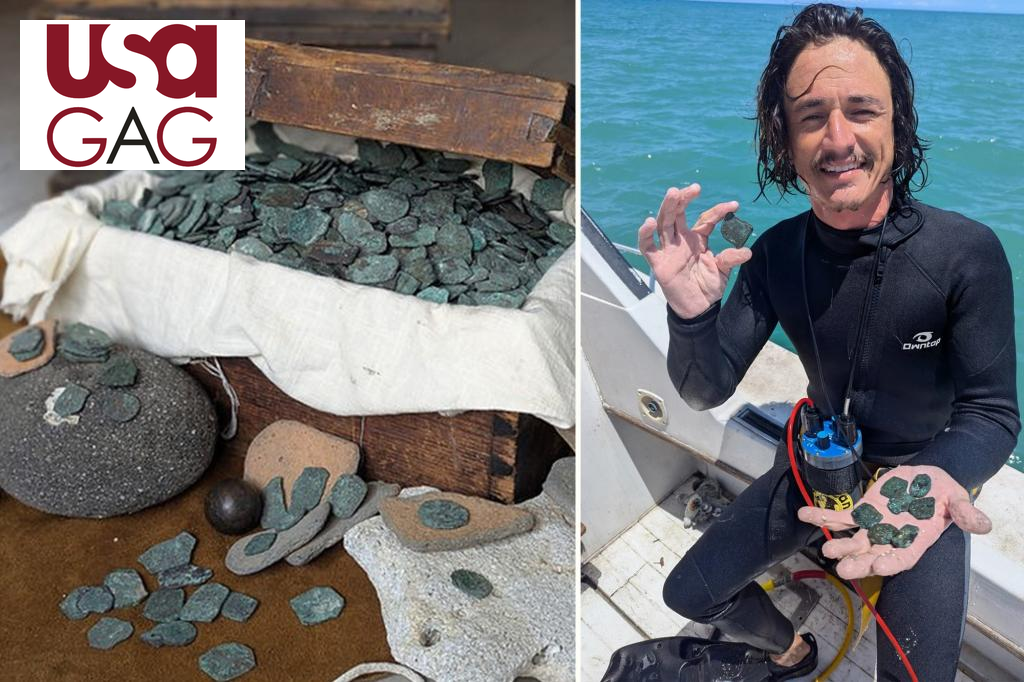
Salvage Crew Finds $1M Treasure in 300-Year-Old Florida Shipwreck
Treasure Trove from 300-Year-Old Shipwreck Uncovered
A salvage crew recently retrieved over 1,000 gold and silver coins from a shipwreck that sank more than three centuries ago, valued at approximately $1 million. The discovery was made during summer expeditions on a Spanish fleet wrecked in a hurricane off Florida’s Treasure Coast in July 1715.

The recovered coins include roughly 1,000 silver “Reales,” five gold “Escudos,” and other rare artifacts, all remarkably preserved beneath layers of sand and seawater. Experts estimate the total value of the treasure at around $1 million.
The haul forms part of an estimated $400 million in gold, silver, and jewels lost when the fleet sank—a maritime tragedy considered one of the greatest in history. The spread of wealth along the Florida coast earned the area its nickname, the “Treasure Coast.”

The coins originate from Spanish colonies in Mexico, Peru, and Bolivia, and many still show legible dates and mint marks. The condition suggests they might have been part of a single shipment that spilled during the ship’s rupture in the storm.
Once conserved, the coins will be exhibited in local Florida museums, offering a tangible connection to the past. As Guttuso, Director of Queens Jewels, noted, each piece is a concrete link to the people of the Spanish Empire’s Golden Age, and finding so many in one deposit is extraordinary.

“Every discovery contributes to understanding the human story of the 1715 fleet,” Guttuso added. “We are dedicated to preserving and studying these artifacts for future generations.”