What Does Trump’s “Antifa” Executive Order Really Do?
Trump Signs Executive Order Targeting Domestic Terrorism and Left-wing Groups

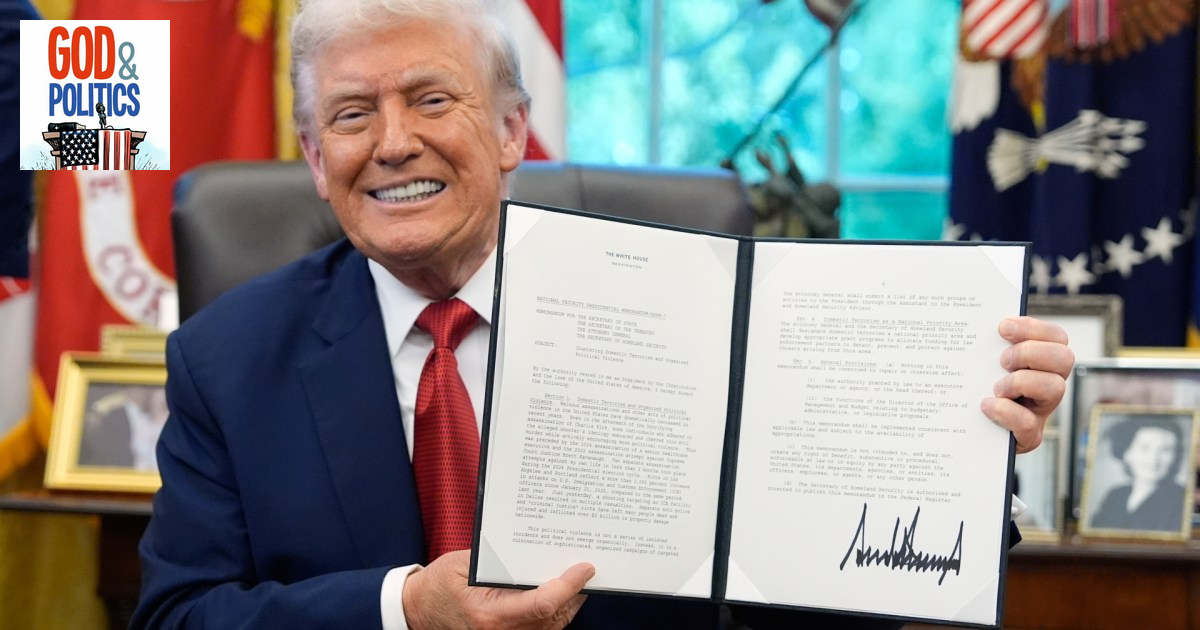
President Donald Trump signs an order related to countering domestic terrorism.
Following the tragic death of Charlie Kirk, right-wing figures rapidly called for vengeance. Activist Laura Loomer emphasized that more violence would ensue if the Left isn’t suppressed through state power. Despite the unclear motive behind Kirk’s killing, prominent Republicans and supporters warned of an impending civil war. Vice President JD Vance accused “radical left lunatics” of fomenting violence, vowing to target what he described as a network of liberal organizations responsible for inciting unrest.
This retaliation and crackdown on dissent have been in the planning stages for some time. The Heritage Foundation, an influential conservative think tank, had previously outlined a plan called Project Esther to intensify efforts against pro-Palestine activism, proposing measures like deportations and investigations into groups linked to George Soros. Trump’s recent executive order declaring “antifa” as a domestic terrorist organization signals an escalation aligned with these ideas, formalizing the authorities’ focus on the broader left.
Legal experts highlight that while the president cannot officially designate domestic groups as terrorists under existing law, the language used—referring to “terrorist enterprise”—mirrors FBI authorities and can serve as a basis for investigations. The FBI already conducts proactive “assessment” investigations based on ideology, which could now be intensified under this new directive. Historically, during the George Floyd protests, authorities used aggressive rhetoric to scrutinize participants, indicating a potential for expanded surveillance and repression.
Critics warn that this executive order opens the door for abuse, empowering federal and local law enforcement to label groups as terrorist organizations without clear legal backing. The groundwork for this approach was laid decades ago, especially after 9/11, when policies shifted toward preemptive surveillance of political activism, especially anti-government and pro-Palestine groups. The order reflects a broader trend of undermining civil liberties in the name of national security, echoing a long history of government overreach designed to suppress dissent.