Ukraine’s Kids Study Online or Underground Amid Ongoing Russian Attacks
Amid ongoing conflict, thousands of children in Ukraine have spent over five years confined to online schooling, largely due to dangerous living conditions caused by relentless bombings.
Russian attacks frequently target civilian infrastructure across Ukraine, making outdoor activities and even basic daily routines perilous.
Many children, like fourth-grader Kyrylo, have had limited in-person schooling. Kyrylo, who started kindergarten in 2020 during the pandemic, has only experienced three months of face-to-face classes before war resumed and forced a return to virtual learning.

Since the resurgence of conflict, most schools have lacked bomb shelters, forcing parents to make tough choices. Some invest in private schools with shelters, while others relocate their children to safer areas.
Vlada, Kyrylo’s mother, expressed concern over his safety and social development. “He enjoys being with other kids, not just learning online, because it’s hard for small children to understand teachers on a screen,” she said. “Kids need interaction and friends.”
Similarly, Tatiana moved her 7-year-old son to a school in Poltava, a safer city with proper shelter, to ensure continuous education. She described the strict safety measures, including mandatory shelter visits during alarms, but emphasized the importance of giving children a sense of normalcy.

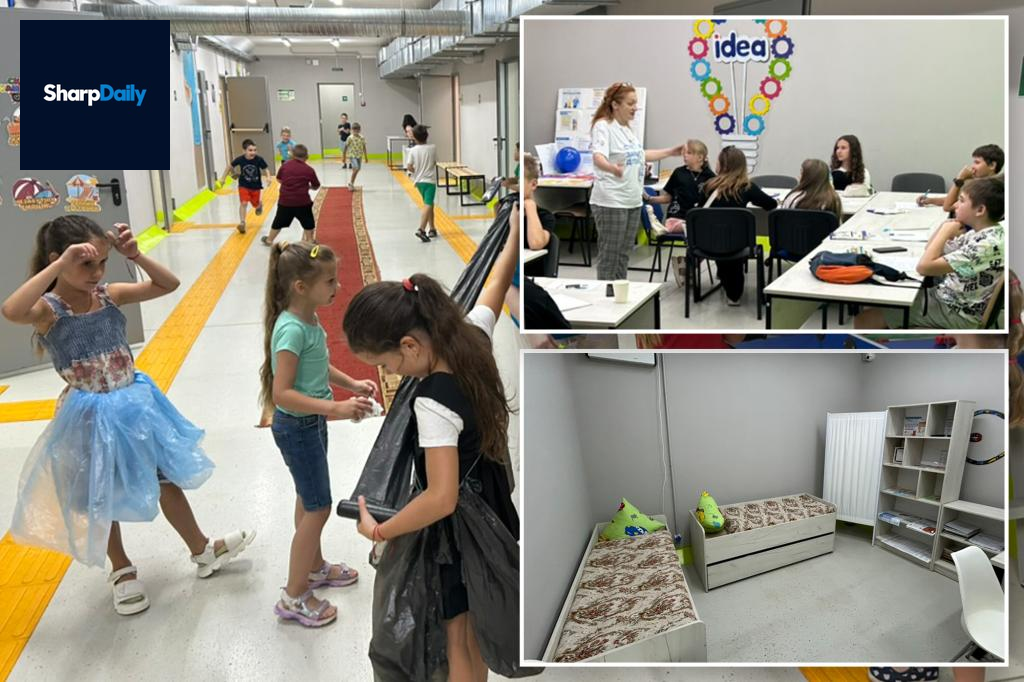
Fortunately, some schools are built underground with support from international donors, offering safer environments for students. A newly opened school in Pisochyn can host 250 students in eight classrooms, operating in two shifts due to space constraints.
Located just 15 miles from the Russian border, the school’s underground design is a safety necessity, allowing classes to continue without interruption from missile threats. Students attend in four-hour shifts, with classes interrupted only to seek shelter during alarms.
Students like Anastasiia and Yevheniia feel safer and more engaged when physically present in school, emphasizing the importance of peer interaction and teacher support. Despite the danger, these children cherish their in-person learning and friendships, illustrating resilience amidst adversity.