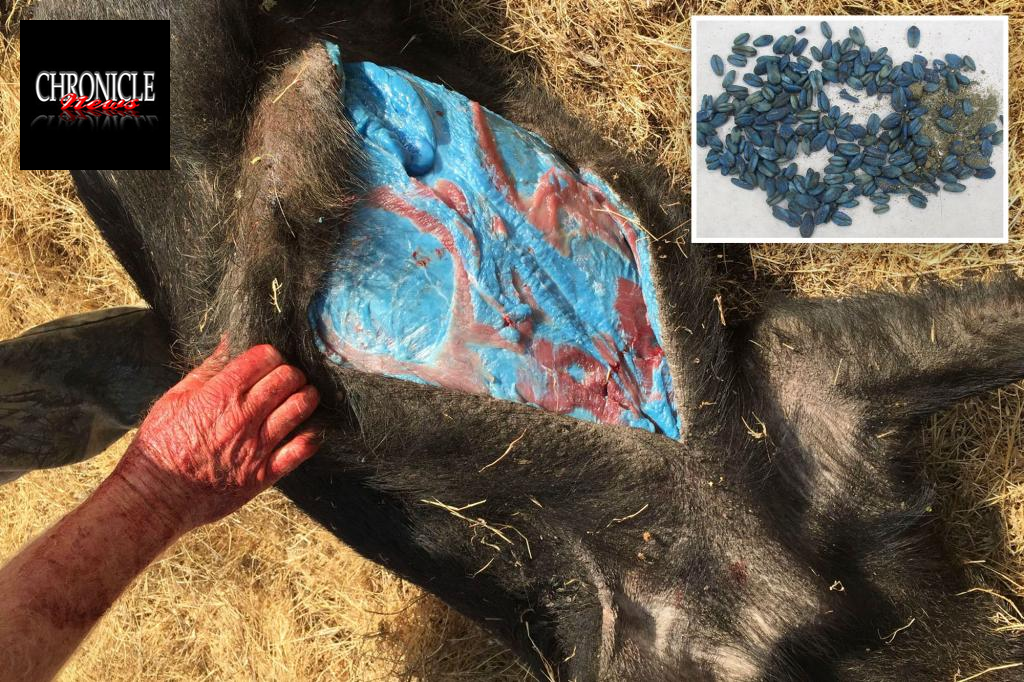
California Pigs Turn Bright Blue After Pesticide Exposure
Wild Pigs in California Exhibit Blue Flesh Due to Pesticide Exposure
A notable number of feral hogs in California’s Monterey County have developed striking blue-colored flesh after consuming pesticides containing rat poison. Authorities have warned that other wildlife, including game animals, may also be affected.
The pigs ingested the anticoagulant rodenticide Diphacinone, which impairs blood clotting and causes internal bleeding. This contamination likely occurred through eating dyed bait or prey that had already ingested the pesticide.
Wild pigs in California are omnivorous, feeding on a variety of foods including grasses and smaller animals like mice, making them susceptible to pesticide exposure. The California Department of Fish and Wildlife first reported the discolored pigs in March, noting that not all affected animals show the characteristic blue innards, depending on when they consumed the poison.
Wildlife enthusiasts and pest control professionals have observed revealing cases of neon blue flesh in affected pigs, with one expert describing the coloration as “blueberry blue.” These pigs are widespread across nearly all counties in California, with only two counties not reporting them.

Studies from 2018 reveal that rodenticide compounds have been found in over 8% of wild pig tissue samples near agricultural and residential pesticide use, with a concerning 83% contamination rate among bear tissues examined. Runoff from pesticide applications often contaminates water bodies, initially affecting aquatic life and then passing through the food chain as predators consume contaminated prey.