Dems’ Frustration with Texas Redistricting: A Self-Reflection Needed
Exploring Illinois’ 13th Congressional District and Redistricting Politics
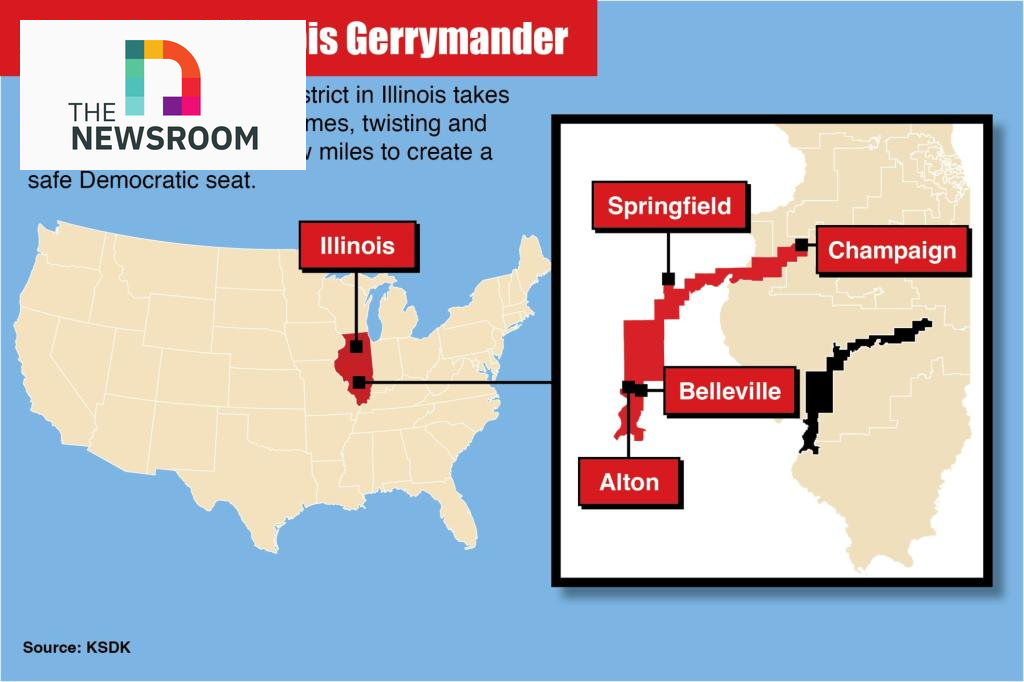
The 13th District in Illinois stretches in a winding path from East St. Louis, moving northward through six counties, and then turns eastward towards Decatur and Champaign. Its borders resemble an old gerrymander, characterized by a long, salamander-like shape created to concentrate Democratic voters.
This district was notably reshaped after the 2020 Census to assemble Democratic-leaning areas, transforming it from a competitive district traditionally held by Republicans into a Democratic stronghold by flipping it in 2022. Overall, Illinois’ total districts shifted from a 13-5 Democratic advantage to 14-3, with critics labeling the new map as “the worst gerrymander in the country” by a prominent political analysis site.
Interestingly, Texas Democrats fleeing their state to oppose new redistricting efforts have sought refuge in Illinois. Illinois Governor JB Pritzker publicly welcomed these Democrats, praising their courage, despite signing the law that led to a significant Republican underrepresentation in Illinois’ congressional delegation—where Republicans secured nearly 44% of the vote but only 18% of the seats in 2022.
Meanwhile, Texas’ legislature is considering new district maps, aiming to gain up to five additional seats for Republicans before the 2026 midterms. These efforts are partly in response to the Justice Department’s concerns about racial gerrymandering, and a pending Supreme Court case may clarify rules around race in district drawing.
Historically, district lines are shaped by political motivations, with both parties engaging in gerrymandering to enhance their chances. While Democrats also gerrymandered Texas seats in the past, the current efforts reflect Republican initiatives to maximize their gains.
Other states, like California, also exhibit partisan-tilted maps. For example, despite Republicans earning nearly 40% of the vote in California in 2024, they hold only about 17% of the congressional seats, demonstrating how redistricting influences political representation.
Overall, debates over redistricting highlight the ongoing struggle between partisan interests and the goal of fair representation.