Trump Plans to Restore Confederate Monument in the Nation’s Capital
Reinstallation of Confederate Statue in Washington, DC, Sparks Controversy

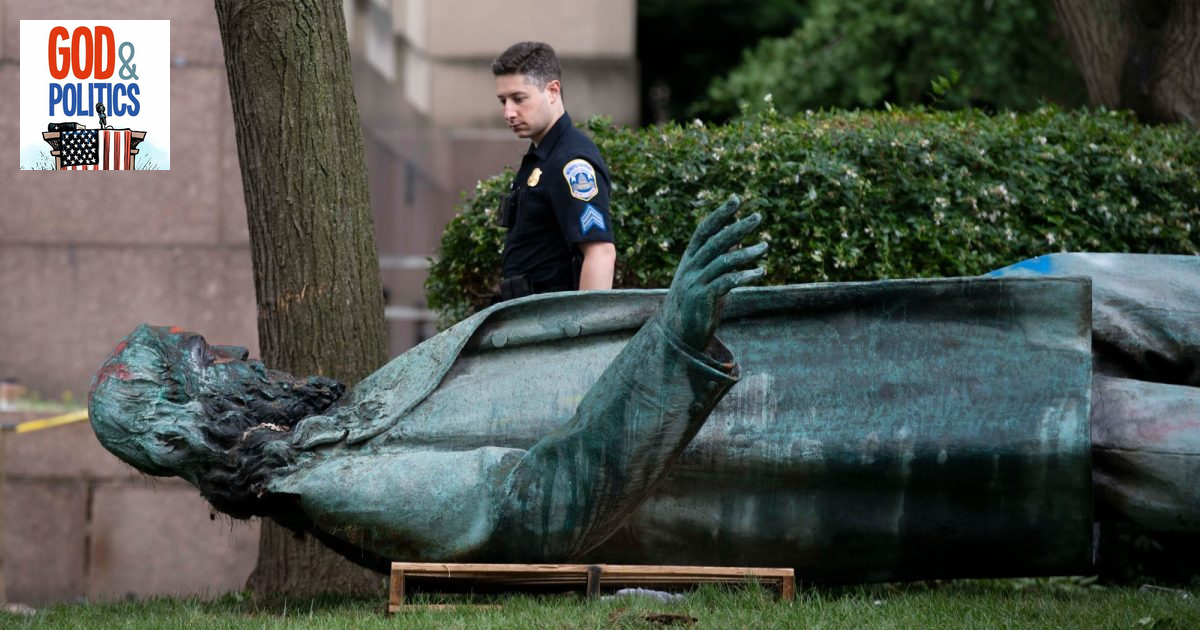
Protesters toppled the Washington, DC, statue of Confederate General Albert Pike in June 2020. It is set to be reinstalled in the coming months.
Since assuming office again, President Donald Trump has actively sought to reshape the narrative of American history, dismissing divisions and elevating figures associated with oppression.
This week, the National Park Service (NPS) announced plans to restore and reinstall the statue of Confederate General Albert Pike, which was toppled during protests in June 2020 following George Floyd’s death. The statue, authorized by Congress in 1898, was displayed in Judiciary Square and was ostensibly dedicated to Pike’s leadership in Freemasonry, a male-only secret society. However, Pike was also a Confederate general who fought to preserve slavery, allegedly involved with the Ku Klux Klan in the late 1860s, and commanded Native American troops in a brutal 1862 battle.
Footage from that period shows protesters removing the statue with ropes amid cheers, an act which President Trump criticized, calling it “a disgrace to our Country.” During the protests, nearly 100 Confederate monuments were removed across the country, but a report indicates over 680 Confederate symbols still stand today.
The NPS justifies the decision citing two of Trump’s executive orders aimed at cultural and historical reforms, asserting that the statue has been in storage and is currently undergoing restoration, with a planned reinstallation by October. Discussions have already begun about the moral implications, with local officials such as DC’s non-voting delegate vowing to introduce legislation to permanently remove the monument.
This move is part of a broader effort by Trump to present a sanitized, unified version of American history, attacking institutions like the Smithsonian and attempting to erase references to impeachment. His administration has also renamed military bases honoring Confederate leaders and altered online content concerning slavery and gender identity at national parks.
Analysts see these actions as part of a campaign to control historical narratives and weaken the acknowledgment of America’s racial and social struggles, pushing toward an autocratic vision of the nation’s past and present.