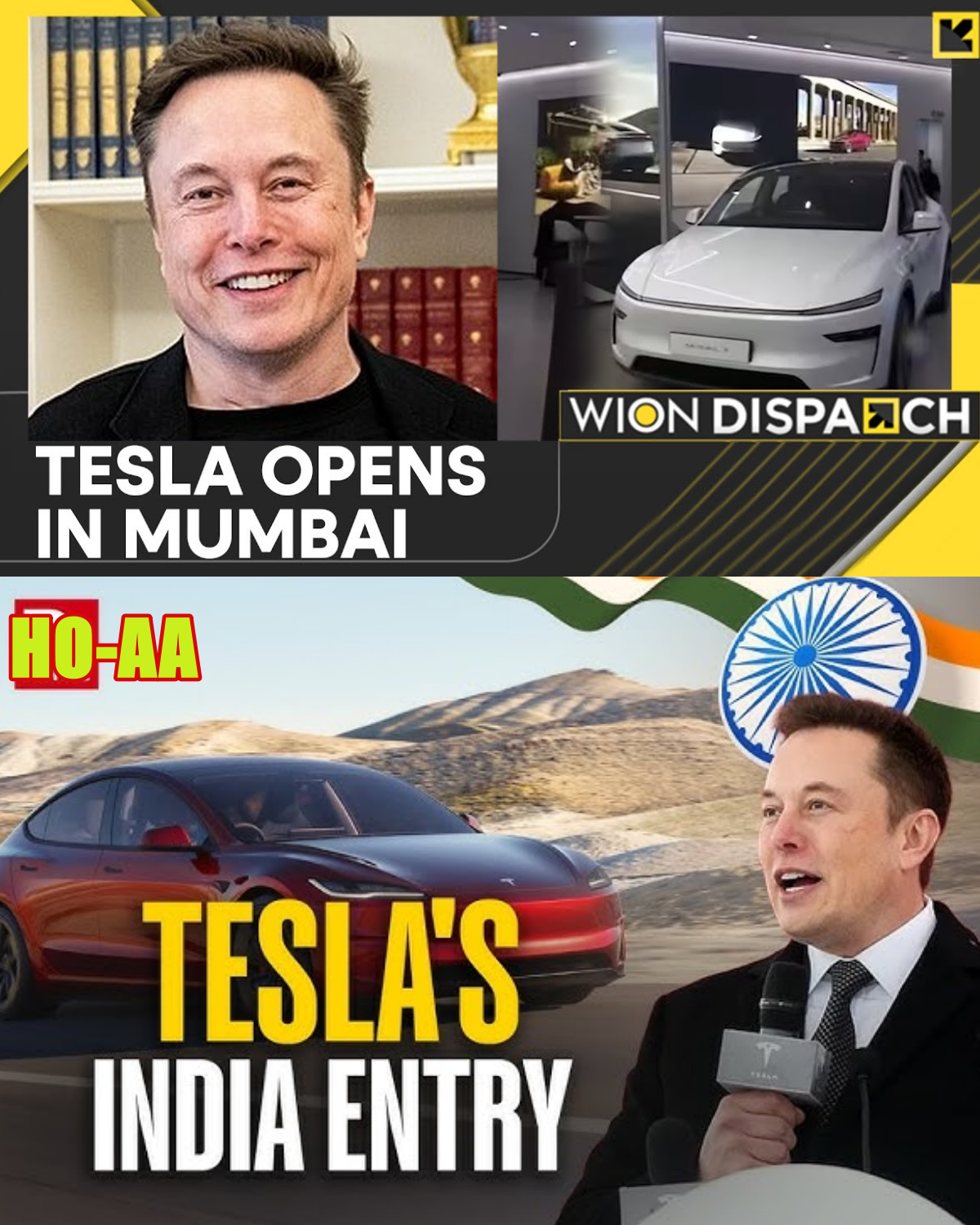
Tesla Launches First Mumbai Showroom; Delhi Next!
A Major Step for Tesla in India’s Market
On July 15, 2025, Tesla officially entered the Indian market by launching its first Experience Centre in Mumbai’s prominent Bandra Kurla Complex (BKC). The event was attended by Maharashtra’s Chief Minister, Devendra Fadnavis, and saw Deputy Chief Minister Eknath Shinde driving the company’s first locally-displayed Model Y, built in China.
The new showroom, approximately 4,000 square feet and located within Maker Maxity mall, was designed and constructed in less than two months. To support early adopters, Tesla has already activated four fast-charging stations around Mumbai.
However, the pricing of Tesla’s Model Y in India is notably high, ranging from ₹59.9 lakh to ₹67.9 lakh (~$70,000), nearly doubling its U.S. price due to tariffs and luxury levies. This has sparked memes and discussions about the steep taxes, indicating Tesla’s brand focus on India’s luxury segment rather than mass-market affordability.
Expansion plans include a second showroom in Delhi’s Aerocity, expected to open by late July, alongside the deployment of seven Supercharging stations across Delhi-NCR, totaling sixteen Superchargers and fifteen Destination chargers.
Market Positioning and Infrastructure Development
Tesla appears to be positioning itself against high-end competitors like BMW and Mercedes, rather than domestic EV manufacturers such as Tata or Mahindra. Industry leaders have welcomed Tesla’s arrival, signaling a potential boost for innovation despite existing production challenges.
The company is also establishing critical charging infrastructure in key areas like Lower Parel, BKC, Navi Mumbai, and Thane, with similar plans across Delhi. With over 7,000 Supercharger stations worldwide, Tesla’s commitment to building an efficient charging network is key to building consumer confidence in India’s emerging EV landscape.
Local Operations and Policy Challenges
Tesla is recruiting locally, posting at least 13 roles in Mumbai and Delhi to develop in-house expertise and leadership. Discussions with government officials highlight the importance of domestic manufacturing, likely under incentives, to make Tesla’s vehicles more competitive on price.
Nevertheless, high import taxes—combining 70% customs duty and 30% luxury tax—substantially inflate Tesla’s prices. While some duties have been reduced, Musk has publicly criticized the tariff policies, which complicates future plans for scaling production locally to drive down costs.
Implications for India’s EV Future
Tesla’s entry signals growing investor confidence and may accelerate infrastructure and policy developments to foster EV adoption. The company’s success could place India as a serious player in Tesla’s global expansion, provided it can navigate tariffs, local manufacturing, and affordability hurdles.