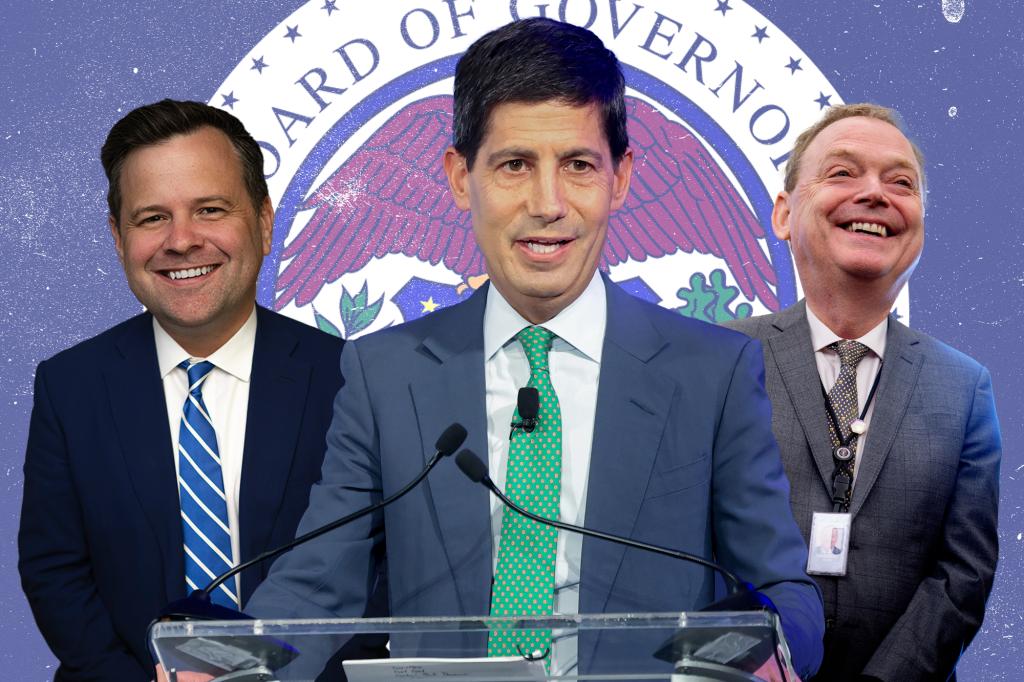
The Wild Chase to Replace Jerome Powell at the Fed
Potential Fed Chair Replacement Sparks Rumors and Market Concerns
While tensions remain high between President Trump and Federal Reserve Chair Jerome Powell, speculation about Powell’s possible replacement is gaining attention. Recently, the name of Bill Pulte, head of the Federal Housing Finance Authority overseeing Fannie Mae and Freddie Mac, surfaced as a potential candidate, alongside two other prominent figures—Kevin Hassett, a seasoned economist and former advisor, and Kevin Warsh, a former Fed governor with significant experience during the 2008 crisis.
Despite the buzz, credibility of these rumors is questionable. Pulte, 37, has a background in private equity and manages a loan portfolio worth around $7 trillion. He also comes from a family of influential builders. While not an economist, Pulte’s social media activity hints at an interest in meme stocks, though he’s careful not to endorse specific investments.
Among the candidates, Hassett stands out as a former co-author of “Dow 36,000,” predicting a market boom. His media presence is notable, and his loyalty to Trump raises concerns about potential market destabilization if he assumes the role, given the risk of raising interest rates in line with presidential favoritism.
The most qualified candidate appears to be Kevin Warsh, who has both the professional background and political rapport. Warsh served on the Fed during the financial crisis and has publicly criticized Powell’s handling of inflation, advocating for a less interventionist monetary policy—views that might clash with Trump’s desire for lower short-term rates. Nonetheless, Warsh’s expertise and relationship with Trump suggest he could be a strong contender.
Ultimately, the choice will depend on political considerations and the upcoming confirmation process. Treasury Secretary Scott Bessent is reportedly leading the search, with some speculation that he might even nominate himself. Bessent’s deep experience on Wall Street and connections to figures like George Soros make the decision particularly intriguing—and potentially controversial.
As the market watches closely, the coming weeks promise high-stakes decision-making that could influence Federal Reserve policy and financial markets for years to come.