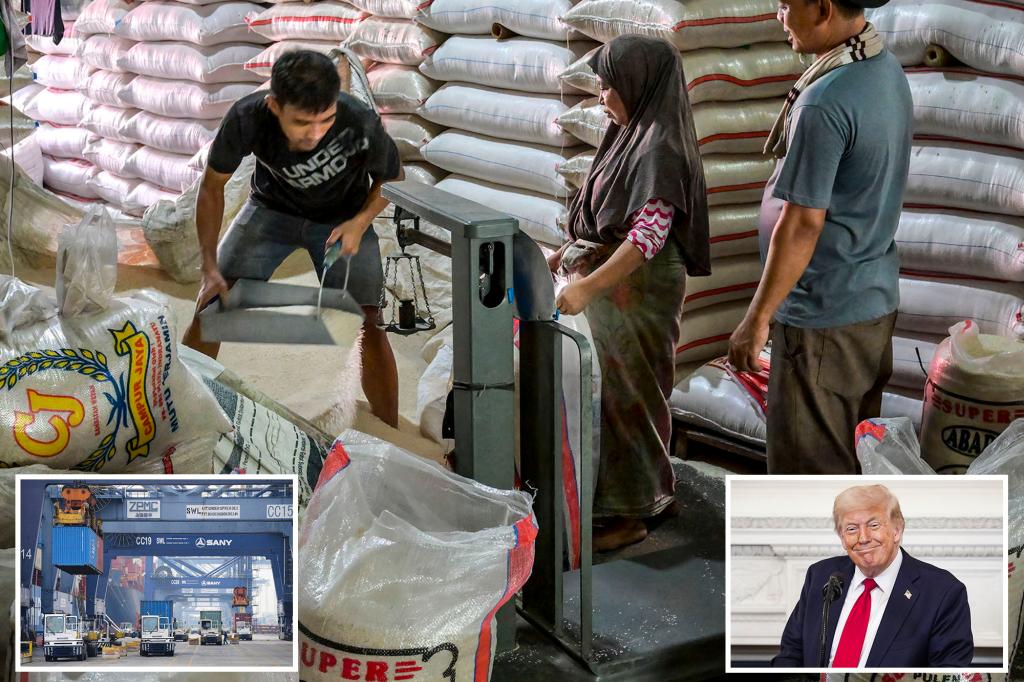
Trump Announces Indonesia Trade Deal After Threatening 32% Tariffs
President Trump Announces Preliminary Trade Deal with Indonesia
President Trump revealed that he has reached an initial trade agreement with Indonesia, shortly after threatening a 32% tariff on the Southeast Asian nation, which is the world’s fourth most populous country.
“A great deal for everyone, made directly with their highly respected President [Prabowo Subianto]. More details to come!” Trump announced on his social media platform, Truth Social.
Previously, Trump announced similar in-principle agreements with the UK, China, and Vietnam, as well as a broader trade roadmap with India, amid ongoing tensions and a global trade war sparked by his tariff threats since April.

Indonesia exports textiles, agricultural products like palm oil and spices, and electronics including smartphones and copper wires. The country also has the world’s largest known nickel reserves, vital for steel manufacturing and battery production.
Despite its size, Indonesia isn’t a major U.S. trading partner, ranking around the 20th spot in trade volume, comparable to Israel, which has a significantly smaller population.
Trump’s negotiations focus on removing tariffs and restrictions to boost American exports. According to Commerce Secretary Howard Lutnick, the deal with Indonesia involves “no tariffs on U.S. goods—they pay tariffs here, creating an asymmetrical advantage.”
In contrast, tariffs on other agreements remain higher—Vietnam at 20%, the UK at 10%, and China’s tariffs are temporarily set at 30% pending further negotiations.

Each deal aims to open foreign markets to American products, yet the average U.S. tariff rate on imports was only 2.2% in 2024, according to the World Trade Organization, suggesting post-deal tariffs are still relatively high.
Effective August 1, Trump plans to implement reciprocal tariffs on countries without trade agreements, including the EU, Japan, and South Korea, which currently do not have similar deals.

The U.S. trade war’s overlapping effects also influence the Federal Reserve’s policies. Despite Trump’s efforts to pressure the central bank, Chairman Jerome Powell has resisted rate cuts, citing the risk of inflation.
Recent inflation data shows a 2.7% increase, which complicates efforts to lower borrowing costs, impacting business loans, mortgages, and auto leases amid ongoing tariff disputes.