ICE Hounding Chicago Locals with Excessive Chemical Munitions
Amid Intense Tear Gas Deployment, Protesters and Civilians Suffer in Broadview, Illinois

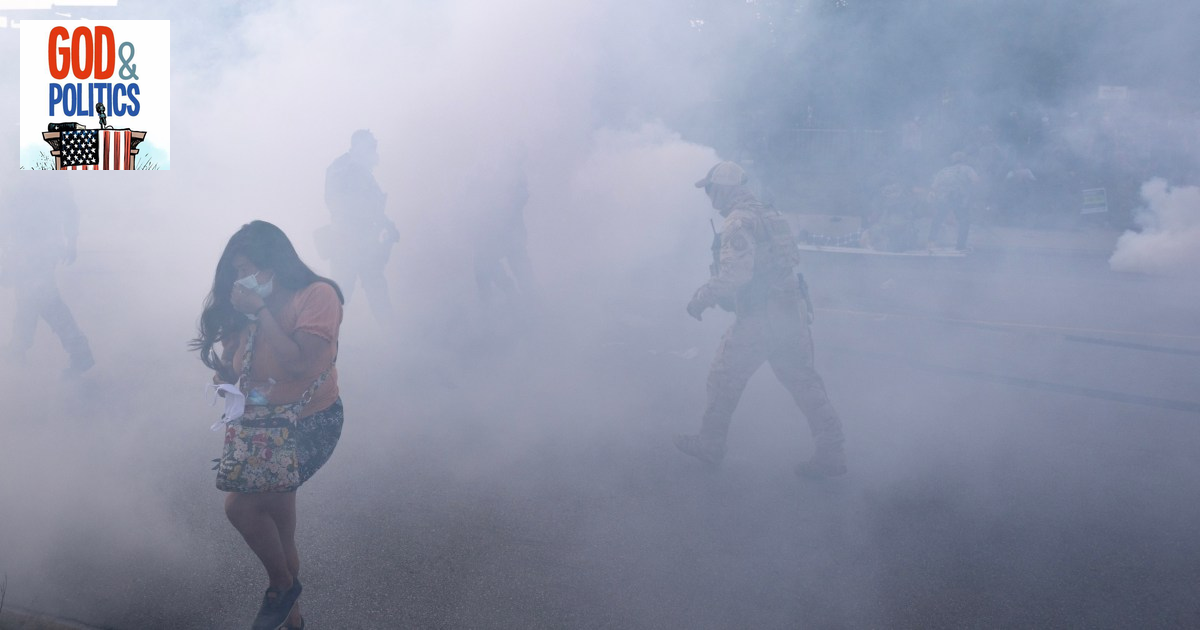
Tear gas fills the air in Broadview, Illinois, on October 4.
Federal agents have been using overwhelming amounts of tear gas at protests outside an ICE facility in Broadview, Illinois, causing nearby residents—even those not participating in demonstrations—to experience difficulty breathing when leaving their homes. This information comes from a recent lawsuit filed by journalists and protesters, accusing the Department of Homeland Security of employing “extreme brutality” to suppress and intimidate those exercising their First Amendment rights.
The lawsuit alleges that federal officers are stationed on the roof of the facility with weapons like pepper balls, paintballs, and rubber bullets pointed at protesters and journalists. It describes instances of individuals being tackled, slammed to the ground, and hit with flash grenades and tear gas indiscriminately, despite no legitimate threat or damage to property.
The Broadview ICE center handles detention and processing for immigrants arrested across the Chicago region. Protests surged during the summer, especially after reports of prolonged and cramped detention conditions, which led to efforts to block federal vehicles from leaving with detainees. In September, an expansive immigration enforcement operation known as “Operation Midway Blitz” resulted in hundreds of arrests, including a militarized raid on a Chicago apartment building, intensifying tensions and protests.
- The Reverend David Black was struck twice in the head with chemical pellets while praying peacefully near officers.
- Media workers dressed in press credentials, Raven Geary and Leigh Giancreco, were shot in the face and head with pepper balls.
- Protesters like Stephen Held were tackled and detained while filming police actions, then released without charges.
Lawyers argue that federal officers are trying to silence the press and suppress peaceful demonstrations, seeking a court order to restrain their actions. Despite a designated “First Amendment zone” established outside the facility, many protesters ignored it, protesting publicly elsewhere. Homeland Security Secretary Kristi Noem visited during a protest and publicly praised officers, urging them to take harsher actions against demonstrators.
In addition to harming protesters, federal officers have injured civilians attempting to conduct lawful activities nearby. A 16-year-old boy was shot with pepper balls while delivering belongings to detainees, and the Broadview police chief reported verbal abuse from federal agents. The use of tear gas, which can travel up to 700 feet with wind, has affected residents like Jose Juan Alvarado and his wife, who struggled to breathe after exposure. Lawsuits detail residents unable to engage in daily activities due to the noxious fumes, with some needing to keep children home due to asthma exacerbations.
Recently, local officials restricted protests outside the facility to daytime hours, citing safety concerns and disruptions to daily life. Similar aggressive tactics have been observed in other parts of Chicago, including tear gas deployment at a Hispanic grocery store after protesters tried to block an ICE SUV, prompting nearby schoolchildren to seek shelter.