Stunning Rainbow Spectra of Binary Star Captured by Telescope – Photo of the Day (Oct 2, 2025)
What is the newly captured image of Eta Carinae?
Scientists have released a new image showcasing the full spectrum of the binary star system Eta Carinae, captured from the deep reaches of Chile’s Atacama Desert using the advanced SOAR Telescope Echelle Spectrograph (STELES). This detailed spectrum provides new insights into one of the galaxy’s most dynamic and massive star systems.
STELES functions by dispersing starlight into its component colors with high precision. This technology spans a broad range of the electromagnetic spectrum, enabling astronomers to analyze atomic and molecular features in stellar atmospheres. It allows for the measurement of Doppler shifts as objects in space move, as well as assessing the physical conditions of distant stars like Eta Carinae.
The image vividly displays the full spectrum of the binary system, emphasizing its complex features. 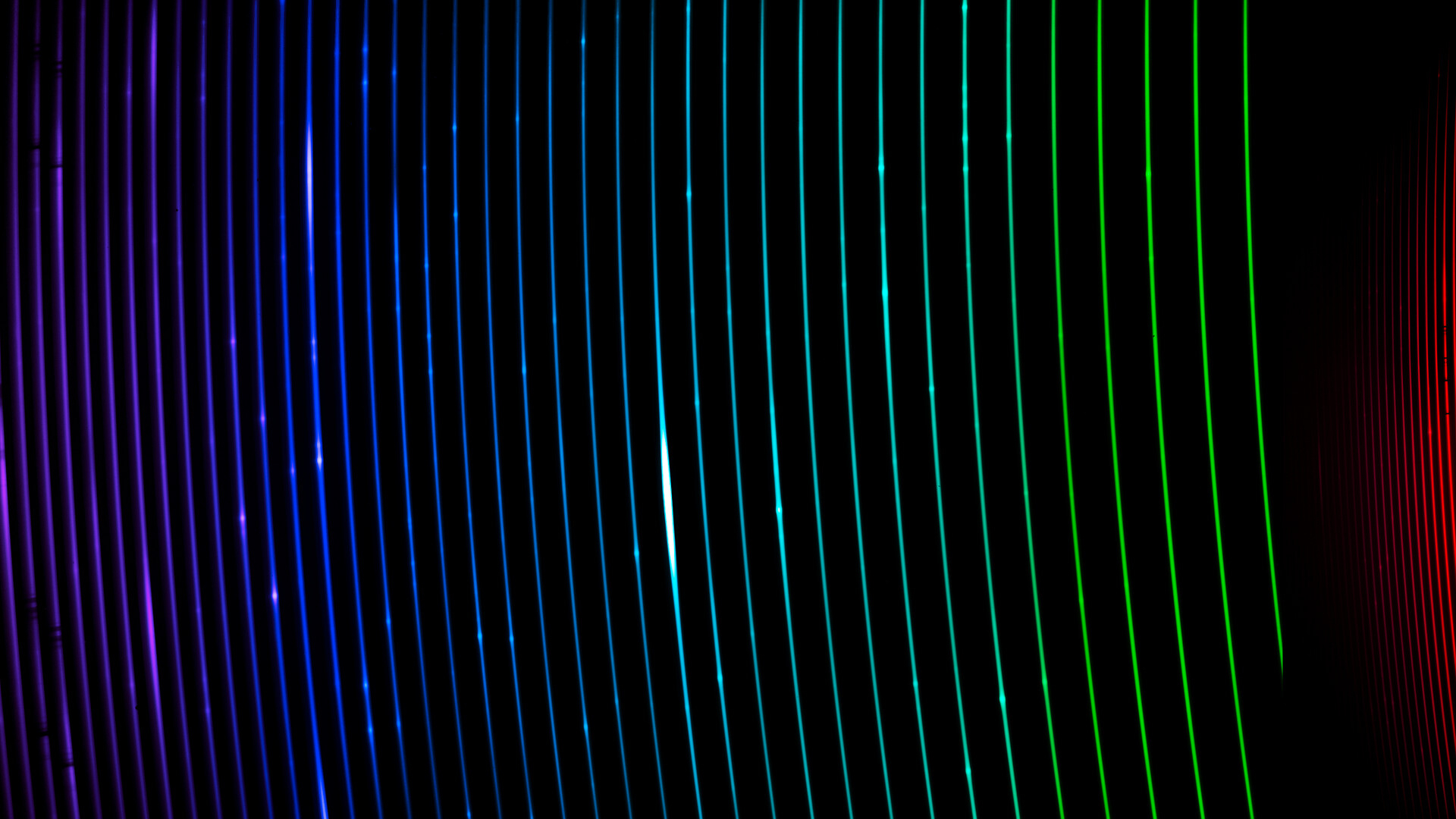
This image shows the full spectrum of the binary star system Eta Carinae.
Why is Eta Carinae so intriguing?
Eta Carinae, located about 7,500 light-years away in the Keyhole Nebula of the constellation Carina, captures the attention of astronomers because of its unusual activity. The system features at least two massive stars orbiting each other in a highly elongated path. In the 1840s, Eta Carinae experienced a dramatic “Great Eruption,” temporarily becoming the second-brightest star in the night sky before dimming and enveloping itself in gas and dust. The cause of this eruption remains a mystery, and the system is still under active study due to its apparent instability.
By using tools like STELES, scientists can investigate the outflows and winds from Eta Carinae, analyze the gas’s chemical makeup, measure the velocities of expelled material, and monitor evolving changes within the system. These observations are crucial, especially as Eta Carinae might be nearing the end of its life, offering insights into how massive stars evolve and their potential to explode as supernovae.