Progressive Lawmakers Moving to Ban Stocks: Wolves of Wall Street?
Many Progressive Lawmakers Benefit from Stock Trading Despite Criticism
Although some members of Congress, like Rep. Alexandria Ocasio-Cortez, have publicly condemned stock trading by lawmakers, data shows that nearly a quarter of her progressive colleagues have substantial investment portfolios. Filings reveal that 24 members of the Congressional Progressive Caucus have significant stock holdings, with some achieving remarkable returns.
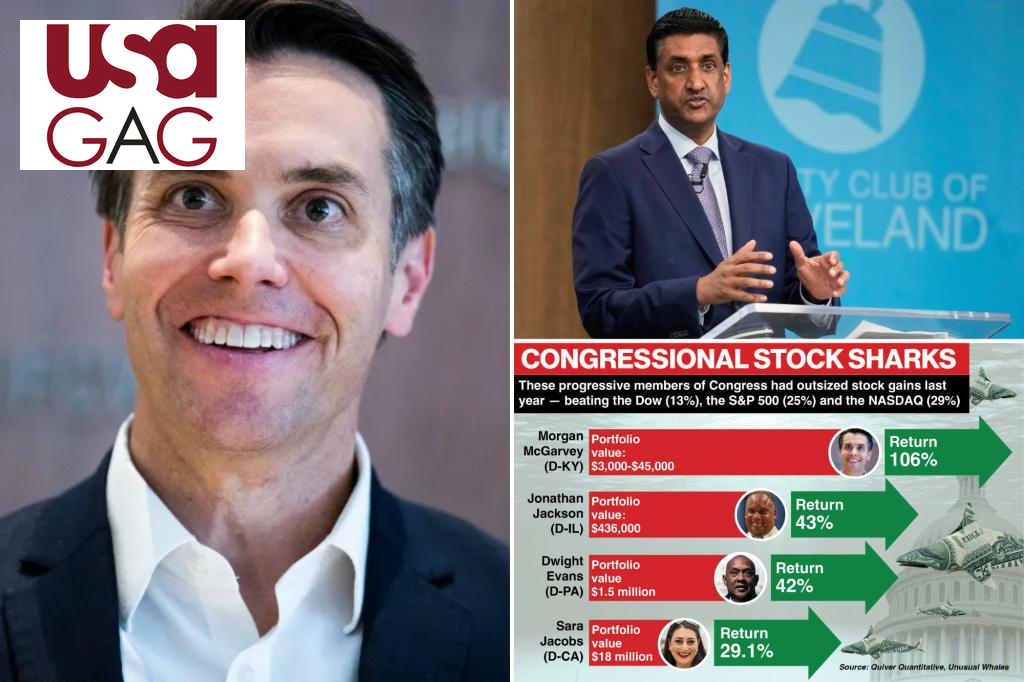
Leading in profit is Morgan McGarvey, a vice-chair of the caucus from Kentucky, who earned an impressive 106% return on his stock portfolio in 2024. This surpasses the 71% return by well-known trader Nancy Pelosi and far exceeds the S&P 500’s 25% gain for the year. McGarvey claims to represent working-class communities and has a net worth of approximately $1.6 million, despite active stock trading, including shares in the media company linked to former President Trump.
Another prolific trader is Ro Khanna from California, who has executed over 34,272 trades since his 2017 election, including 3,424 trades last year alone, trading about $30 million worth of stocks. Khanna has declared support for legislation banning stock trading among lawmakers, though critics question whether he personally trades his holdings.

Other progressives with notable investments include Rep. Val Hoyle, who failed to disclose hundreds of trades worth millions; Rep. Jonathan Jackson, who reported a 43.1% return with holdings of $1.5 million; and Rep. Sara Jacobs, granddaughter of Qualcomm’s founder, owning around $18 million in stocks. Critics argue that such active trading, especially in industries lawmakers influence, raises serious ethical concerns and suggests an urgent need for reform.
Public figures, including AOC, have long highlighted the potential conflict of interest stemming from lawmakers trading on privileged information. Despite calls for bans, many continue to profit significantly, which insiders say reflects a broader problem within congressional ethics.