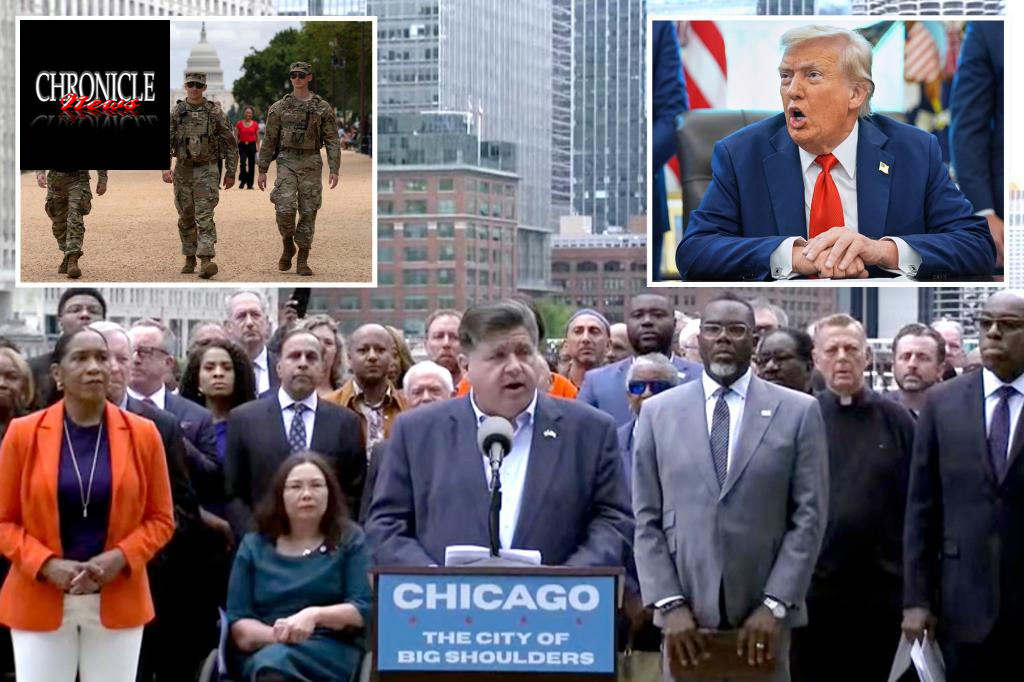
Gov. Pritzker & Chicago Mayor Slam Trump’s National Guard Threat
Chicago Mayor and Governor Oppose Federal Troop Deployment to Combat Violence
Chicago’s progressive Mayor Brandon Johnson criticized the idea of deploying the National Guard to address violence, calling incarceration “racist, immoral, and unholy.” During a heated press conference, he emphasized that locking up more criminals won’t solve crime issues, as the city continues to experience elevated violence levels despite past efforts.
Governor JB Pritzker echoed this stance, condemning President Trump’s plans to send troops. He labeled the move as overreach, illegal, and unconstitutional, warning it could turn neighborhoods into warzones and accusing Trump of seeking to intimidate political rivals. Pritzker noted that the state’s crime rates, including homicides, have declined by about 30% this year, although violence remains higher than pre-pandemic levels.
Recent reports suggest the White House has been developing plans for a potential deployment of thousands of National Guard troops in Chicago as early as September to curb crime, following similar actions in Los Angeles and Washington, D.C. Trump has confirmed in statements that he is considering sending troops, framing it as a move to combat violence.

Trump dismissed accusations that his troop deployment plans were about fighting crime, claiming instead that they were aimed at political domination. He suggested that his moves are being misconstrued as dictatorships, denying any authoritarian intent.
While crime in Chicago has fallen somewhat this year, it still surpasses other major cities in violence, with a homicide rate much higher than Los Angeles or New York. Officials from the city and state insist they have made no formal requests for federal intervention, learning of the plans through media reports, not direct communication.

Despite acknowledging violence reduction, local leaders argue that the deployment is politically motivated. Trump maintains that he wants to assist if asked but criticizes local officials for their resistance and mismanagement, hinting at a potential for vague or limited military involvement. Historically, National Guard troops sent to U.S. cities have primarily protected federal property or assisted federal agencies, with deployment scope varying based on jurisdiction and consent.