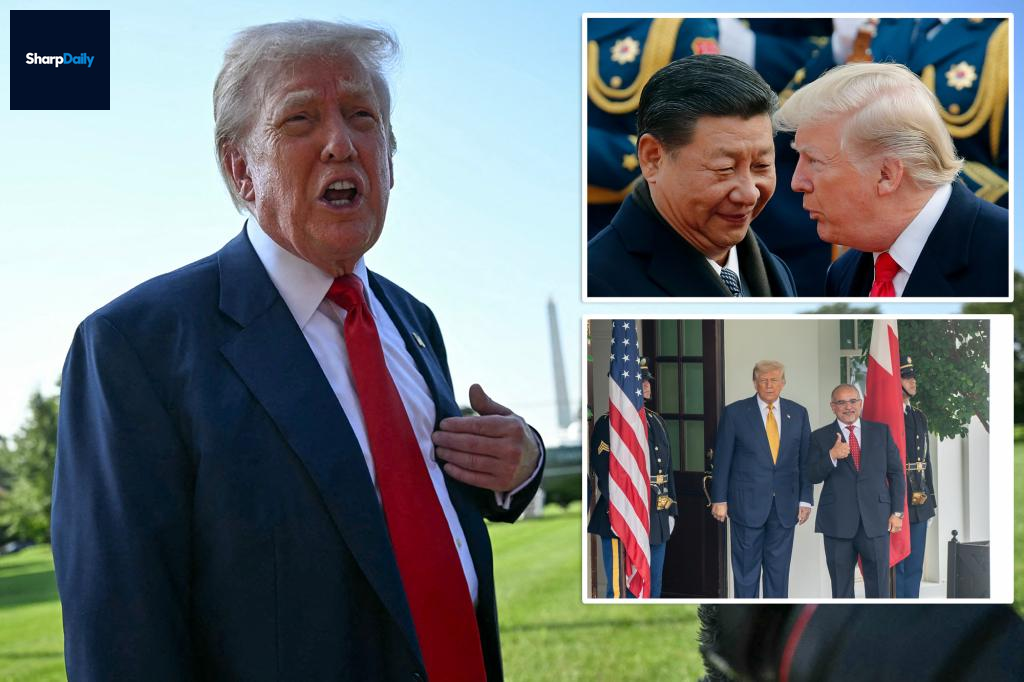
Trump Gains Momentum Ahead of August 1 Tariff Deadline After Asian Trade Deals
President Trump Gains Momentum with Asian Trade Agreements
This week, President Trump strategically strengthened his negotiating position by forming trade agreements with three Asian countries, providing him with a boost ahead of the upcoming August 1 deadline for reciprocal tariffs.
He negotiated with Japan to implement a 15% tariff on exports to the US, complemented by a commitment from Japan for $550 billion in new investments in America — which he described as a “signing bonus.” Meanwhile, Indonesia and the Philippines agreed to accept a 19% tariff on their goods while enjoying zero tariffs on US products.
Experts view these deals as an unexpectedly hard bargain for the US, with some noting the inclusion of significant investments. An international trade professor from Harvard commented that Trump’s deals, especially with Japan, resemble a high-stakes dealer exchanging concessions for US stakes, reminiscent of recent mergers involving Nippon Steel.

Previously, Trump announced deals with Vietnam, which agreed to a 20% tariff (or 40% for Chinese-sourced items), and with the UK, which committed to 10% tariffs on steel and cars, in exchange for market access for American agricultural products. Meanwhile, the US continues to impose a 30% tariff on Chinese goods, with China retaliating with a 10% tariff on US imports, illustrating ongoing trade tensions.
Despite the tariffs, inflation remains relatively stable; consumer prices grew by 2.7% in June. Some critics, however, warn about the long-term impact of higher tariffs on industries like automotive manufacturing, citing recent earnings slumps of companies like General Motors and Stellantis.
Trade experts debate the political viability of these agreements, especially with India facing challenges over agriculture reforms, and questions remaining about future negotiations with China. The current climate is complicated by China’s upcoming political events and economic issues, such as a housing market downturn.
Overall, analysts suggest President Trump’s aggressive trade tactics are aimed at pressuring China and the EU, while maintaining a strategic advantage in ongoing trade negotiations.