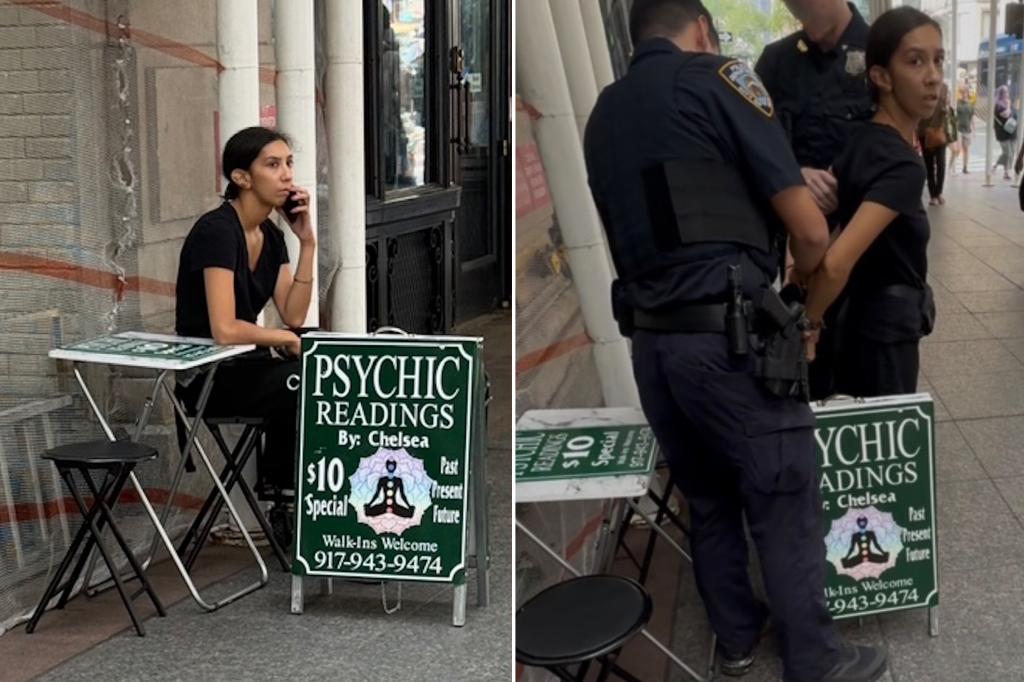
NY’s Rarely Used Fortunetelling Law Explained
New York Law Targets Fortune Telling Scams Amid High-Profile Cases
A recently spotlighted law in New York aims to combat fraudulent practices among fortune tellers, especially those preying on vulnerable individuals. The legislation seeks to prevent scammers from deceiving people out of large sums for worthless spiritual cleanse or curse removal services.
Supporters argue the law is essential to protect the public from con artists claiming supernatural abilities to influence or exorcise evil spirits. “Anyone can fall victim to these scams during a vulnerable moment in life,” said retired NYPD officer Bob Nygaard.
Established in 1967, the law classifies fortune-telling fraud as a Class B misdemeanor, carrying penalties of up to 90 days in jail or a $500 fine—a significant increase from the previous maximum of 15 days and $250 fine, when these acts were charged as disorderly conduct.
The law explicitly makes it illegal for individuals to charge fees claiming to tell fortunes or influence spirits using occult practices. However, fortune-telling remains legal when presented as entertainment, provided no financial expectations are implied.
Recent Cases Highlight Enforcement
This week, two incidents involve purported clairvoyants accused of exploiting victims. Pamela Ufie allegedly swindled over $50,000 from a hotel maid to rid her of evil spirits, a case that was dropped from criminal charges and replaced with grand larceny and fraud allegations. 
Another case involves Hemath Kumar Muneppa, accused of conning an elderly woman out of $60,000 through spiritual services. He was charged with grand larceny and fortunetelling but was released without bail.
Legal Challenges
Legal experts note that convicting fortune tellers can be difficult. “It’s nearly impossible to prove they don’t genuinely believe in their practices when they claim religious or spiritual intent,” states a recent law review article.
Defense attorneys emphasize the presumption of innocence until evidence is presented in court, maintaining that establishing fraud in such cases remains a complex challenge.