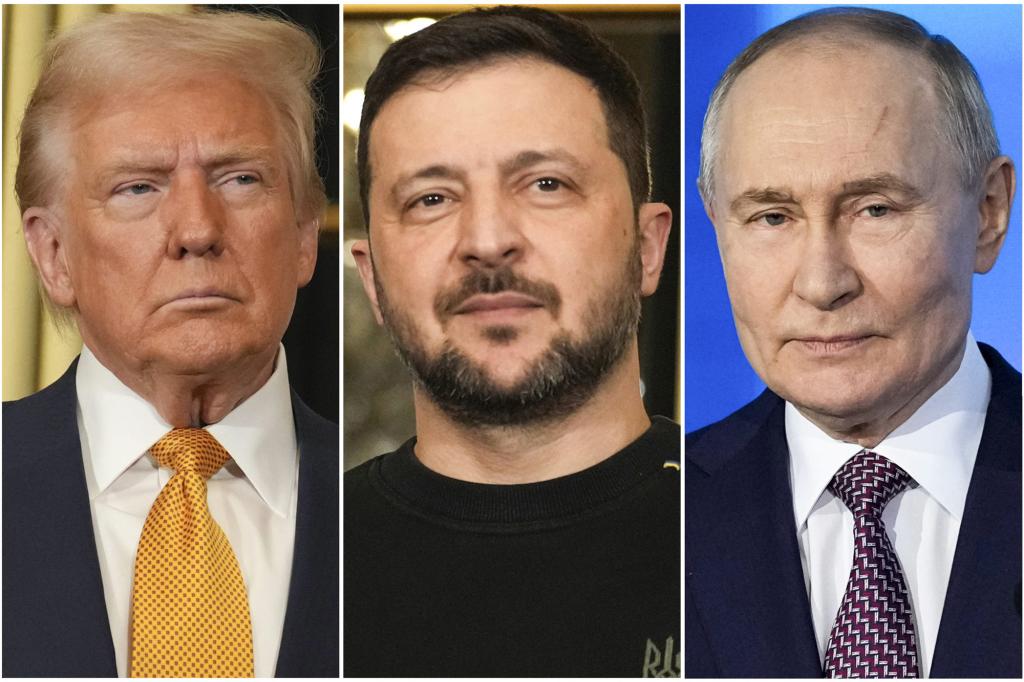
Trump’s 50-Day Russian Sanctions Pause: Costly Outcome or Empty Win?
President Trump Proposes 50-Day Sanction Deadline Amid Ongoing Ukraine Conflict
President Donald Trump has expressed a willingness to engage in negotiations, often giving adversaries multiple opportunities to broker agreements. However, he claims to have believed he secured a deal with Vladimir Putin four times to cease hostilities in Ukraine, only for those efforts to fall short.
Recently, Trump threatened to enforce stringent sanctions on Russia if Putin refused to agree to a cease-fire within 50 days. Critics interpret this as a cautious move, as Moscow responded swiftly by intensifying attacks on Ukrainian civilian infrastructure, including a shopping center and energy facilities. This escalation signaled that Putin was not interested in compromise and dismissed diplomatic overtures.
Ukrainian President Volodymyr Zelensky emphasized that Russia’s leader is deliberately avoiding resolution, indicating that Putin has no intention of making concessions anytime soon. The 50-day window, although presented as a deadline, may inadvertently encourage Russia to escalate the violence to seize as much territory as possible before the period ends.
Impact of Sanctions and Future Strategies
Trump’s proposed sanctions include an outright 100% tariff on Russian exports—though these are limited—and a secondary tariff on countries trading with Russia, currently set at 100%, with plans to increase to 500%, targeting primarily China. China relies on Russian oil and has economic incentives to continue its support, but will face tough choices as these tariffs make trade more costly.
Reducing Russian export revenues could further weaken Putin’s already fragile economy. After years of ignoring Western sanctions, intensified measures could pressure Moscow significantly—especially if key countries like China respond to the tariffs by adjusting their trade policies.
Call for Immediate Action
While Trump views himself as a dealmaker seeking peaceful resolutions, the 50-day pause might be seen as a delay that emboldens Russia. Experts argue that toughening sanctions now is essential to deter further aggression. The message is clear: strategic economic pressure must be applied immediately to influence Russian behavior and prevent more needless loss of life.
It’s time to act decisively—imposing sanctions now rather than waiting for an uncertain deadline.