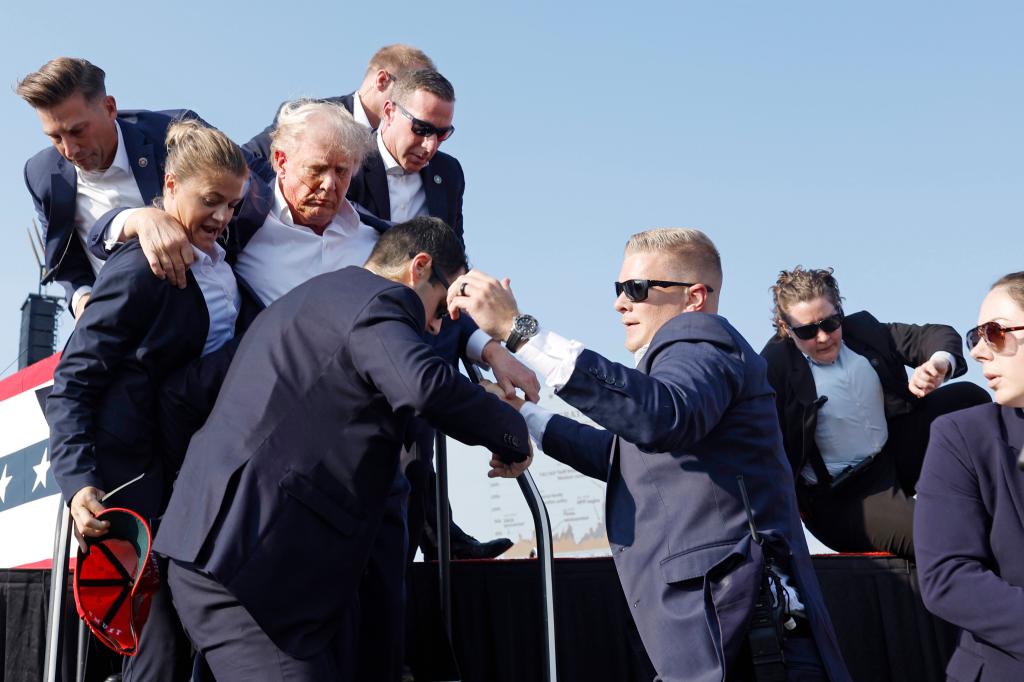
Butler Shooting Reveals Shocking US Secret Service Failures
Failures of the Secret Service Led to Nearly Tragic Incident at Trump Rally
Investigations by Senate committees have revealed alarming failures within the Secret Service that nearly allowed an assailant to target former President Donald Trump during a rally in Butler, Pennsylvania. The detailed reports expose a series of critical mishaps with deadly potential consequences.
Firstly, the agency refused to allocate anti-drone technology for the event, citing resource conflicts with national conventions. Additionally, they failed to assign a liaison for coordination between agents and local law enforcement, which hampered communication. On the day of the rally, drone detection equipment malfunctioned, leaving the venue vulnerable to threats.
The assailant, Thomas Crooks, flew a drone over the rally to scout the area, but secret service officers were engaged in repairs due to poor training and faulty hardware. Worse, communication breakdowns—amplified by poor cell reception—meant local police and Secret Service couldn’t coordinate effectively. Ultimately, a counter-sniper team neutralized Crooks, preventing more tragedy, but not before he fatally shot a rally-goer and injured others, including the former president.
Compounding the failures, the Secret Service had planned to use large farm equipment as a barrier but instead relied on a jumbotron and flags because no one informed the advance team of the active threats. The lack of updated security measures and missed warnings from intelligence officials—who had information about a significant threat from Iran ten days prior—highlight systemic flaws.
These deficiencies point to a glaring lack of communication, training, and preparedness within an agency with a hefty $3.1 billion budget. Since the incident, the Secret Service has taken steps like acquiring military-grade drones and establishing better communication channels. However, experts insist that procedural and cultural reforms are essential to prevent such lapses from recurring.
Ultimately, the Butler incident underscores the urgent need for a comprehensive overhaul of the agency’s protocols to ensure it can effectively protect America’s leaders in an increasingly complex threat environment.