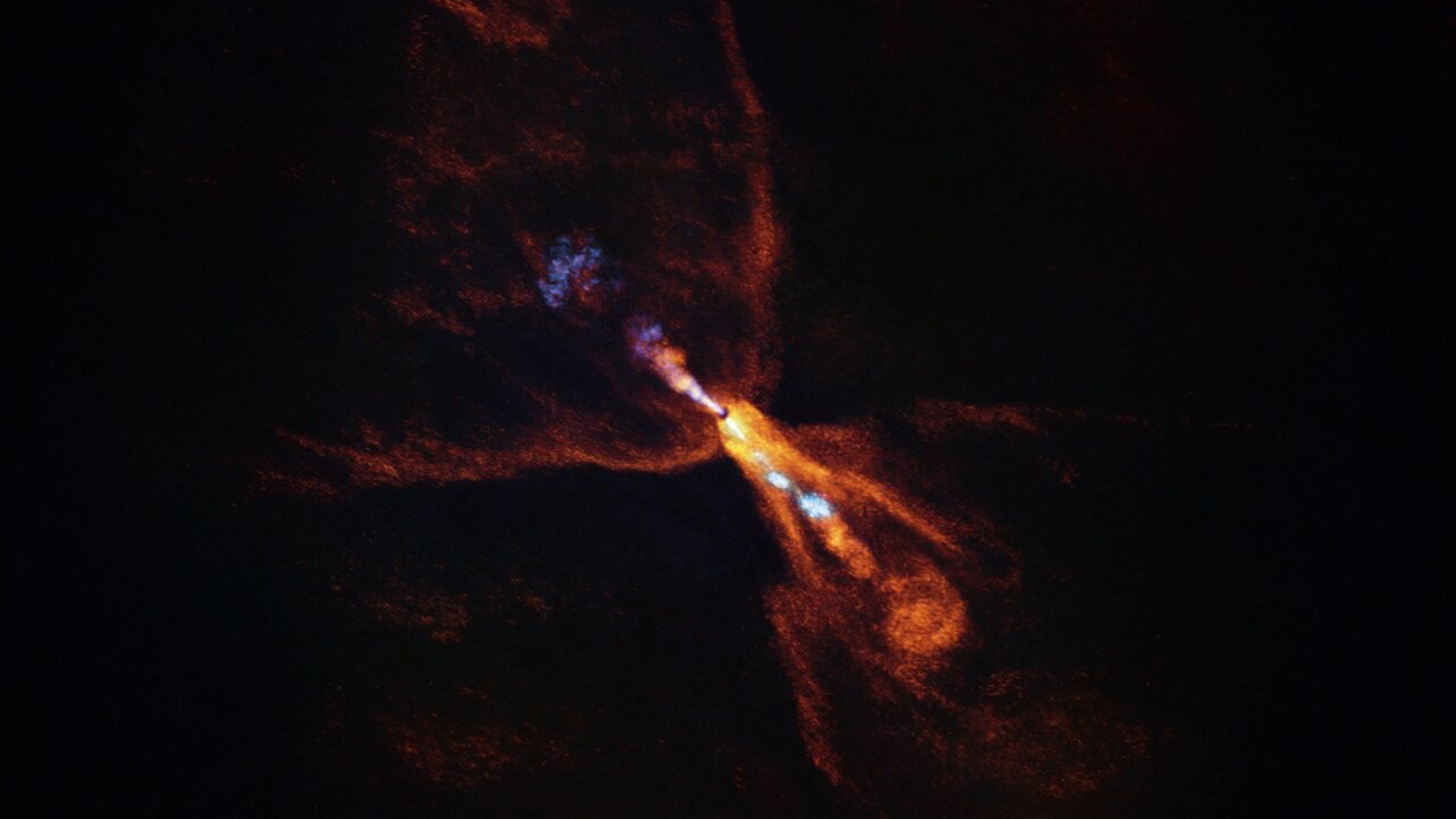
First-Ever Video of a Planetary System Birth Unveiled!
Newly Discovered Star System Reveals Early Planet Formation
Astronomers have observed the formation of a planetary system that could become similar to our solar system. This discovery provides a valuable glimpse into how planets develop around young stars, offering insights into the origins of our own cosmic neighborhood approximately 4.6 billion years ago.
The breakthrough was achieved by pinpointing the moment when primordial material begins to clump together to form planets around a young star named HOPS-315, located about 1,300 light-years from Earth. Data from the Atacama Large Millimeter/submillimeter Array (ALMA) in Chile, combined with observations from the James Webb Space Telescope (JWST), were key to this discovery.
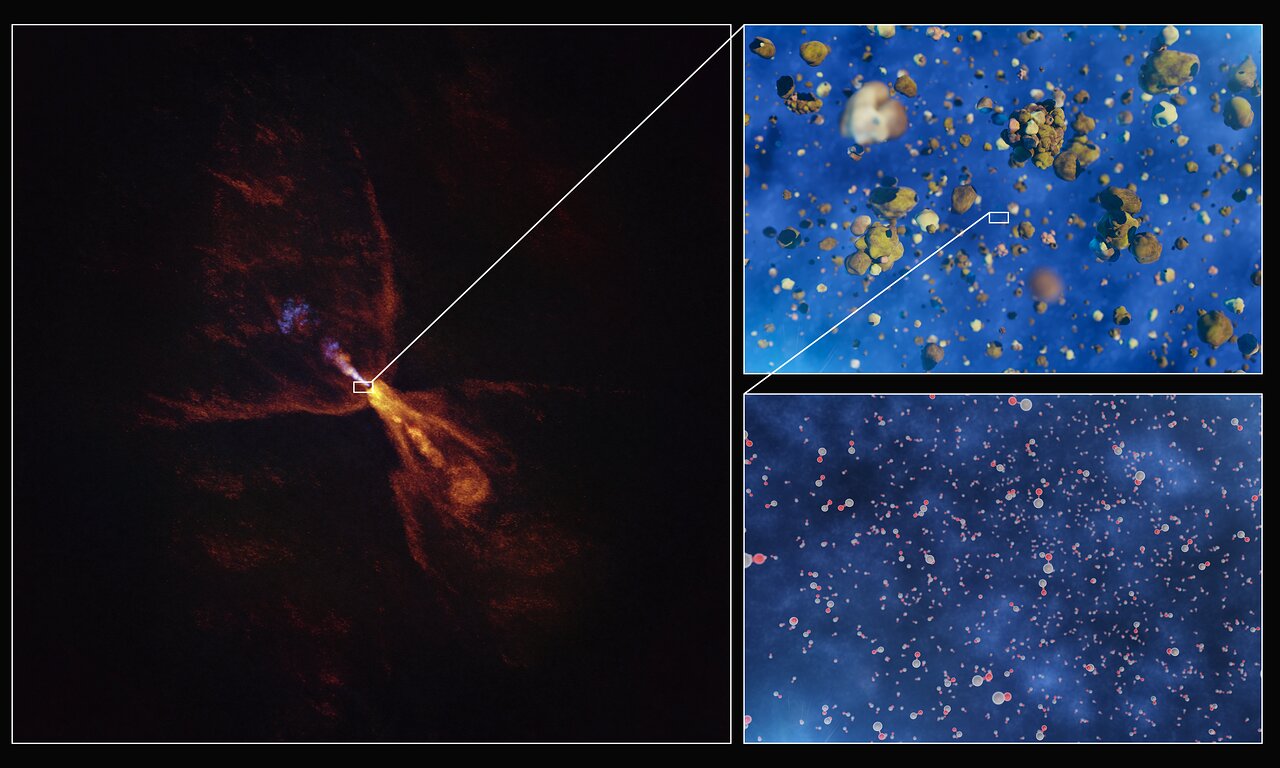
For the first time, scientists identified the earliest signs of planet formation in progress around a star other than our sun. They observed mineral traces, particularly silicon monoxide, both as gas and in crystalline form within the protoplanetary disk—a swirling mass of gas and dust that surrounds young stars and from which planets coalesce. This indicates that mineral condensation is just beginning in this system, mirroring early solar system conditions.
The team also detected these minerals in a limited region of the disk situated at a distance comparable to the main asteroid belt in our solar system, suggesting that HOPS-315 serves as an excellent model for understanding planetary origins.
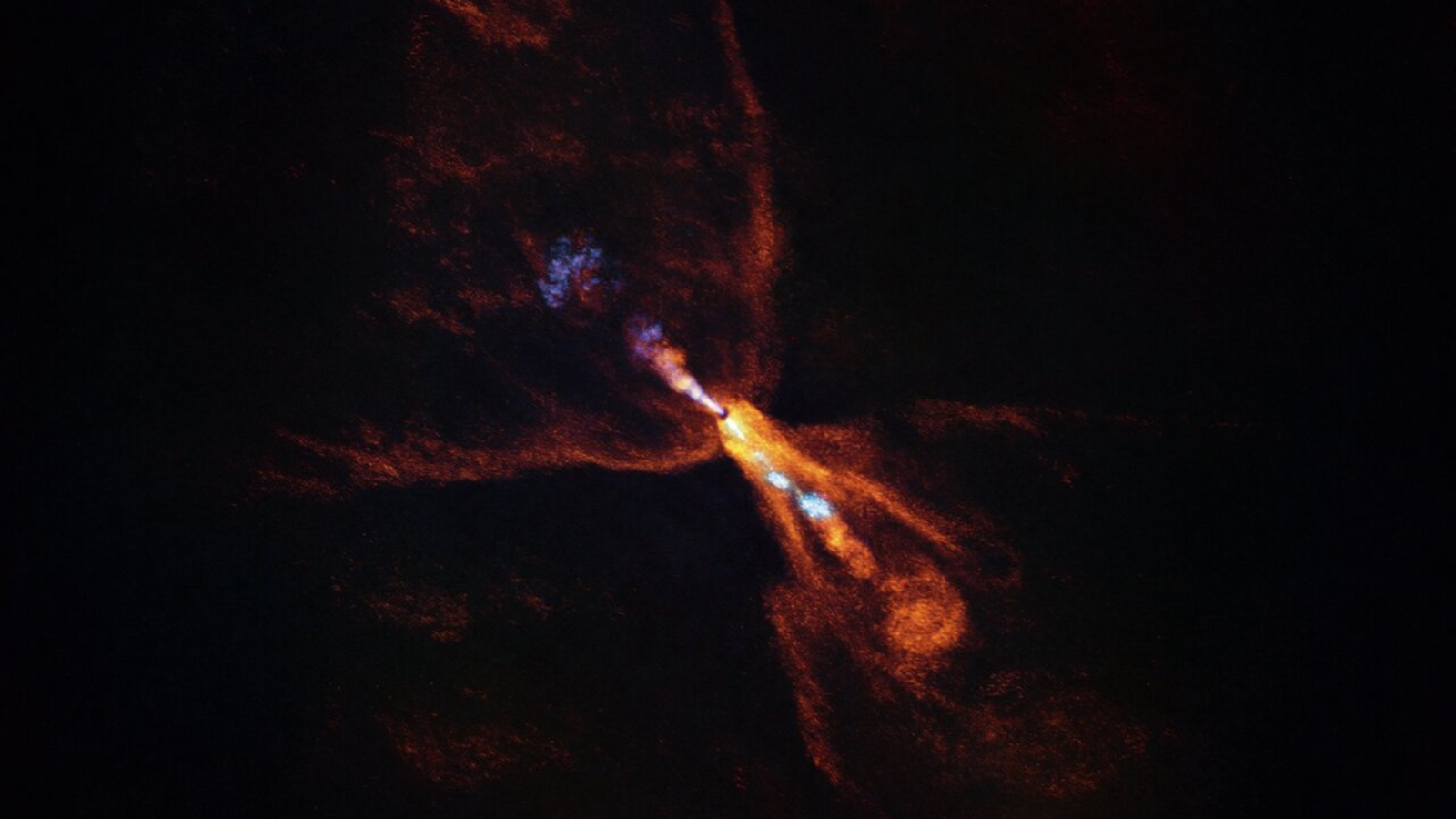
Experts describe this as a “snapshot” of a nascent solar system, akin to our early planetary environment. The discovery offers a rare opportunity to study the processes that shaped our own cosmic history and the birth of planets in similar systems.