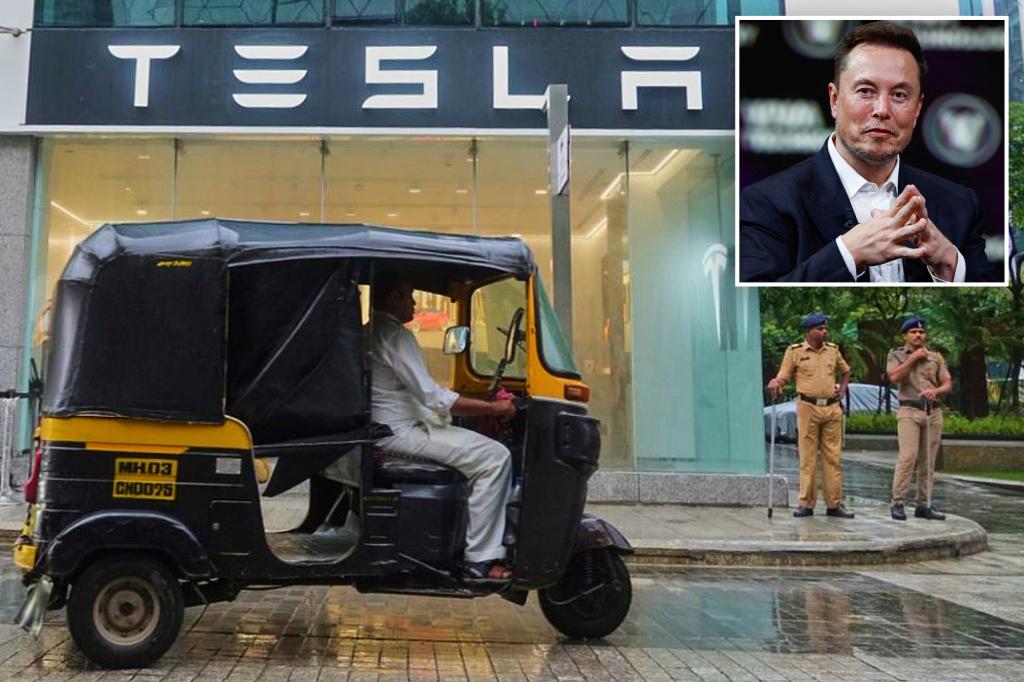
Tesla Launches in India — Struggling with High Prices
Tesla Opens Its First Showroom in India Amid Market Expansion
Electric vehicle pioneer Tesla has launched its inaugural showroom in Mumbai’s upscale Bandra-Kurla Complex, marking its official entry into India’s automotive market. The flagship store aims to introduce Tesla’s lineup to Indian consumers, with the first models to arrive via imports.
The company’s arrival signifies increased investor confidence and aligns with India’s push to boost electric vehicle adoption, aiming for EVs to represent 30% of new car sales by 2030. Currently, EVs account for just over 2% of total sales, and Tesla’s presence could accelerate this shift.
The initial offerings include the Model Y, with prices starting at approximately 6.78 million rupees ($79,089) for the long-range variant. Delivery is scheduled to begin in the third quarter. Compared to the U.S. market, where the same model costs around $44,990 without incentives, Tesla’s vehicles are priced higher in India, partly due to import taxes.
Initially, Tesla faced high import duties of up to 100%, making vehicles less affordable. The company lobbied for reduced taxes to test the market, which led the government to introduce a policy lowering import tariffs to 15% for EVs under $35,000, provided Tesla commits to local manufacturing within three years. However, Tesla has since expressed no immediate plans to establish manufacturing facilities in India.
Despite earlier enthusiasm, Elon Musk expressed concerns in 2019 about tariffs potentially doubling vehicle prices, which could limit affordability. Following negotiations, Musk was expected to visit India to discuss local manufacturing investments but canceled the trip, citing Tesla’s commitments elsewhere.
Additionally, Musk’s broader goals in India include launching Starlink satellite internet services, which has recently gained regulatory approval but still awaits spectrum allocation for full launch.
