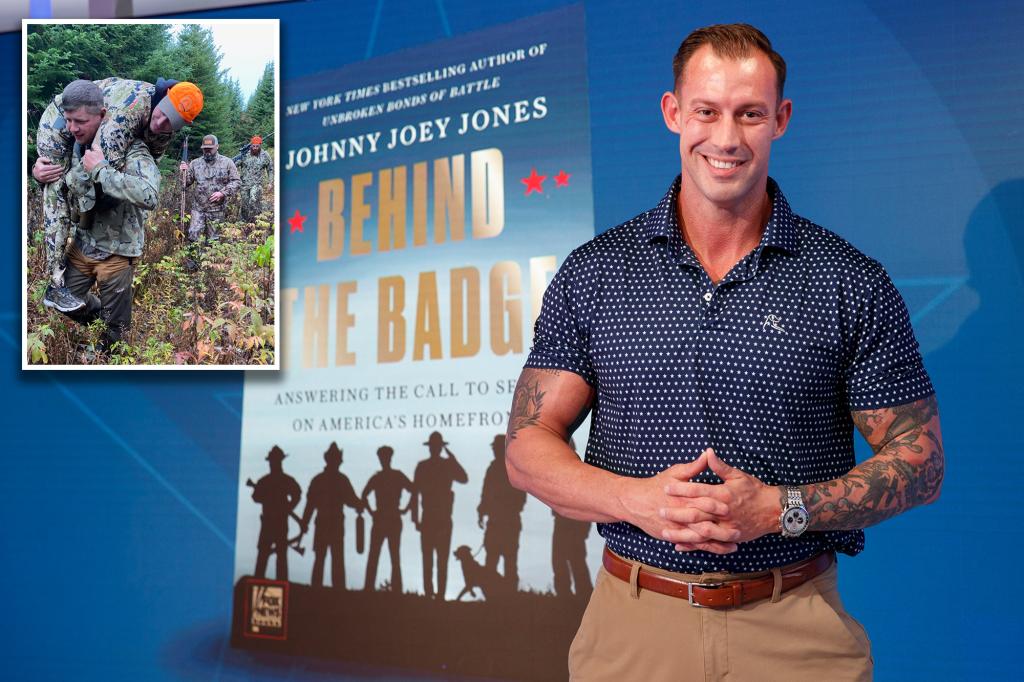
Joey Jones Honors First Responders in New Book: “If Life Feels Easy, You’re Not Living”
Johnny Joey Jones’s Book Tops Best Sellers Amidst War’s Distractions
Fox News contributor Johnny Joey Jones, a former Marine Corps bomb technician, experienced a surprising achievement when his latest book debuted at No. 1 on The New York Times Best Sellers list. Despite a busy promotional schedule, the launch coincided with a significant world event, diverting his focus from publicity efforts.
“It was quite a shock,” Jones shared. “The week we chose to release the book, a war broke out, and I had to shift my attention to covering that instead of promoting the book. You can’t promote a book when the news is filled with reports of bombs and rockets.”
The book, titled Behind the Badge: Answering the Call to Serve on America’s Homefront, chronicles Jones’s conversations with nine first responders—many friends, some family—revealing the challenges and sacrifices of their duties. The narrative offers an authentic insight into their lives and the burdens they bear.
Inspired shortly after finishing his previous book about veterans, Jones aimed to spotlight first responders, emphasizing their heroism and struggles. Despite his own life story being profound, he chose to focus on others—highlighting their impact and resilience.

Marking nearly 15 years since his injury in Afghanistan, Jones reflects on his journey. In 2010, he stepped on an IED in Safar Bazaar, losing both legs and witnessing the death of his comrade. He now wears prosthetics and advocates for resilience.
He believes that life’s difficulties are universal, citing examples from personal adversity to broader tragedies faced by others. Despite his own challenges, Jones chooses to face life with purpose—maintaining eye contact, embracing physical challenges, and refusing to be defined by his injury.
His decision to walk on his own legs, rather than use a wheelchair, symbolizes his approach to life’s obstacles. “I want to look people in the eye when I enter a room,” he explains, emphasizing dignity and perseverance over limitations.
Jones’s dedication extends beyond personal endurance. He also highlights the lack of mental health support for first responders, contrasting it with the recognition and resources available to veterans. He hopes his book will help change this disparity and foster a broader awareness of the sacrifices made by first responders every day.