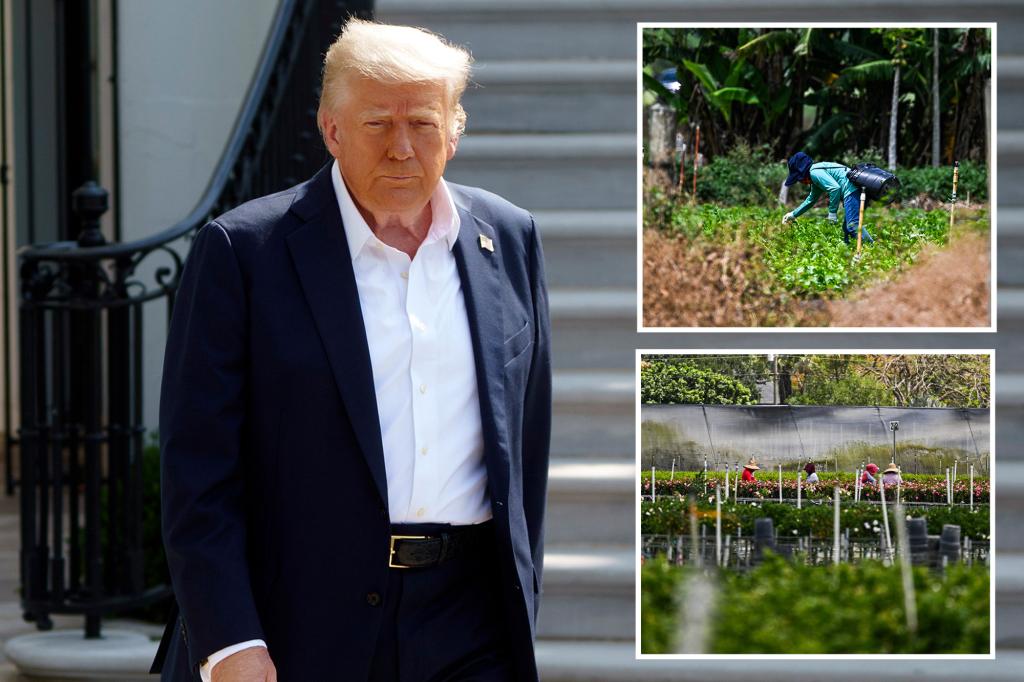
Trump Launches New Program for Migrant Workers Amid Farmer Backlash
Trump Administration Introduces New Visa Program Amid Farm Worker Concerns
The current administration is rolling out a new visa system aimed at migrant workers, seeking to address worries from farmers and hotel owners about labor shortages caused by recent mass deportation raids.
The Department of Labor has established the Office of Immigration Policy, which will facilitate faster processing of visas for foreign workers. Officials emphasize that this initiative is strictly not amnesty or a pathway to citizenship for illegal immigrants; eligibility is limited to foreign workers applying from outside the U.S., excluding those who are in the country illegally.
Farmers wishing to hire seasonal agricultural workers through H-2A visas must demonstrate a lack of qualified local labor. Despite access to an unlimited H-2A program, many farmers have avoided paying higher wages required by the program, leading to concerns over labor shortages.

The administration’s efforts aim to streamline visa issuance and reduce regulatory barriers believed to be incentivizing illegal hiring. However, details on how exactly the process will be expedited remain unclear.
Recently, President Trump paused ICE raids at farms and hotels after industry leaders voiced concerns about disruption, citing that long-term workers are being driven away and replaced by unspecified criminals amid ongoing immigration crackdowns. The president emphasized the importance of protecting farmers while removing criminal elements from the U.S.

A governmental advisor noted that the new visa initiative signals ICE to refrain from targeting farmers. Critics argue that farmers have had ample warning to adjust their practices, with some attributing labor shortages to their reluctance to pay required wages or invest in proper housing and transportation for workers.
The Department of Labor has yet to comment on the new visa program. Overall, the policy represents an effort to balance immigration enforcement with the needs of the agricultural sector.