Texas Floods Ignite Clash: MAHA vs. Tech Right
Texas Floods Raise Questions Over Weather Modification Technology

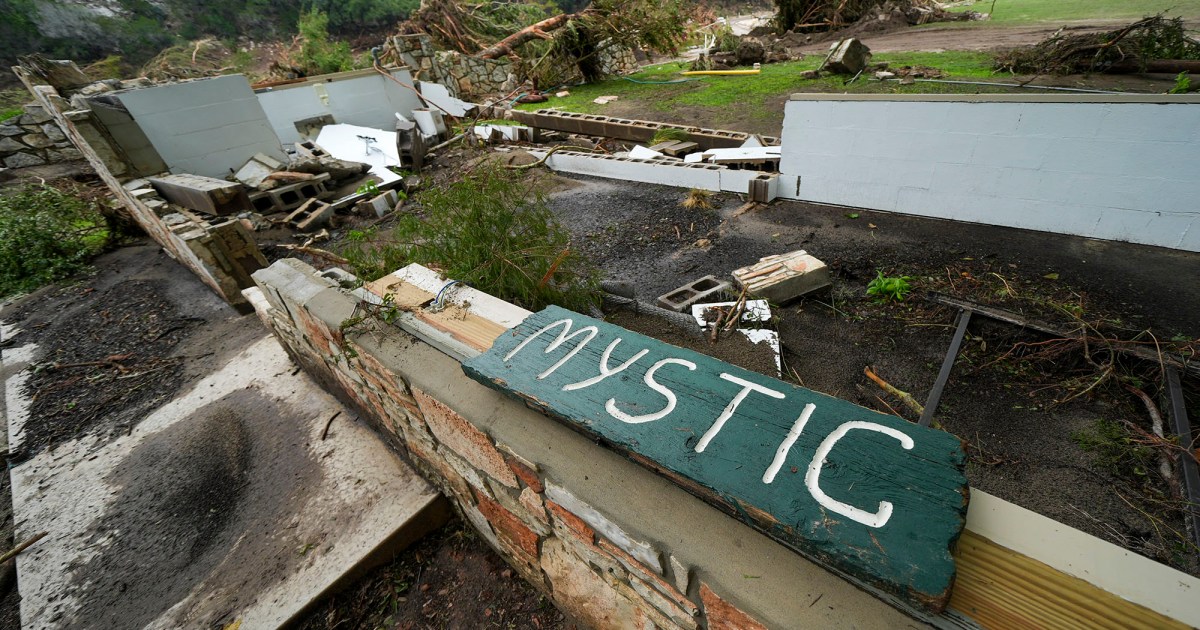
The banks of the Guadalupe River in Hunt, Texas, after a sudden flood swept through the area on July 5, 2025.
For years, a debate has simmered between those who oppose human interference in weather patterns—often religious conservatives—and tech advocates eager to harness geoengineering for environmental management. The recent catastrophic floods in Texas have intensified this discourse.
Prior to the floods, a California-based company named Rainmaker was engaged in cloud-seeding efforts in West Texas. Using drones to disperse silver iodide into clouds, the technology aims to stimulate rainfall, and the company operates under the oversight of Texas authorities. Though the practice dates back to 1947, it remains controversial.
Following the floods, many internet commentators speculated that Rainmaker’s cloud-seeding efforts contributed to the deluge. Critics argued that manipulating weather could be responsible for the devastating event, with some even labeling it as “murder.”
Despite scientific consensus that cloud-seeding cannot produce the amount of rainfall observed—an estimated 100 billion gallons in a few hours—public figures and lawmakers called for bans on weather modification. Rep. Marjorie Taylor Greene announced plans to introduce legislation making weather alteration a felony, while states like Florida and Tennessee have moved toward outlawing such practices.
Meanwhile, Rainmaker’s CEO, Augustus Doricko, has dismissed allegations linking their activities to the floods, emphasizing the technological limitations of cloud-seeding. He frames his mission as benefiting the environment and aligning with divine stewardship, citing his religious beliefs and connections with conservative Christian groups.
Despite opposition from some political and scientific sectors, other states are actively contracting with Rainmaker and similar companies, especially in drought-prone regions like Arizona and California. The debate embodies a broader cultural divide, with progressive voices advocating climate solutions and conservatives emphasizing natural order and divine authority.
Public controversy persists, with some emphasizing transparency and seeking accountability for weather modification activities, while others view such skepticism as unwarranted interference in technological progress.