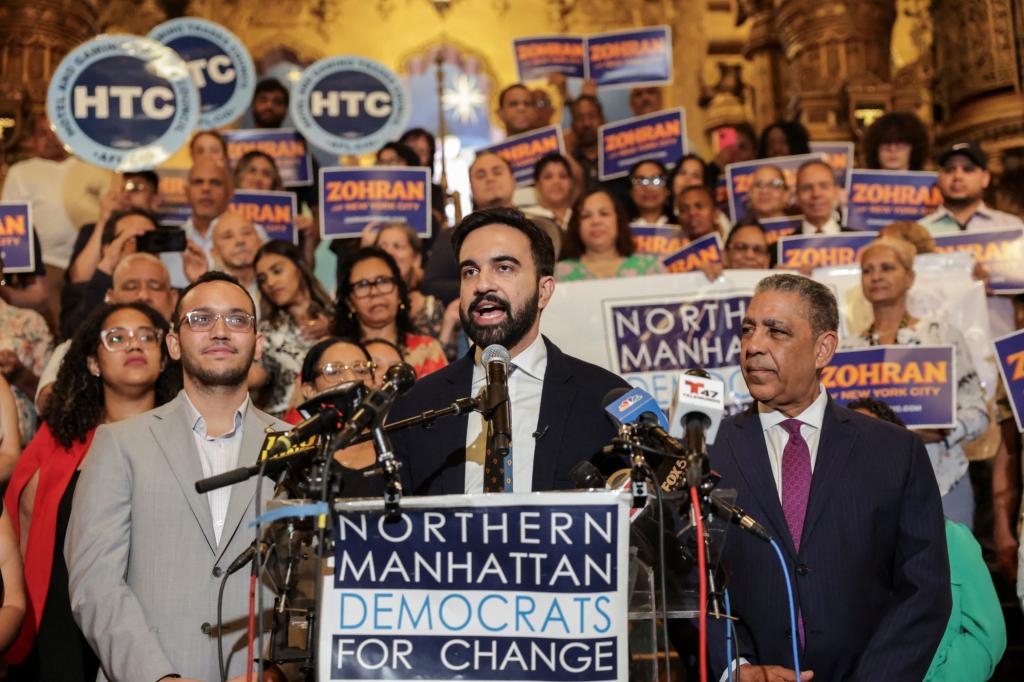
Mamdani: The Latest Mayor Candidate with Outlandish World-Police Plans
Should a Mayor Have a Foreign Policy?
It’s unusual for a mayor to be involved in foreign policy, given their limited powers. While they may oversee local police, they lack control over military assets like fighter jets or bombers. Yet, some candidates speak as if they possess such authority.
The front-running Democratic candidate for mayor, Zohran Mamdani, has recently made headlines with provocative foreign policy claims.
Statements on International Leaders
Mamdani has asserted that if elected, he would pursue the arrest of foreign leaders visiting New York, such as Israeli Prime Minister Benjamin Netanyahu and Indian Prime Minister Narendra Modi. He claims such actions align with his interpretation of international law, despite the fact that a mayor has no legal authority to detain foreign heads of state.
This hypothetical approach raises questions about the actual powers of local officials and the appropriateness of such interventions. Critics argue that if a mayor could enforce international law arbitrarily, it might be an argument for relocating the United Nations headquarters out of New York, given the city’s traffic congestion and political theatrics during the UN General Assembly.
Diplomatic Theater in New York
Past UN gatherings have seen unorthodox speeches, such as Iran’s “president” Masoud Pezeshkian claiming Iran has never started a war—despite regional conflicts involving Yemen, Syria, Lebanon, Iraq, and Gaza—raising skepticism about such assertions.
Similarly, Turkey’s President Recep Tayyip Erdogan frequently visits New York, despite ongoing disputes over Cyprus and his country’s regional policies, yet calls for his arrest remain absent from mainstream political discourse.
Legal and Political Missteps
Mamdani’s talk of arresting foreign leaders ignores the fact that the U.S. has not signed the Rome Statute and does not participate in the International Criminal Court (ICC). The court, often criticized for bias and politicization, has little legitimacy in American law. Attempts to hold Israeli leaders to account through international courts—while ignoring issues in other nations—highlight the court’s uneven priorities.
Therefore, Mamdani’s aggressive foreign stance seems to serve two purposes: revealing his own prejudiced views and attempting to elevate his profile through grandstanding, much like London’s Mayor Sadiq Khan, who criticizes U.S. elections from afar while neglecting local issues.
Ultimately, how Mamdani or any candidate plans to improve safety and infrastructure in New York remains unanswered. Their foreign policy posturing appears disconnected from the daily concerns of residents, emphasizing the tendency of some Mayors to grandstand abroad when their city’s problems persist at home.