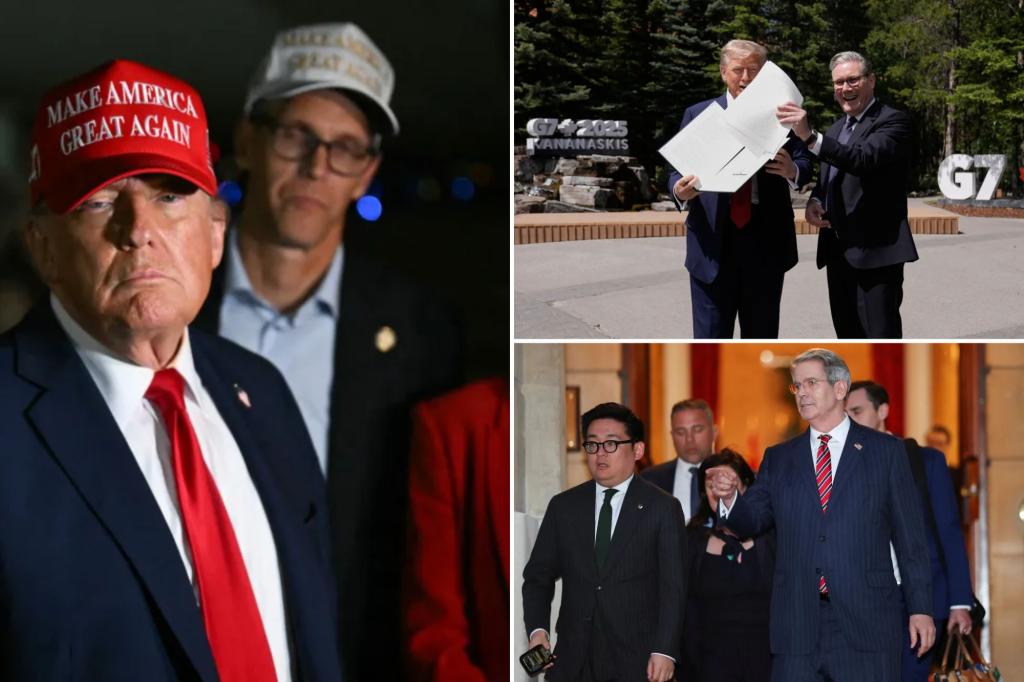
Trump Imposes Reciprocal Tariffs Up to 70%—A ‘Bargain’ for America
President Trump Announces New “Reciprocal” Tariffs on Unresolved Trade Partners
President Trump has revealed plans to begin implementing retaliatory tariffs starting Friday on countries that have not reached preliminary trade agreements with the United States. The new tariffs could reach rates as high as 60% to 70%, with approximately 10 to 12 countries receiving official notices each day.
Trump stated that by July 9, most countries would be informed of their specific tariff rates. These rates are expected to vary significantly, with some reaching 60-70%, surpassing previous measures introduced in April, which set a baseline tariff of around 10%. Notably, prior tariffs on countries like Cambodia, Laos, and Madagascar ranged from 47% to 49%, based on trade imbalances.

The tariffs are being raised amid optimistic economic indicators, including strong job creation in June, inflation near the Federal Reserve’s target, and record stock market highs. However, critics fear that increased tariffs could lead to higher prices for imported consumer goods.

Trump has already secured tentative trade deals with China, the UK, Vietnam, and has outlined a framework with India. These agreements only partially mitigate the new tariffs, with some, like the UK, exempting major sectors such as cars, steel, and aluminum from higher duties in exchange for opening markets for US meat and ethanol.
While most trade with Canada and Mexico remains governed by the USMCA, tariffs have been applied to other imports to combat issues like illegal immigration and illicit drug flow. Despite focusing primarily on top trading partners, the administration emphasizes its broader strategy to improve US industries, particularly high-tech and military manufacturing, rather than low-skill apparel production destined for export.