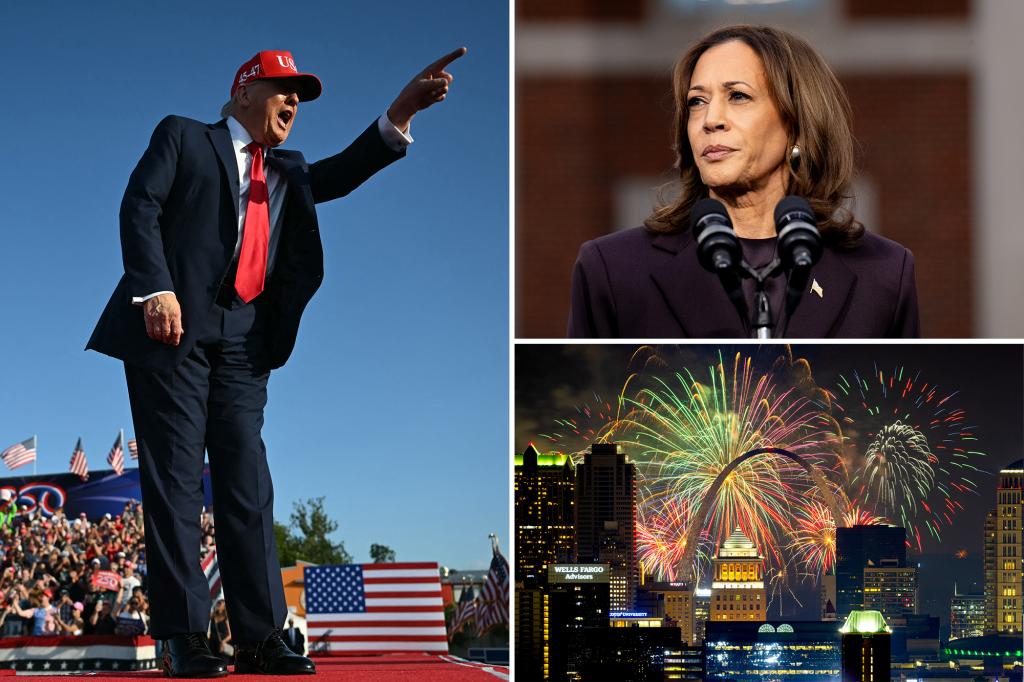
Half of Democrats See Themselves as Patriots: Shocking Poll Results
Patriotism Dividing Americans Ahead of Independence Day
As the nation celebrates its independence, a recent survey highlights a growing divide in how Americans perceive patriotism. Conducted by GOP-affiliated National Research Inc., the poll reveals that 91% of self-identified Republicans consider themselves patriots, in contrast to only 50% of Democrats.
The divide extends to political supporters supporting the 2024 presidential candidates: 90% of President Trump’s supporters identify as patriots, while only 55% of Vice President Kamala Harris’s supporters do. Among self-described conservatives, 87% see themselves as patriots, whereas only 51% of liberals share this view.
Overall national pride has declined significantly. Only 58% of Americans now feel extremely or very proud to be American— marking a nine-point drop from the previous year. This dip is especially notable among younger generations, with just 41% of Gen Z expressing pride, compared to 58% of Millennials, 71% of Generation X, and 75% of Baby Boomers. The level of pride among adults overall was once as high as 87% in 2001, spiking after 9/11, but now hits a historic low.
Political commentator Adam Geller suggests that these trends may partly stem from post-election tensions, but emphasizes the importance of patriotism beyond political affiliations. “Even if you don’t love the president, you should still be proud to be an American,” he states.
In line with these findings, other polls like Gallup’s show a decline in national pride, with only 36% of Democrats feeling very or extremely proud—a sharp decrease from previous years. Gallup’s data also indicates that Generation Z exhibits the lowest levels of pride, fueling concerns about national sentiment as the country approaches its 250th anniversary.
Geller remarks that understanding these shifts in patriotism is crucial, especially with widespread partisan divisions and a looming milestone for the nation’s founding. The survey was conducted among 1,000 registered voters with a margin of error of about 3.1 percentage points.