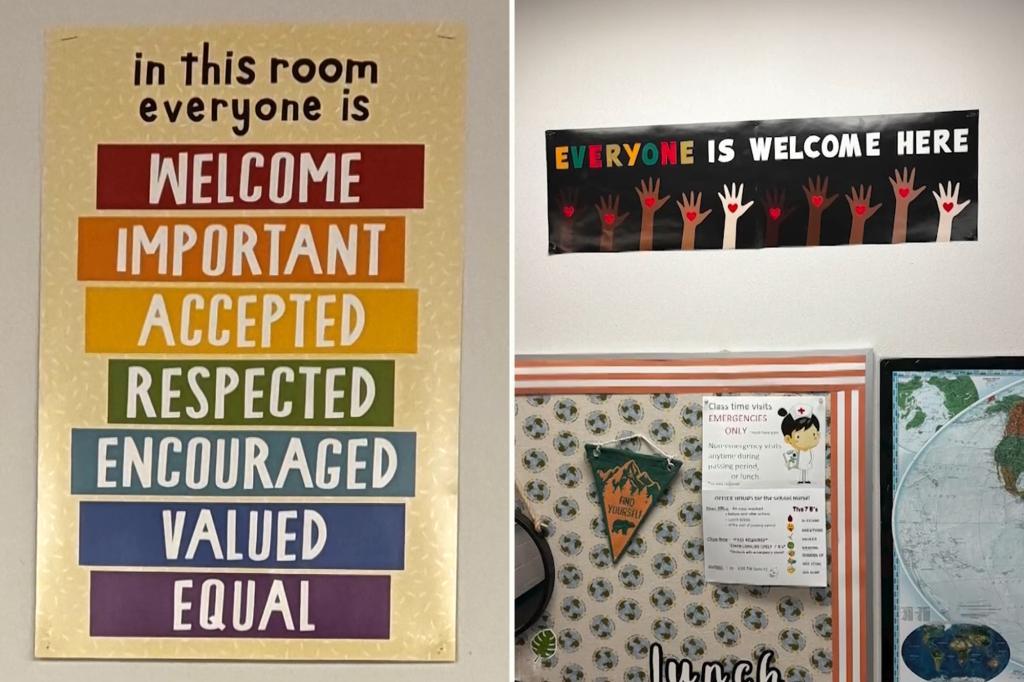
Idaho AG Bans ‘Everyone is Welcome Here’ Signs at Public Schools
Idaho Bans “Everyone is Welcome Here” Signs from Public Schools
The Idaho Attorney General has issued an official ruling requiring the removal of “Everyone is Welcome Here” signs from all public schools after they were deemed to cause division.
A legal opinion released recently states that banners like the one displayed by a teacher at Lewis and Clark Middle School in February violate state law. The signs, which promote inclusion, are considered to breach House Bill 41, which restricts banners or flags that express political viewpoints in public educational settings.
The Attorney General’s office characterized these signs as part of an ideological movement originating after the 2016 U.S. presidential election, which has been used by the Democratic Party for political purposes. The opinion describes the banners as part of a social movement, suggesting they serve as political statements rather than solely messages of inclusion.
In response to the controversy, the Idaho Democratic Party began selling merchandise inspired by the signs, citing support for the teacher involved. The party’s spokesperson emphasized that many parents and educators across the state are united in their desire for a fair, inclusive, and supportive educational environment.
The teacher at the center of the incident had previously displayed the signs annually and made the decision to put the signs back up despite the district’s orders to remove them. The district expressed concern that the inclusion of different skin tones in the banners might violate the requirement that school displays remain neutral and foster a positive learning environment.
The legal opinion asserts that the signs are associated with a broader social movement and that displaying them could be viewed as sharing personal ideological beliefs. The ruling emphasizes the importance of neutrality in school environments and suggests that student artwork with ideological themes might also be subject to restrictions.
While the signs are no longer permitted, supporters view them as expressions of anti-discrimination and solidarity that transcend partisan politics. The debate highlights ongoing tensions over expression and inclusivity in educational settings.