US Strikes on Iran Nukes Won’t Spark Chernobyl—Experts Reveal Shocking Truth!
US Conducts Targeted Strikes on Iran’s Nuclear Facilities
The United States launched precise military strikes on several Iranian nuclear sites Saturday night, aiming to destroy facilities involved in uranium enrichment. Experts say these actions are unlikely to lead to a nuclear disaster or widespread radiation contamination.
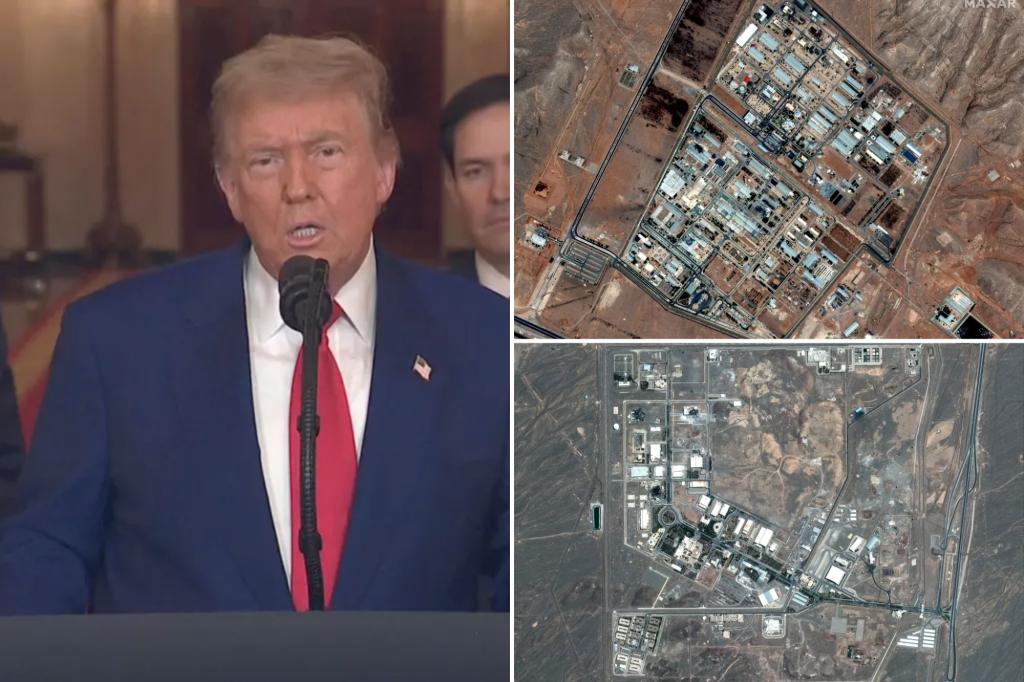
President Trump authorized attacks on three key locations—Natanz, Fordow, and Isfahan—believed to house Iran’s most secure and clandestine enrichment activities. The strikes included bunker-buster bombs potentially destroying Fordow, a facility buried 300 feet inside a mountain, along with Tomahawk missiles fired from submarines at Natanz and Isfahan.
Given that the targeted sites contain uranium, radiation is unlikely to spread extensively. Radiation experts emphasize that uranium’s toxicity poses health risks primarily through inhalation or ingestion, not long-distance environmental contamination. An academic from the University of Bristol explained that uranium’s radiation doesn’t travel far, and a full-scale nuclear fallout like Chernobyl is unlikely.
Additionally, the materials involved are in various stages of enrichment and are not in the form of active nuclear fuel. This reduces the risk of a catastrophic nuclear event. Experts also believe that localized chemical hazards, such as a release of uranium hexafluoride, could occur if centrifuges were damaged, but these would not result in a regional radiological disaster.
The strikes targeted deep underground and in mountainous areas, providing natural barriers against widespread contamination. Analysts note that this action likely prevented escalation toward a broader conflict and demonstrated military strength without risking a nuclear catastrophe. The operation’s precise nature reduces concerns about long-term environmental fallout, although health risks near the sites remain a consideration.
Key Points:
- Strikes focused on Iran’s uranium enrichment facilities, not reactors.
- Expert assessments suggest minimal risk of regional radiation spread.
- Material in enrichment stages unlikely to cause a nuclear incident.
- Localized hazards could include chemical leaks but not large-scale contamination.