US’s Biggest B-2 Raid: 14 Bunker-Busters Devastate Iran’s Nuclear Sites – Inside Operation Midnight Hammer!
Major U.S. Airstrike Targets Iran’s Nuclear Facilities
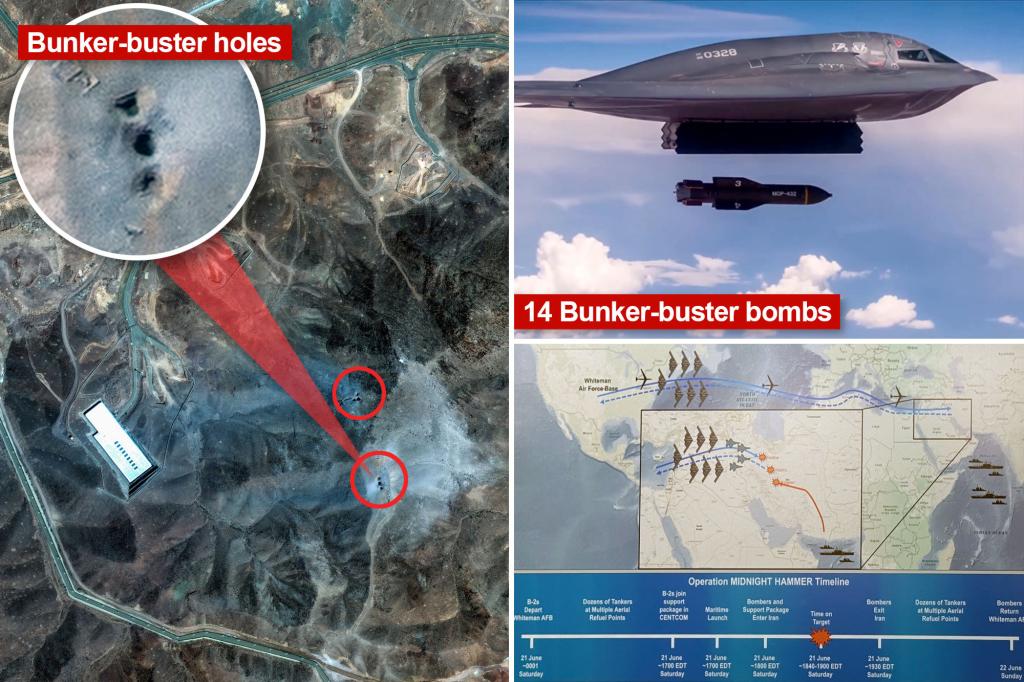
The United States launched a significant military operation, known as “Operation Midnight Hammer,” targeting key Iranian nuclear sites. Conducted by the largest-ever deployment of B-2 Spirit stealth bombers, this mission included the aircraft’s longest flight since 2001.
This operation marked the first combat use of the powerful GBU-57 bunker-buster bombs, with 14 of these 15-ton munitions dropped on Iran’s nuclear enrichment facilities at Fordow, Natanz, and Isfahan. The strike was highly coordinated, catching Tehran off guard, and reportedly did not provoke immediate retaliation.
According to military officials, no shots were fired at the U.S. strike package during ingress or egress, and Iranian fighters or surface-to-air missile systems did not detect the aircraft, maintaining the element of surprise. The operation involved complex in-flight refueling, tactical deception, and suppression tactics, including decoys and preemptive fire to ensure safety and success.
Details of the Mission
The main attack commenced around 6:40 p.m. ET, with B-2 bombers from a base in Missouri flying 18 hours across nearly 7,000 miles. The aircraft executed precise synchronized maneuvers with escort fighters, including F-22, F-35, and F-16 jets, which had been repositioned from Europe to support the operation.
The strike inside Iran lasted approximately 25 minutes, culminating with a barrage of Tomahawk cruise missiles launched from a U.S. submarine, further securing the element of surprise and targeting surface infrastructure at Isfahan.
Operational Highlights
The campaign was notable for its use of several deception tactics, designed to evade enemy defenses. The operation also included the historic deployment of the GBU-57A/B MOP, recognized as one of the most powerful bunker-buster bombs in existence. It was the longest B-2 mission since 2001 and the first time this munition was employed operationally.
Officials emphasized the mission’s precision and the U.S. military’s capability to carry out complex, long-distance operations with minimal threat detection, reflecting advanced planning and coordination.
Post-Strike Security and Response
Military leaders highlighted that the region remains on high alert, especially in Iraq, Syria, and the Gulf. The U.S. military remains vigilant, warning Iran against any provocative retaliation or proxy attacks, warning that such actions would be a strategic mistake.