Supreme Court Bans Gender-Affirming Care for Minors—What This Means for Families Now

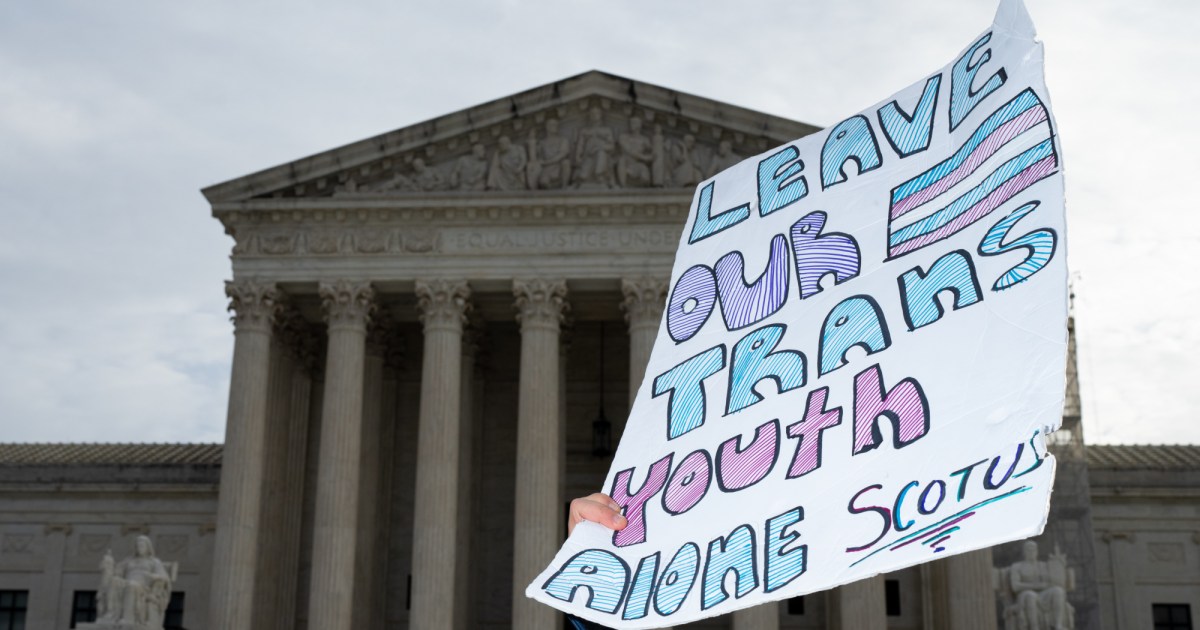
Activists for trans rights protest outside the US Supreme Court before the start of the United States v. Skrmetti case in December 2024.Bill Clark/CQ Roll Call/Zuma
The Supreme Court, three years after overturning Roe v. Wade and permitting states to ban abortion, has now ruled on another contentious issue: whether states can block gender-affirming medical treatments for minors.
In a 6-3 decision, the justices upheld a Tennessee law prohibiting transgender youth from accessing puberty blockers and hormone therapy, regardless of parental approval. Tennessee’s law is among 25 such bans enacted nationwide since 2021. Most of these laws are currently facing legal challenges, but they are expected to stay in effect.
The ruling in United States v. Skrmetti clarified that the Tennessee law does not discriminate based on sex but rather on age and medical intent. As such, it requires a lower standard of constitutional review. Chief Justice Roberts noted the case reflects intense scientific and policy debates about the safety and ethics of gender-affirming treatments, leaving the regulation of such care to individual states.
The decision marks a significant setback for transgender rights during a period of heightened political attacks, including efforts to define gender based solely on biological sex and restrict access to related care. The ruling is viewed as a legal validation of the state’s ban, potentially influencing similar cases across the country.
While medical associations, including the American Academy of Pediatrics and the American Medical Association, support gender-affirming treatments, they remain rare, with less than 0.05% of youth receiving such care, according to recent data.
Legal challenges by the Biden administration and trans families have already changed the landscape, but today’s verdict effectively allows more states to enforce bans and limits on care for gender-diverse youth.
Despite this, advocacy groups plan to continue fighting, emphasizing the importance of legal and legislative efforts, protests, and public education to protect transgender youth’s rights and health.