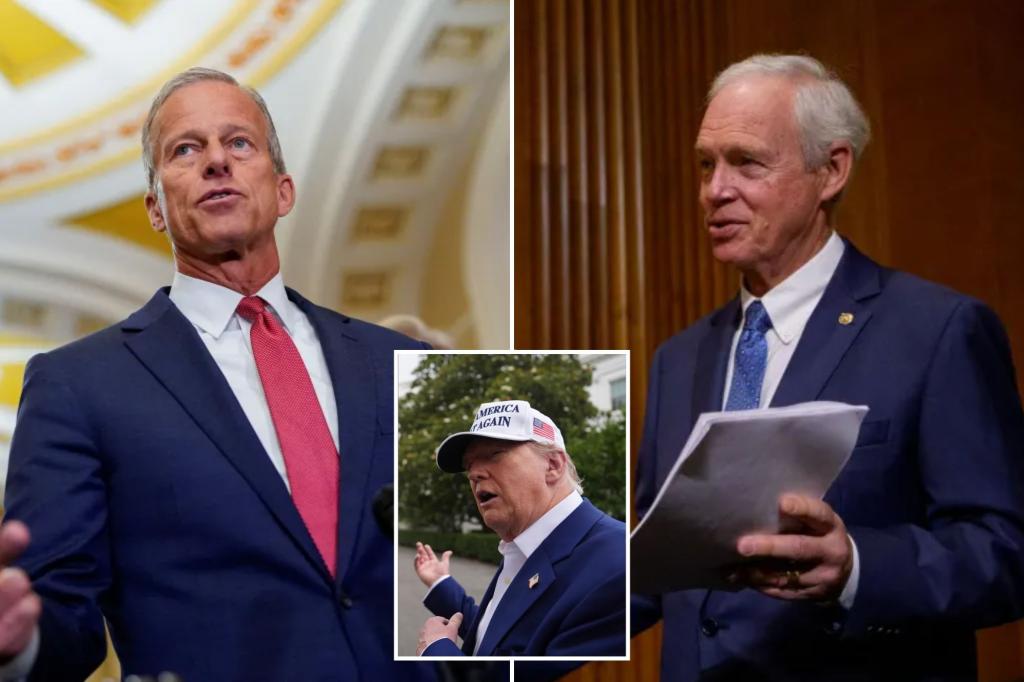
Sen. Ron Johnson Exposes White House Lies About True Cost of Trump’s ‘Big Beautiful’ Bill!
Senator Ron Johnson, a former accountant from Wisconsin, has conducted a comprehensive review of the proposed One Big Beautiful Bill Act. He concluded that this Republican-backed legislation would significantly increase the national deficit, contradicting claims from the White House which suggest the bill would improve the country’s fiscal outlook.
Johnson’s detailed 31-page report explores various projections of the legislation’s financial impact, criticizing the White House’s assertions as misleading budgeting strategies aimed at making the bill appear more beneficial than it truly is.
According to his analysis, the U.S. deficit could balloon by approximately $24.1 trillion over the next decade, with at least $3 trillion directly attributable to this legislation, based on the Congressional Budget Office’s assessments.
The report also criticizes a recent White House memo that claimed the bill could slash the deficit by nearly $7 trillion through tariff revenues and spending cuts. Johnson’s findings suggest that the most optimistic scenario would only reduce the deficit by about $2.5 trillion over ten years, leaving substantial gaps.
He warns that achieving even this modest reduction is unlikely, citing potential legal challenges over discretionary spending and tariffs. Johnson expressed that his goal is to promote honest debate and encourage economists to scrutinize government projections, moving beyond the CBO’s estimates alone.
Johnson also highlighted issues with the legislation’s reliance on assumptions such as 1.8% GDP growth, which is lower than the historical average of 2.21%. His analysis questions the popular Republican claim that the 2017 Tax Cuts and Jobs Act paid for itself after inflation adjustments, describing such assertions as unsupported.
While Johnson opposes allowing key tax provisions from 2017 to expire, he emphasizes the need for tighter fiscal discipline. He advocates for a forensic audit of government spending as a more effective measure to rein in costs than existing efforts like the Department of Government Efficiency.