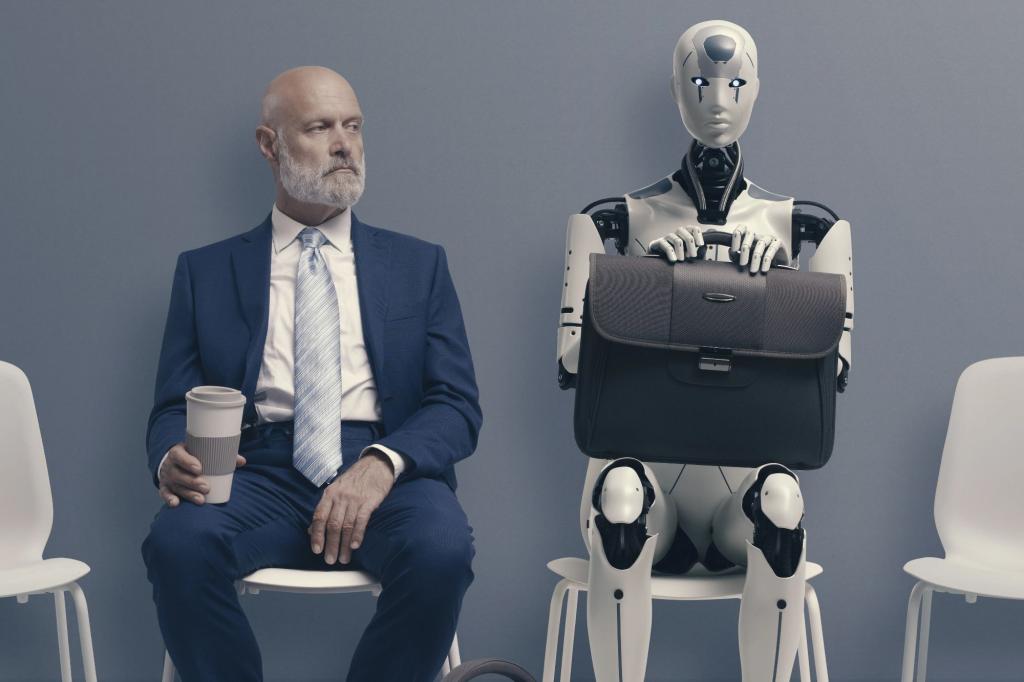
AI Displacement of White Collar Workers Could Spark a Revolution
AI-Driven Disruption: Preparing for the Future of Work
Recent announcements from major tech firms highlight a significant shift in the workforce landscape. Microsoft revealed plans to lay off 9,000 employees amid an AI-driven push to boost productivity, with CEO Satya Nadella noting that up to 30% of their coding is now generated by AI. Similarly, Salesforce’s CEO claimed that AI now handles nearly half of their work processes. These statements serve as early warnings of a broader transformation in the American job market.
Experts warn that AI’s impact extends beyond tech companies. Historically, new technologies such as electricity and computing initially disrupted their own industries before transforming the wider economy. For example, electrification first improved efficiency in power plants before revolutionizing manufacturing, and computing began by streamlining electronics manufacturing before reaching nearly every sector.
The current AI wave is likely following this pattern, starting with software and eventually impacting law, finance, marketing, and more. This raises questions about which workers will be displaced and how society will respond. While high-income, educated elites possess resources to adapt, the unprepared may face severe economic hardship. Previously, blue-collar workers bore the brunt of globalization’s dislocations, leading to community decline and social crises. Now, AI threatens to similarly upheave those who built their prosperity on the globalization era.
Historical insights suggest that rapid technological changes can provoke political instability, especially when elites and middle-class workers find themselves economically vulnerable. As AI displaces traditional roles, political unrest could intensify, reminiscent of past upheavals like those in the late Roman Republic.
To mitigate these risks, policymakers should implement real-time tracking of AI’s impact on employment, enabling proactive responses rather than reactive ones. Early data collection and analysis can help identify which jobs are disappearing and where new opportunities are emerging. Companies like Anthropic are already contributing valuable insights into AI’s evolving role across various industries.
The challenge ahead is not whether AI will displace knowledge workers but how society prepares for this inevitable disruption. Our success depends on anticipating changes and developing strategies to ensure a smooth transition into the new economic landscape.