Churches Can Now Endorse Candidates—And Trump Couldn’t Be Happier
President Trump Celebrates Changes to Church Political Speech Rules at White House Faith Luncheon
During a nearly 90-minute speech at the White House Faith Luncheon, President Donald Trump addressed faith leaders, corporate executives supporting faith-based initiatives, and the broader community. While touching on topics like the election, foreign policy, and legislative achievements, he highlighted the recent IRS decision to loosen restrictions on political activities by churches.
Trump emphasized that the IRS now considers political endorsements within religious services as private communications, exempting them from the Johnson Amendment, which previously limited churches’ political expressions. He claimed this change restores free speech for clergy, stating, “We’re getting rid of the Johnson Amendment so pastors and ministers can speak about politics again.” Historically, churches could engage in political discussions but were barred from explicitly endorsing candidates, often relying on subtle support.
Reflecting on his 2016 campaign, Trump recalled being surprised that faith leaders couldn’t openly endorse him, promising to eliminate that restriction. He told attendees, “You have more power than anybody, but you’re not allowed to use it. That’s changing now.”
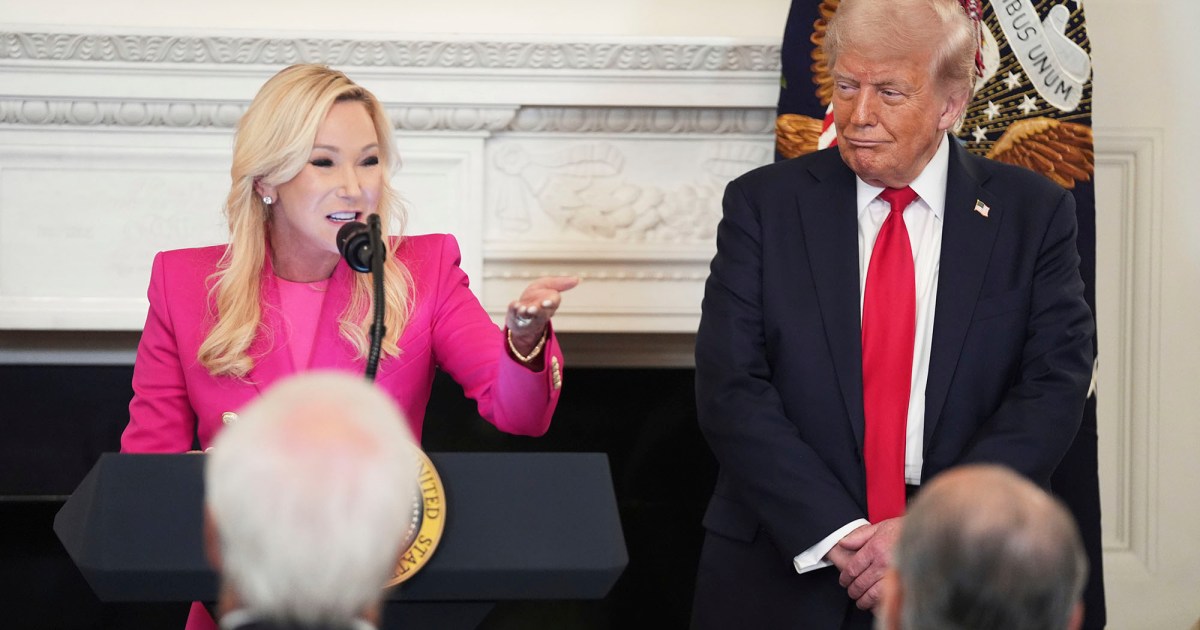
Among those present was Paula White, a prominent figure in the New Apostolic Reformation—a charismatic movement that advocates for Christians to exert influence over societal institutions, including politics. White has historically been an influential adviser to Trump, warning followers about supporting opponents and encouraging active engagement in political struggles.
Trump also drew parallels between his legal challenges and the persecution of Christians, asserting that his investigations resembled efforts to suppress religious freedom. “I stopped the Biden administration’s persecutions of Christians and pro-life activists,” he proclaimed, humorously comparing his investigations to those of notorious figures like Al Capone.
Concluding his remarks, Trump invited White to lead a prayer, praising her as a strong supporter of faith. She quoted the biblical story of Esther, calling on attendees to recognize their divine calling during these times, framing their efforts as part of a divine purpose to uphold faith and influence society.