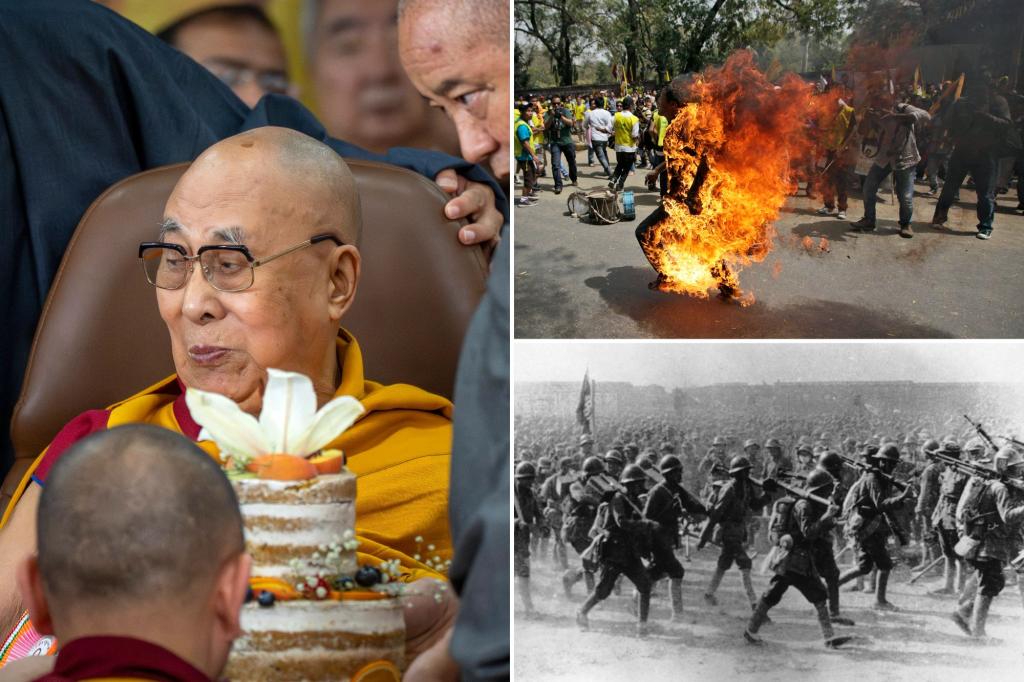
Dalai Lama Plans Succession as Protest Against Beijing
The Dalai Lama Confirms He Will Select His Successor Outside Tibet to Avoid Chinese Control
Just days before celebrating his 90th birthday, the Dalai Lama made a significant announcement regarding his succession. Traditionally, high-ranking Tibetan lamas seek their reincarnation through dreams, divinations, and whispers from oracles, usually within Tibet. However, he revealed that his successor will be identified by a trusted conclave outside Tibet—marking a departure from centuries-old customs—aimed at preventing Chinese interference.
The proposed process involves a conclave of top followers choosing his successor in the “free world,” outside the territory under Chinese control. This move challenges Beijing’s long-standing efforts to manipulate Tibetan spiritual lineage, exemplified by the 1995 disappearance of the Panchen Lama, who has not been publicly seen since.
The Chinese government has historically sought to suppress Tibetan culture and self-determination, transforming Tibet into the world’s most policed region. Many Tibetans, protesting the repression, have self-immolated, yet global reactions remain muted. Despite China’s suppression—mentioning economic exploitation and forced Sinicization—Tibet’s cultural and religious identity persists, largely due to the Dalai Lama’s leadership.

Since fleeing to India in 1959, the Dalai Lama has championed Tibetan autonomy and peace, receiving the Nobel Peace Prize in 1989. Beijing, however, brands him a terrorist, despite his commitment to nonviolence. Chinese authorities have previously kidnapped or disappeared key Tibetan figures, such as the 6-year-old Panchen Lama in 1995.

The world’s indifference to Tibet’s plight is evident in Western self-censorship and consumer dependence on Chinese goods. Regional powers like India also hesitate to fully support Tibetan leadership, fearing Beijing’s wrath. As Tibet endures continued oppression, the Dalai Lama’s decision signifies a strategic effort to preserve Tibetan spiritual sovereignty amidst mounting external pressures.