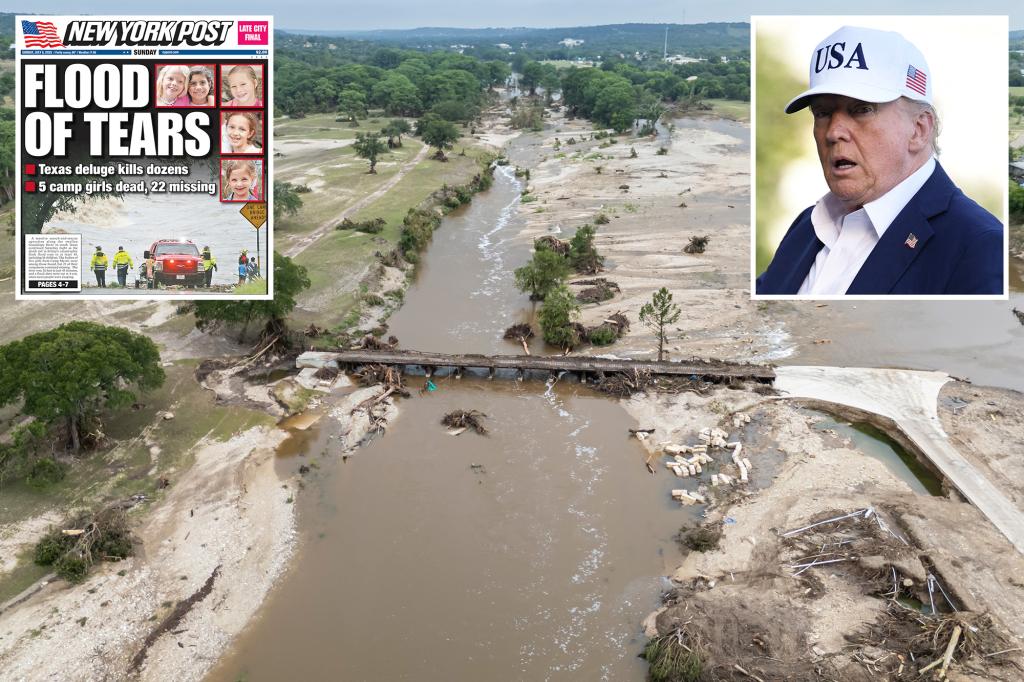
Dems blame Trump for Texas flood deaths, but experts and timeline debunk the claim
Texas Floods Claim Over 100 Lives Amid Conflicting Reports on Prediction Efforts
More than 100 individuals have lost their lives due to severe flash flooding in Texas Hill Country, with the Guadalupe River rising over 26 feet in just 45 minutes after a sudden summer storm. Among the dead are dozens of children, including many from Camp Mystic, a nearby girls’ summer camp. Approximately 850 flood survivors have been rescued, but many others remain missing.
Early warnings were issued on July 3, with the National Weather Service (NWS) giving alerts hours before the flood peaked. The NWS Austin/San Antonio held briefings in the morning about imminent flash flood risks, and a Flood Hazard Outlook warned of potential danger in Kerrville and surrounding areas. The first flood watch was issued at 1:18 p.m., followed by mesoscale alerts predicting high rainfall and flash flood danger by 6:10 p.m., and a warning of “considerable” flooding risks at 6:22 p.m. later that evening.
Despite these warnings, officials faced difficulties deciding on evacuations. Kerrville city manager Dalton Rice explained that evacuations are complicated; delaying could endanger people on roads in low water areas, whereas early evacuations might cause chaos and put many at risk. The floodwaters rapidly overtook the region, with the Guadalupe River spilling over its banks in a matter of minutes.
County officials had previously declined to install a warning system along the river due to costs, missing a $1 million grant opportunity that could have funded such safety measures. Experts defending the NWS emphasized that staffing or budget issues did not hinder the agency’s response. A Houston-based meteorologist stated, “We have seen no evidence that current staffing or budget cuts affected the warnings issued.”
While some political figures blamed federal budget cuts for worsening the disaster, agencies confirmed that warnings were timely and sufficient. The White House dismissed accusations linking impending cuts, which are scheduled to take effect only in October, to the flood response. Overall, meteorologists and officials stress that the warnings were issued with adequate lead times, and the tragedy largely reflects the storm’s unexpected severity rather than failures of systems or staffing.
The disaster has reignited debates about flood preparedness, with calls to improve early warning infrastructure to prevent future tragedies.