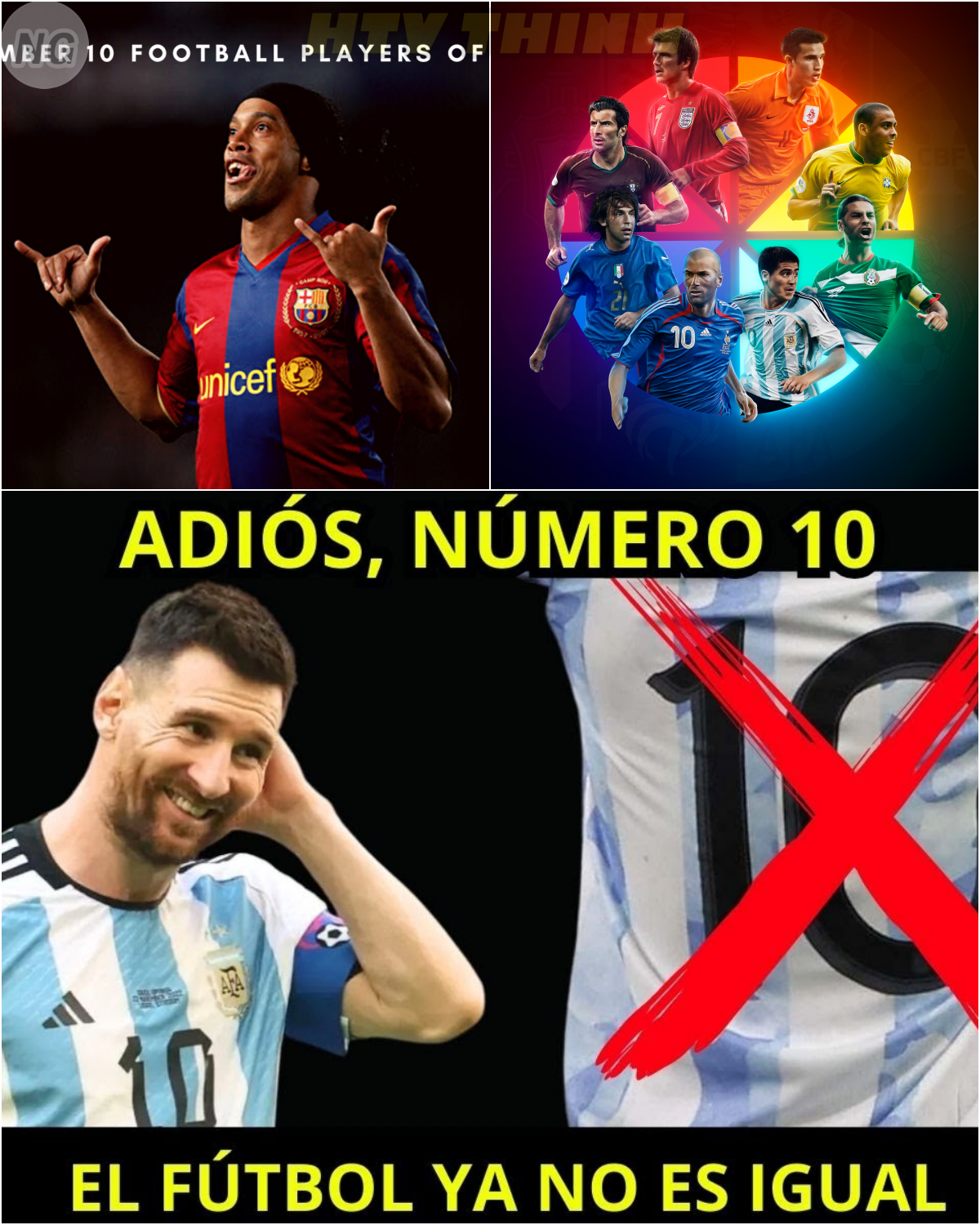
The Shocking Truth Behind Modern Football: Did the Number 10 Die? 😱⚽
The Disappearance of the Classic Number 10 in Modern Football
Not long ago, the number 10 symbolized more than just a position—it embodied creativity, vision, and artistry on the field. The player wearing it was the poet in the game, effortlessly weaving passes and shaping play from midfield.
Legends like Riquelme, Zidane, Valderrama, Aimar, Ronaldinho, Totti, and Kaká exemplified this rare breed, embodying an almost extinct species of footballer who played with his head up and viewed the game with a unique perspective.
Today, if you observe the top competitions—Champions League, Premier League, Copa Libertadores—you’ll see a different game: midfielders pressing aggressively, wingers sprinting tirelessly, and players spending more time in their own penalty area than in the attacking third. The traditional playmaker—the essence of the number 10—is vanishing.
The evolution is complex, but largely driven by changes in tactics, pace, physical demands, and even pitch surfaces. Modern football emphasizes rapid transitions, relentless pressing, and physicality, gradually sidelining the relaxed, creative role once held by the classic 10. Coaches increasingly view him as a luxury, and many top teams lack a true playmaker in the traditional sense.
Even Lionel Messi, the quintessential 10, has had to adapt—deeper roles, false nine, or winger—yet he remains the best. Similarly, Luka Modric, Antoine Griezmann, Kevin De Bruyne, and Jude Bellingham possess the technique, but their roles are shaped by a game that demands constant action and quick decision-making.
The shift has impacted player development, with youth academies prioritizing effort and speed over patience and ingenuity. The artistic, risk-taking midfielder is often discouraged in favor of structured, high-intensity training.
Despite the decline, the spirit of the 10 endures in some pockets—street football in South America keeps alive the flair and improvisation. Talents like Thiago Almada and others carry the tradition, but nurturing them requires the right environment and support.
Football is cyclic, and a return to valuing creativity and calm playmaking could re-emerge. As long as the game celebrates trickles of genius, subtle passes, and moments of pause, the myth of the number 10 will survive—not just as a position, but as a symbol of football’s soulful essence.