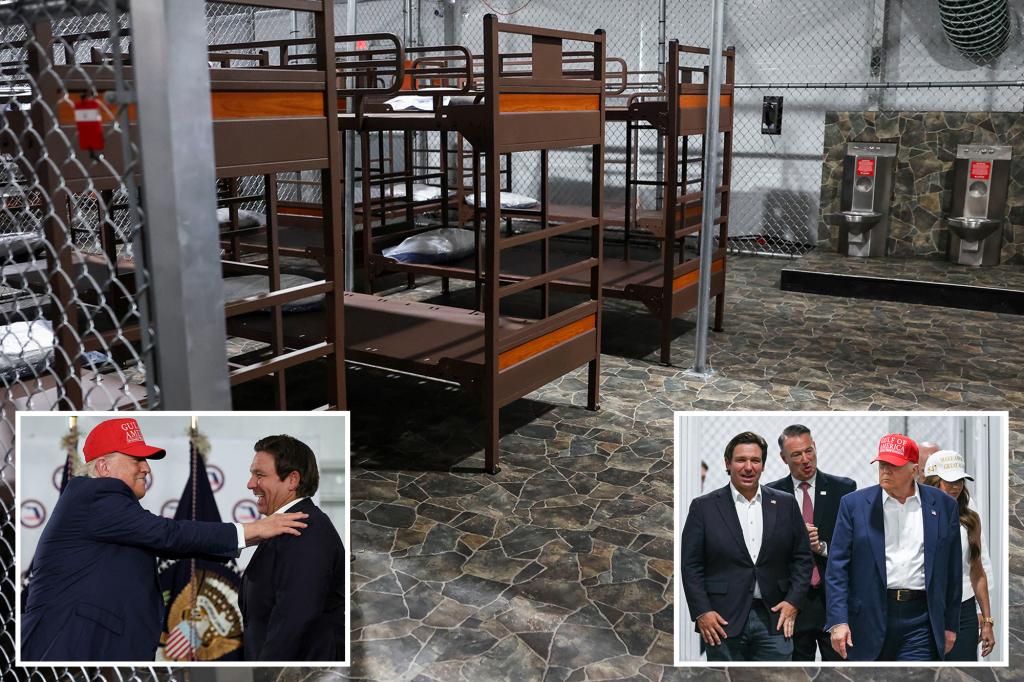
Inside ‘Alligator Alcatraz’: Bleak Detention Conditions for 5,000 Migrants
First Look Inside “Alligator Alcatraz” Migrant Center
The newly unveiled migrant detention facility, dubbed “Alligator Alcatraz,” sits deep within the Florida Everglades, surrounded by dangerous wildlife including alligators, crocodiles, and pythons. Authorities plan to house up to 5,000 detainees in wire cages featuring rows of metal bunk beds and chain-link fencing.
During a tour, former President Trump observed the site, which is located at the Dade Collier Training and Transition Airport. He commented on the isolated location, noting that the only exit is via a one-way flight, with the surrounding swamp making escape nearly impossible. The facility, built in just eight days, costs an estimated $450 million annually to run, with some funding expected to come from FEMA’s Shelter and Services Program.

Security measures are extensive, including over 200 cameras, 28,000 feet of barbed wire, and more than 400 personnel. The site, accessible via a single road, is heavily fortified to prevent escapes and enhance surveillance.

Transport of new detainees anticipates the use of the site’s air-conditioned accommodations, designed to withstand Florida’s heat. Environmental groups, however, oppose the project, warning it could harm local endangered species and calling for environmental assessments. Florida officials contend the law cited by opponents only applies to the federal government, not the state, as the airport is already active with frequent flights.
Trump has voiced support for expanding similar detention centers nationwide, envisioning a network of facilities across multiple states to bolster immigration enforcement efforts.