Supreme Court Wins for Parents Wanting to Remove LGBTQ Books from Schools—Shocking Ruling!
Supreme Court Rules in Favor of Parents Over LGBTQ-themed School Books
The Supreme Court has ruled in favor of a group of Maryland parents who challenged a school district’s policy on LGBTQ-themed storybooks in elementary schools. In a 6-3 decision, the justices overturned a lower court ruling that required parents to demonstrate their children were being coerced to act against their religious beliefs. The high court determined that the parents showed a likelihood of success in their challenge, allowing a preliminary injunction to stand.
The ruling does not mark the final decision, as the case will return to lower courts for further review. Justice Samuel Alito, writing for the majority, emphasized that government actions should not impose on religious exercise by requiring children to participate in instruction that conflicts with parents’ beliefs. He argued that such requirements threaten religious freedoms and cannot be justified by the benefits of public education.
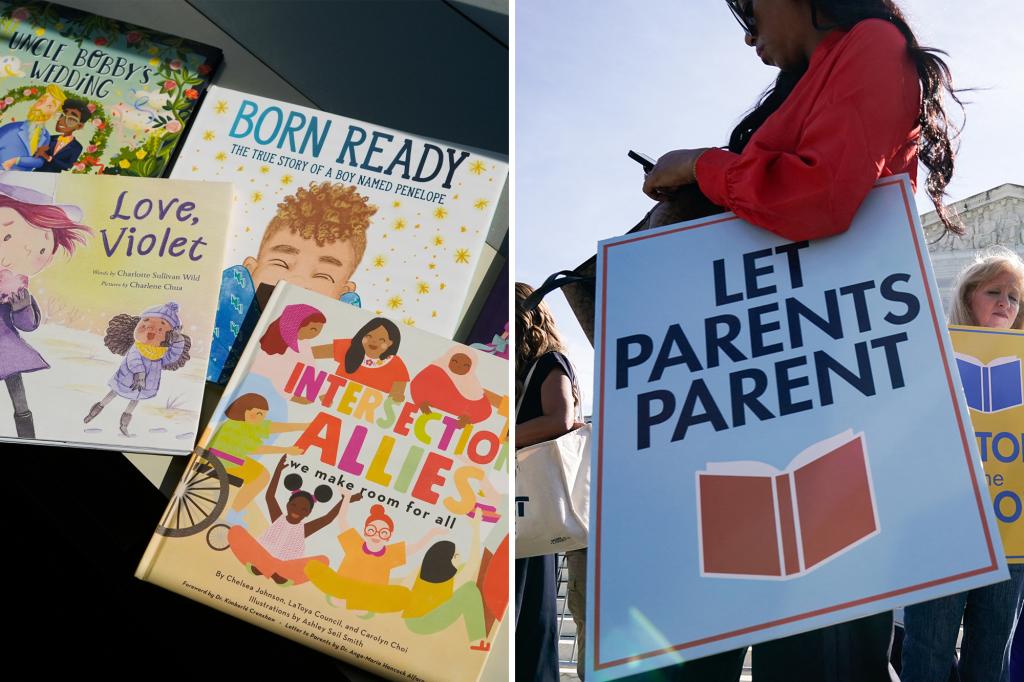
The controversy centers around books approved by Montgomery County Public Schools, including Pride Puppy, a picture book aimed at three- and four-year-olds depicting themes associated with gay pride, such as items found at pride parades and historical figures like Marsha Johnson. Other books explored transgender topics, such as Intersection Allies and What Are Your Words?, which discuss gender identity and pronouns, sometimes depicting children adopting different gender pronouns.
Opponents argue these books promote particular viewpoints on sexuality and gender, with critics claiming they push for acceptance of practices that may be inappropriate for young children. The plaintiffs contended that the school district provided guidance encouraging teachers to reinforce these themes and reprimand children who disagreed, infringing on parents’ religious rights.
During oral arguments, Justice Brett Kavanaugh expressed confusion about the controversy, while Justice Sonia Sotomayor dissented, warning that the ruling could lead to chaos in public schools by requiring extensive parental notification and opt-out options for every lesson that might conflict with religious beliefs.
The case has ignited a national debate over parental rights, school curricula, and the limits of government authority in shaping classroom content.