Shocking Reason Why Coyotes Are Flooding Long Island — You Won’t Believe the Surprising Talent Behind It!
Coyotes Are Making an Unexpected Appearance on Long Island
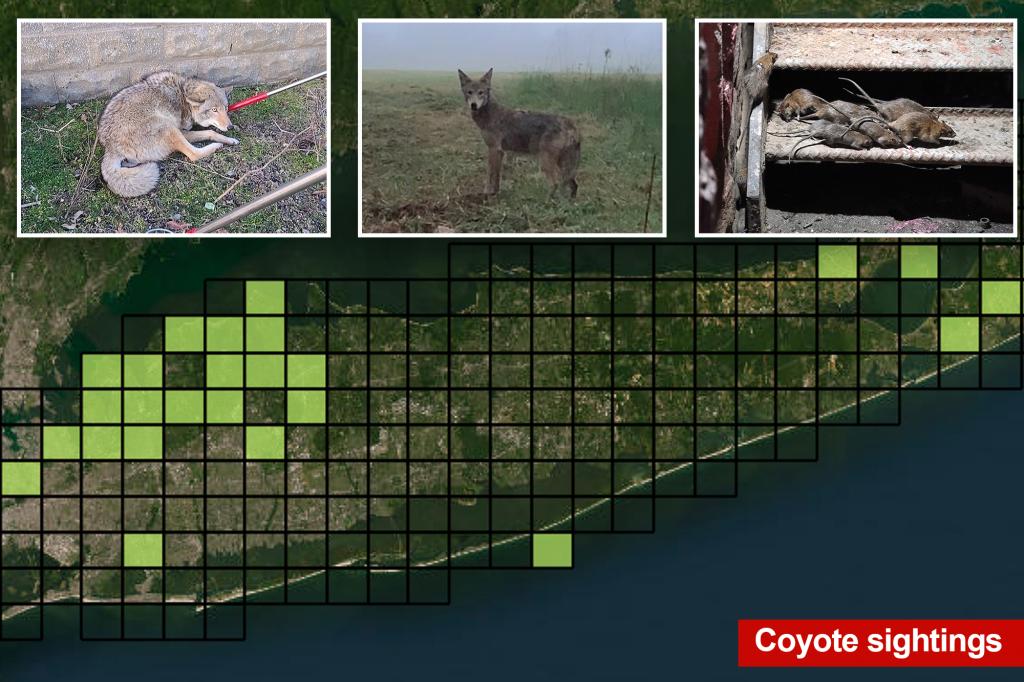
Long Island, traditionally free of coyote populations, is now seeing a rising number of sightings and breeding pairs, thanks partly to their impressive swimming abilities and the abundance of rats in urban areas.
In northwest Nassau County alone, at least five pairs of coyotes have been identified this year, with additional reports further east. Experts believe these animals are crossing over from New York City, likely swimming from the Bronx via large waterways.
These coyotes are often attracted to areas with plentiful food sources, particularly rats. A notable incident involved a coyote rescued from the East River two years ago, illustrating their capacity to navigate water barriers.
Historically, individual coyotes have been sporadically spotted near Queens and the Hamptons, but a significant development occurred in 2016 when a family — a breeding pair with eight pups and a yearling — was observed thriving near a LaGuardia Airport employee parking lot, drawn by the area’s rat population.
The proliferation of coyotes correlates with the food-rich environment, which has led to their loss of fear of humans, resulting in more frequent encounters. For instance, coyotes have been seen in Calvary Cemetery in Long Island City and Floral Park. In some cases, local authorities intervened, capturing and euthanizing most of the animals to prevent public safety issues, leaving only one survivor.
There is also evidence suggesting lone coyotes or small groups have migrated to Fire Island and Fisher’s Island, distant areas connected to the mainland by water. While the rising sightings could be due to increased camera technology and reporting, experts emphasize that coyotes generally do not pose a significant threat to humans and tend to be skittish.
To stay safe, pet owners are advised to keep their animals indoors and avoid feeding wildlife, which can encourage coyotes to lose their natural fear of humans. Maintaining this wild instinct is key to coexistence with these increasingly visible creatures.
Source: Long Island Mammal Survey