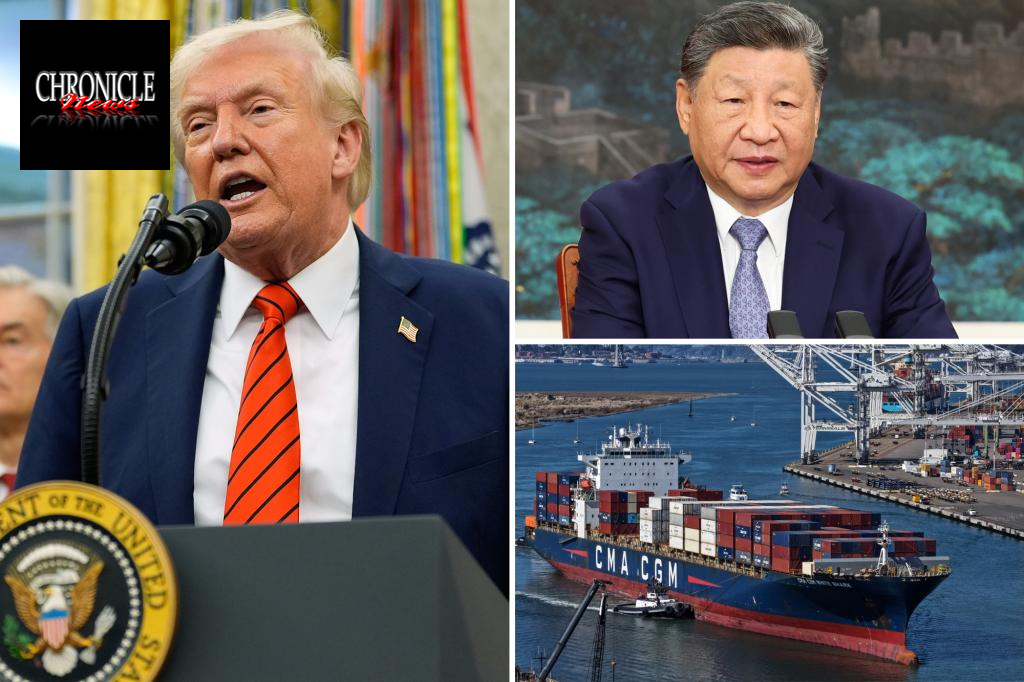
Trump Says ‘Don’t Worry’ After Beijing’s 100% Tariff Threat
President Trump Signals Easing of Tensions with China Amid Tariff Threats
Following recent aggressive rhetoric, the President has indicated a move toward calmer relations with China, despite threatening to impose a 100% tariff on all Chinese imports as retaliation against new export controls. In a social media post, Trump expressed confidence that China’s leadership, particularly President Xi Jinping, is not interested in provoking economic depression for their country and conveyed a desire to support China rather than hurt it.
The push for diplomacy came after China’s Commerce Ministry issued a warning against the United States, emphasizing that threats of tariffs are not the appropriate way to engage with China. They also vowed to take measures if the US proceeds with increased tariffs on Chinese goods.
Previously, Trump announced plans to implement extensive tariffs on Chinese products and threatened to cancel a scheduled meeting with Xi Jinping. The trade tensions escalated over China’s new rule requiring companies to obtain permits before exporting items containing or produced with rare-earth minerals, which are crucial for electronics and AI infrastructure. China produces approximately 90% of the world’s rare earths, giving it significant control over global supply chains.
The US stock market responded to these developments with a sharp decline, with the Dow dropping nearly 878 points (about 1.9%) and the S&P 500 and Nasdaq descending by 2.7% and 3.6%, respectively, marking their worst single-day losses since April.
Trump has set a deadline of November 1 for China to alter its course in trade negotiations. Meanwhile, China retaliated by announcing new port fees on American ships, further intensifying the trade dispute.
Expert Perspectives
Vice President JD Vance endorsed Trump’s approach, emphasizing that the US has strategic advantages and warning that aggressive Chinese responses could influence the dynamics of the dispute. He pointed out that much depends on how China reacts to the US’s moves, suggesting that the US possesses substantial leverage in this negotiation.
In the broader context, China’s control over strategic minerals and recent trade restrictions highlight the ongoing complexity of US-China economic relations amidst rising tensions.