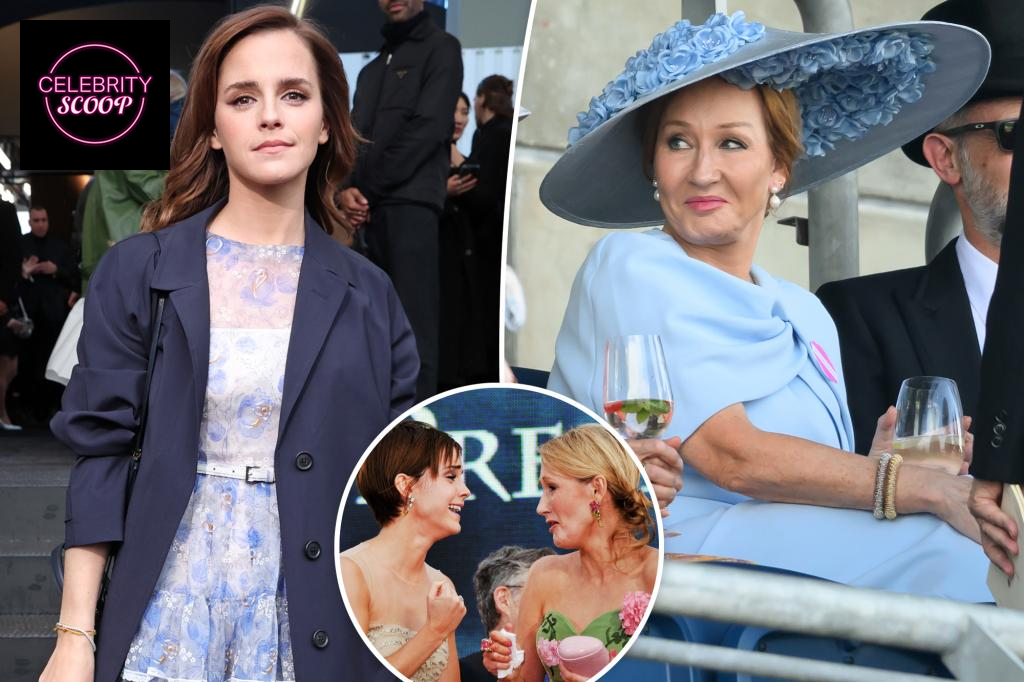
J.K. Rowling Criticizes Emma Watson Over Trans Rights Dispute
J.K. Rowling Rejects Emma Watson’s Attempt at Reconciliation over Transgender Rights
J.K. Rowling has explicitly declined an olive branch from Emma Watson, who had previously softened her stance on the author’s views on transgender issues. Both Watson and her former co-star Daniel Radcliffe had publicly criticized Rowling’s anti-trans statements, but Watson recently expressed hope for understanding.
In a strong rebuke shared via social media, Rowling dismissed the attempt at reconciliation and criticized Watson’s perspective. She pointed out that Watson, now 35, has limited real-life experience and is unaware of the privileges she enjoys, such as access to private bathrooms and security guards, which she argued shield her from the struggles faced by those in less privileged positions.
Rowling questioned whether Watson has faced situations like sharing a mixed-sex changing room at a public swimming pool or being at risk of sharing a prison cell with a male rapist—scenarios she portrayed as relevant to her objections against certain transgender policies. She accused Watson of supporting the trans community as a form of “trashing women’s rights,” affecting women and girls lacking her privileges.
recalling her own background, Rowling emphasized her rise from poverty before achieving financial success with her Harry Potter franchise, contrasting her experiences with Watson’s. She expressed disappointment that Watson, and Radcliffe, who publicly condemned her beliefs, are assuming roles as de facto spokespeople for her fictional universe long after their acting careers ended.
The author further criticized Watson’s support of transgender rights, calling it “the trashing of women’s rights,” and suggesting her stance ignores the realities faced by women without her privileges. Rowling also dismissed Watson’s comments on a podcast, where she expressed continued admiration for Rowling despite their disagreements, alleging the shift in her tone is motivated by a change in social acceptance.
Rowling wrapped up her statement by asserting that adults cannot publicly condemn her beliefs and then expect her affection, likening the situation to a friend calling for violence, and emphasizing her right to voice her opinions. She concluded that Watson is free to disagree publicly, but she too has exercised her right to respond.