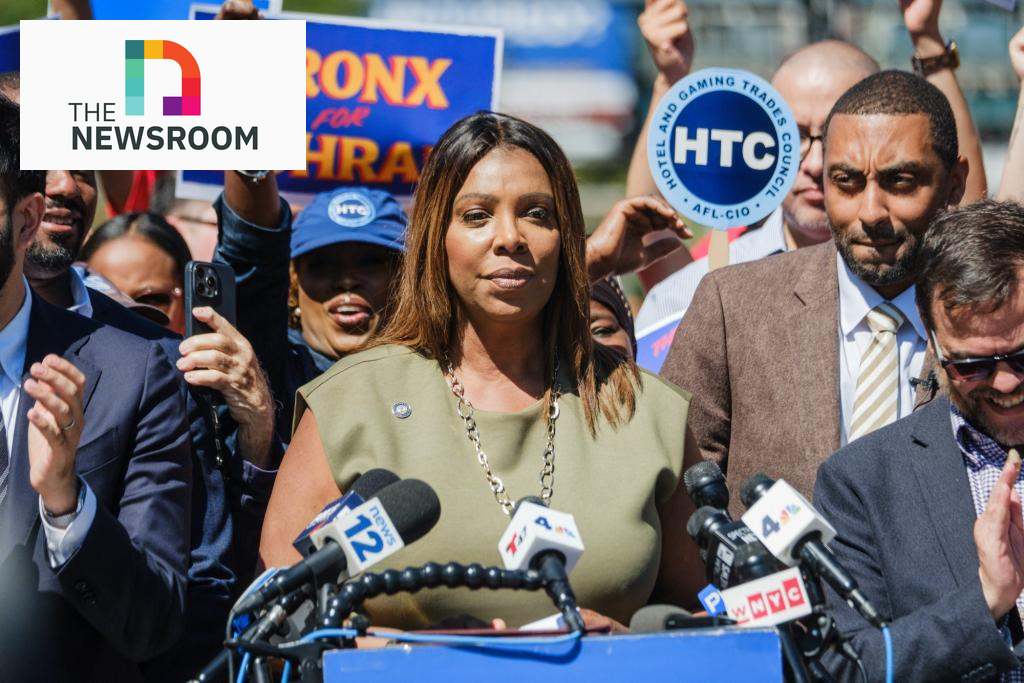
Tish James Focuses on Enemies While Ignoring State Corruption
Selective Enforcement in Charitable Oversight
While certain local charities in New York with strong political connections openly divert millions of public funds, authorities focus their legal efforts elsewhere. Recently, the Attorney General has targeted a small, inactive nonprofit in West Virginia—VDare, an obscure anti-immigration website that originated in New York decades ago. Despite moving out of state, the AG’s office scrutinized its use of donor contributions to purchase property in Berkeley Springs, which also serves as the residence of VDare’s founder.
The prolonged legal pursuit suggests a personal vendetta, as the case involves multiple staff members. In contrast, major service providers in New York, responsible for billions in city contracts, continue to operate under a cloud of corruption and insider profiteering, with little to no intervention from the AG. These groups, often tied to the Democratic political elite, enjoy extensive government funding with nearly zero accountability or legal repercussions.
Meanwhile, investigations into the city’s vast homeless services sector reveal a pattern of self-dealing, nepotism, and illegal practices. The Department of Investigation has reported extensive irregularities, indicating systemic abuse and misappropriation of funds.
Accountability and Corruption in Nonprofits
For example, SEBCO, a homeless shelter operator, engaged in the misappropriation of funds by contracting security services from a security firm it owned—selecting contractors through non-competitive means and paying large salaries to its executives. Its affiliates have longstanding connections to its leadership, creating a cycle of self-enrichment.
Similarly, Acacia Network, another homeless shelter operator, has paid its top executives nearly a million dollars annually—a figure the organization deems justified. Before losing city contracts, CORE Services amassed hundreds of millions in public funds and used subsidiaries for security and food services, compensating its executives generously.
Despite evidence of widespread fraud across multiple providers, federal authorities have prosecuted only a handful of insiders. Meanwhile, the AG’s office directs resources toward ideological legal battles, rather than addressing these systemic abuses.
VDare, which relies solely on private donations and has not received taxpayer funding, remains unjustly targeted amid broader corruption issues. It exemplifies the disparity in enforcement—where ideological enemies are pursued, but institutional corruption in service providers remains largely unchecked.
Conclusion
Many New York nonprofits are built around siphoning taxpayer money for personal gain, yet enforcement against these entities is virtually nonexistent. The focus on ideological enemies over systemic corruption highlights a fundamental failure in oversight, leaving many to wonder who truly benefits from current policies.