Republicans Booed at Their Own Town Halls
Town Halls Reveal Growing Discontent Among Constituents
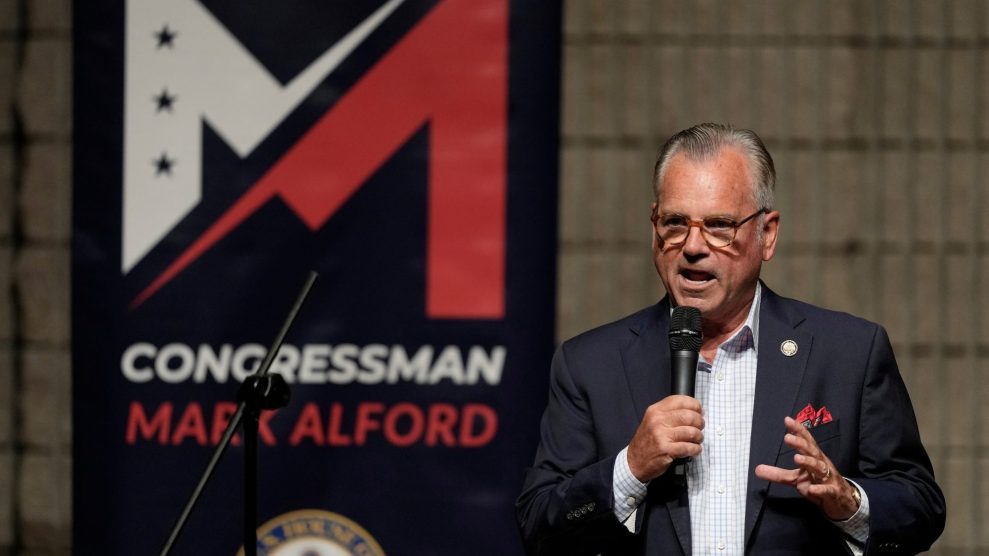
Rep. Mark Alford (R-Mo.) addressed attendees at a town hall that became confrontational on Monday.
Recent town halls across the country have shown increasing frustration among constituents toward their Republican representatives. Attendees have booed, jeered, and demanded accountability on a variety of issues, criticizing efforts to defend President Donald Trump’s agenda.
Key issues fueling anger include proposed Medicaid cuts, deployment of the National Guard to Democratic-led cities, and transparency surrounding the Epstein files. For instance, Representative Dan Crenshaw (R-Texas) faced opposition when he showcased Trump-era achievements, with attendees demanding the release of Epstein documents and shouting dismissive comments. Crenshaw attributed the disruptions to “about fifty leftists” who allegedly interrupted with chants and noise.
Similarly, Representative Barry Moore (R-Ala.) abruptly left a town hall amid shouts of “shame” and questions about due process for immigrants detained during Trump’s administration. Videos of the event depict attendees laughing and questioning Moore’s responses, which he later claimed was “hijacked.”
Other representatives, such as Warren Davidson (R-Ohio), hosted sessions where angry constituents pressed for answers on policies like Medicaid cuts and immigration enforcement. Davidson labeled some protesters “disruptive,” as videos circulated showing attendees expressing their displeasure and skepticism.
In Missouri, Rep. Mark Alford (R) attempted to counter the trend by holding multiple town halls. Despite this, he was met with criticism from attendees accusing him of complacency and blind allegiance to Trump’s policies. Conversely, Rep. Josh Brecheen (R-Okla.) conducted 20 town halls in four days, where attendees challenged him on false claims about drug prices and Medicaid reductions, often limiting questions and facing boos.
This rising wave of unrest has influenced the GOP’s approach; a memo from the National Republican Congressional Committee indicated that hosting town halls was no longer prioritized. Most House Republicans have avoided in-person events to steer clear of voter backlash, making upcoming elections particularly unpredictable.