Florida Bans Chalk Amid Shooting Concerns
Florida Authorities Arrest Protester Over Chalk Footprints in Rainbow Crosswalk

In the wake of a recent tragic school shooting, Florida authorities are drawing criticism for targeting activists. A protester was recently detained for leaving chalk footprints in a crosswalk that commemorates the victims of the 2016 Pulse nightclub shooting, a significant symbol for the LGBTQ community.
Earlier this month, the Florida Department of Transportation removed rainbow markings from a crosswalk in Orlando, which served as a memorial to the massacre where 49 people lost their lives. The removal was justified as a measure to eliminate roadway distractions, but critics argue it’s an effort to suppress LGBTQ visibility and political expression.
Transportation officials have emphasized that roadways should be free of political or artistic messages, with Florida’s transportation secretary stating the initiative aims to “ensure transportation facilities are free of political ideologies.” Similarly, the US Transportation Secretary called for cracking down on political content in public street art, framing the removal as a safety measure.
This action has sparked outrage, especially from local advocates who see the rainbow crosswalk as a vital symbol of resilience and community solidarity. Critics argue that targeting the rainbow design amounts to erasing LGBTQ history and community strengths.
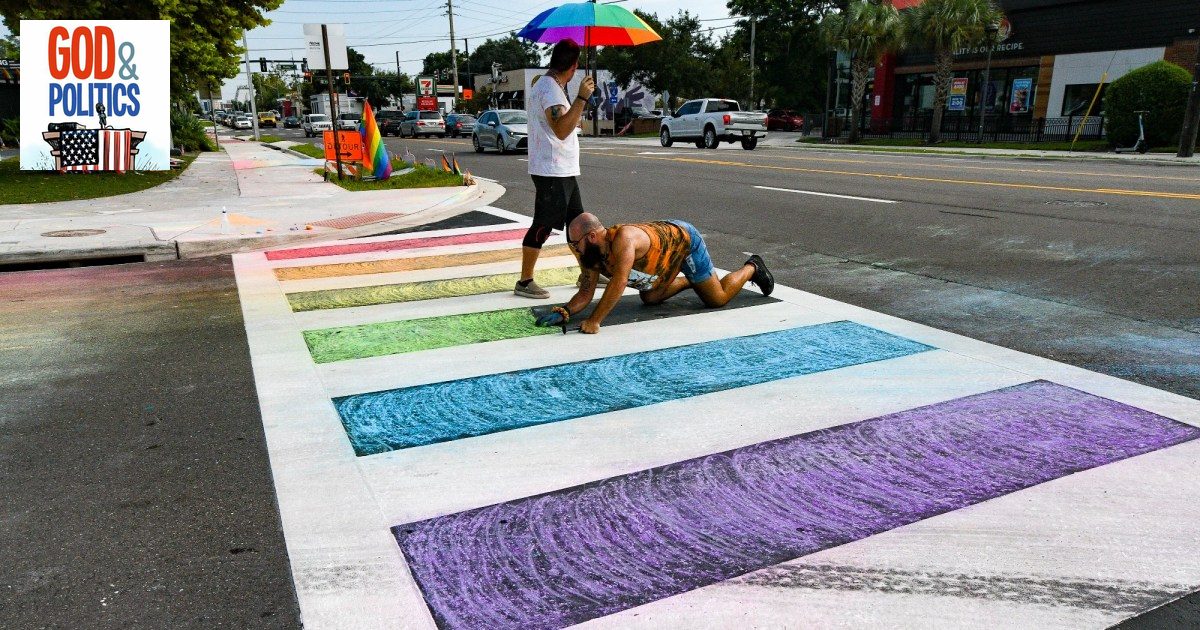
The situation worsened when protesters, using chalk to restore the crosswalk’s colors, were met with police resistance. Authorities threatened to prosecute acts of “defacing” the street. The controversy peaked when a visitor from Georgia, Orestes Sebastian Suarez, was arrested after simply walking in the crosswalk with chalk on his shoes.
Suarez was detained on felony charges but was released after a judge found there was no probable cause for his arrest. Speaking about the incident, Suarez condemned the harsh treatment for engaging in peaceful protest and expressing love and support for the community.
This case highlights the broader political struggle over LGBTQ symbols and free expression in Florida, where efforts to erase such symbols are viewed by many as attempts to diminish LGBTQ rights and visibility.