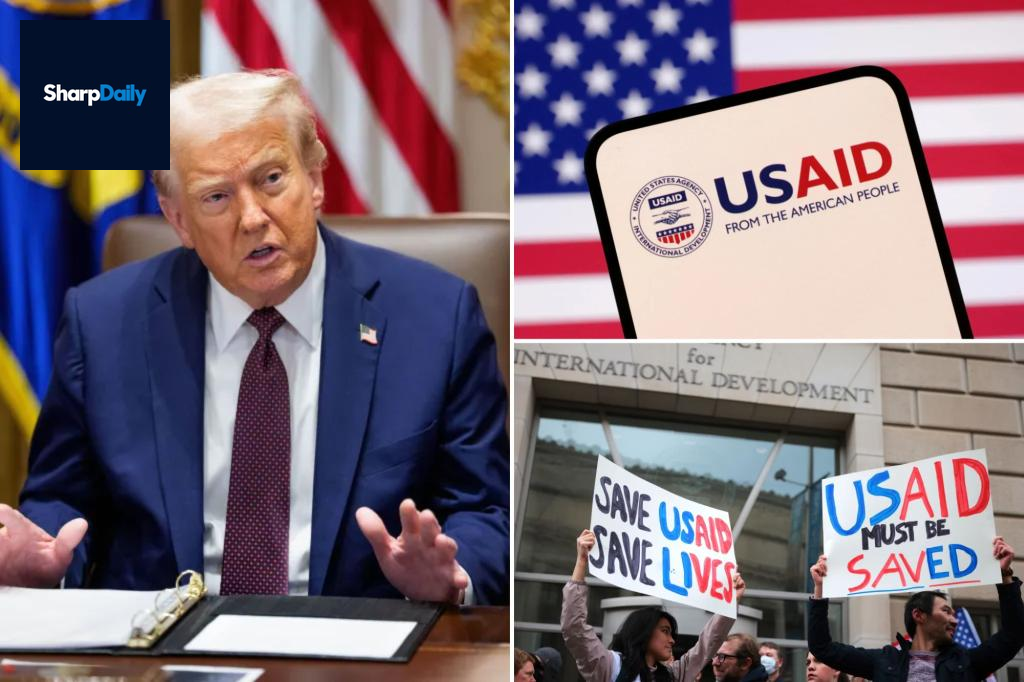
Trump Cancels $5B Foreign Aid in Rare ‘Pocket Rescission’
President Trump Seeks to Cancel Nearly $5 Billion in Foreign Aid
In a rare move, President Trump has proposed rescinding approximately $5 billion in foreign aid and peacekeeping funds previously approved by Congress. This action, known as a “pocket rescission,” is being utilized through a legally contentious method that has not been executed in nearly five decades.
Trump notified Congress late Thursday of his intention to cancel these funds, which had been delayed due to legal disputes until that day. A pocket rescission involves submitting a request close to the end of the fiscal year—September 30—regardless of congressional approval, and is subject to intense legislative debate over its legality.
The proposed rescission targets several major allocations, including $3.2 billion for USAID development programs, over $322 million from the Democracy Fund, more than $521 million in contributions to international organizations, and nearly $445 million for peacekeeping operations. Notably, roughly $838 million designated for peacekeeping efforts worldwide, such as missions in the Democratic Republic of Congo and the Central African Republic, would also be eliminated.

The White House highlighted some spending as wasteful, citing examples like $24.6 million allocated for climate resilience in Honduras, $2.7 million for a South African foundation that previously published racial inflammatory articles, and $3.9 million aimed at promoting democracy among LGBT communities in the Balkans. Additional funds, such as $1.5 million for Ukrainian women’s art promotion, are also part of the cut.
The rescission plan excludes support for specific peacekeeping missions, including those along the Egyptian-Israeli border. Legal questions about the authority to enact such rescissions stem from the Impoundment Control Act of 1974, which generally restricts the president’s ability to cancel approved appropriations. While the government’s legal position suggests such rescissions may be permissible, the legislative and judicial landscapes remain uncertain.
The legality of pocket rescissions remains controversial, with some authorities arguing the practice is unlawful, yet there is limited legal precedent. The General Accounting Office has previously authorized similar actions in the past, though ongoing debates and court rulings could influence future legal battles over this significant executive authority.